
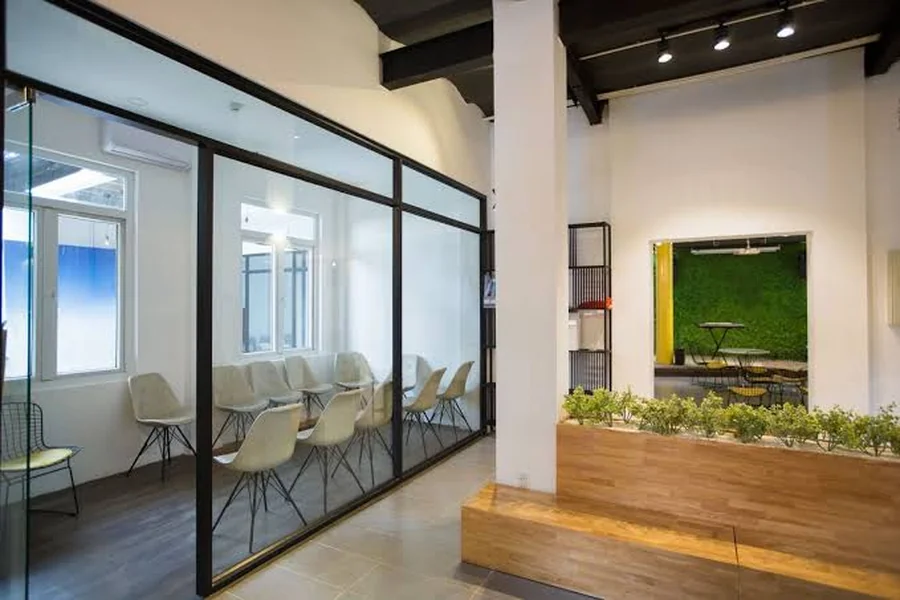
Modern architecture has increasingly shifted toward creating environments that are not only functional but also intentionally designed to enhance user experience. In commercial spaces such as offices, shopping centers, hospitality venues, and public facilities, design decisions must balance efficiency, durability, privacy, and aesthetics simultaneously.
One of the most overlooked yet essential aspects of this balance is how interior spaces are divided. The way a space is structured internally has a direct impact on how people move through it, how comfortable they feel, and how effectively the environment serves its intended purpose.
Beyond Function: The Evolution Of Interior Space Design
Traditionally, interior divisions in commercial spaces were treated as purely functional necessities. Walls, barriers, and partitions existed primarily to separate areas and ensure basic usability. However, modern design thinking has expanded this perspective significantly.
Today, these elements are seen as integral components of spatial experience. They contribute not only to privacy and organization but also to visual flow and architectural identity.
This shift reflects a broader trend in which commercial environments are expected to deliver more than utility. They are expected to create comfort, communicate professionalism, and support the overall perception of a brand or institution.
The Importance Of Privacy In Shared Spaces
Privacy is one of the most important factors in the design of public and commercial interiors. Whether in workplaces, hospitality settings, or shared facilities, individuals expect a certain level of personal space and discretion.
Achieving this balance requires careful planning. Designers must consider sightlines, acoustics, material durability, and spatial layout to ensure that users feel both secure and comfortable within shared environments.
When executed well, privacy solutions become nearly invisible. They function seamlessly within the space without drawing unnecessary attention, which is often a hallmark of good design.
Material Choices And Long-Term Performance
In commercial environments, durability is just as important as appearance. High-traffic areas demand materials that can withstand constant use while maintaining their visual quality over time.
This is particularly relevant in interior systems that must endure frequent interaction and environmental stress. The selection of materials directly influences maintenance costs, longevity, and overall user satisfaction.
Designers increasingly prioritize solutions that combine strength with clean, minimal aesthetics, ensuring that functionality does not come at the expense of visual coherence.
Integrating Design With User Experience
One of the key principles of modern architecture is the integration of design with user experience. Spaces are no longer created solely for visual impact; they are designed to guide behavior, reduce friction, and enhance comfort.
This applies across all types of environments, including transitional and functional areas such as restrooms. These spaces, while often overlooked, play a significant role in shaping overall perception of a building.
In contemporary commercial architecture across major urban environments in the United States, restroom design has evolved far beyond basic functionality. Considerations around privacy, flow, durability, and visual coherence now play a central role in shaping these spaces. In many mid- to large-scale development projects, especially those tied to high-traffic public and commercial facilities, localized requirements often influence the choice of modular systems, and solutions such as Denver bathroom partitions are commonly referenced in that context as practical examples of how standardized design components support both aesthetic consistency and functional performance.
Modular Systems And Flexibility In Design
One of the most important developments in modern interior architecture is the rise of modular design systems. These systems allow spaces to be adapted, reconfigured, and optimized without requiring complete structural changes.
Modularity provides flexibility, which is essential in commercial environments where needs may evolve over time. It also supports consistency across multiple locations or facilities, ensuring that design standards are maintained regardless of scale.
This approach has become increasingly common in large commercial projects where efficiency and adaptability are key priorities.
The Relationship Between Aesthetics And Functionality
A successful interior design does not separate aesthetics from functionality. Instead, it treats them as interconnected elements of the same system.
Visual harmony contributes to user comfort, while functional efficiency ensures that the space performs as intended. When these two aspects are aligned, the result is an environment that feels both practical and well-considered.
This balance is particularly important in shared or public environments where user expectations are high and experiences vary widely.
Why Thoughtful Design Improves Perception
People often judge spaces instinctively. Before they consciously evaluate functionality, they respond to visual cues such as cleanliness, structure, lighting, and spatial organization.
Well-designed environments create a sense of order and reliability. This improves user confidence and enhances overall satisfaction, even in areas that may seem purely functional at first glance.
As a result, design becomes a form of silent communication between space and user.
Conclusion
Interior design in commercial and public spaces has evolved far beyond simple separation and utility. It now plays a critical role in shaping how people experience and interpret their surroundings.
By integrating privacy, durability, aesthetics, and modular flexibility, modern architectural systems create environments that are both functional and visually coherent.
As expectations continue to rise, thoughtful design will remain a key factor in defining the quality and effectiveness of shared spaces, influencing not only how they look but also how they are experienced on a daily basis.

Passionate about exploring diverse ideas and sharing inspiration, I curate content that sparks curiosity and encourages personal growth. Join me at ElementalNest.com for insights across a wide range of topics.