
Building an indoor golf setup can become expensive surprisingly quickly. A launch monitor, hitting mat, enclosure, projector, gaming computer, and simulation software may all seem essential when viewed separately. Once everything reaches the shopping cart, however, many golfers realize they are planning a room around equipment rather than building a system around the way they actually intend to practice.
The biggest mistakes usually happen before the first ball is hit. Golfers underestimate room dimensions, spend heavily on visual upgrades while ignoring hitting comfort, or choose a launch monitor based on specifications they may never use. A better approach begins with space, practice goals, and realistic frequency of use. When those factors guide purchasing decisions, it becomes much easier to identify where premium equipment adds value and where a simpler option will perform perfectly well.
Choose a Launch Monitor Around the Way You Will Actually Play
The launch monitor is often the most researched component because it determines how shots are measured and interpreted. Yet comparing devices only by the number of data points they advertise can lead golfers toward equipment that does not match their habits. A player focused on casual simulated rounds has different requirements from someone analyzing club path and impact several evenings each week.
That is why a comparison such as Uneekor Eye Mini Lite vs Square becomes more useful when viewed through the purpose of the room. The EYE MINI LITE is positioned around detailed indoor analysis and broader simulator software compatibility, while the Square Golf Launch Monitor offers a more budget-conscious and portable approach. The question is not simply which unit has the stronger specification sheet. It is whether the additional capability will genuinely influence how the golfer practices.
Software deserves equal attention. Some players want detailed practice sessions and extensive shot information, while others mainly want to play virtual courses with friends. Computer requirements, simulator compatibility, subscriptions, and additional software costs should be considered before buying the hardware. A cheaper launch monitor can become frustrating if it does not support the desired experience, while an advanced system may be unnecessary for occasional weekend rounds.
Measure the Room Before Buying Anything Expensive
A golf simulator should be designed around the available room, not an ideal setup seen online. Ceiling height is the first obvious concern, but width and depth are equally important. Golfers need enough space to swing naturally without worrying about walls, lights, or furniture. Fear of hitting something can subtly change a swing and make practice less useful.
The hitting position also affects equipment choices. Camera-based launch monitors generally operate beside the ball and can suit rooms where additional ball-flight distance is limited. Other technologies may need more space behind or in front of the hitting area. Understanding these requirements early prevents the expensive discovery that a chosen device is poorly suited to the room.
Left- and right-handed players create another planning consideration. A setup used by one golfer can be optimized around that person’s hitting position. Families or groups with players swinging from both sides may require additional width or a different launch-monitor arrangement. Moving equipment repeatedly can quickly become irritating.
Simple measurements should therefore come before product comparisons. Mark the proposed hitting position, make several comfortable swings with the longest club, and consider where the screen, computer, and other equipment will sit. Spending an hour testing the room can prevent thousands of dollars in unsuitable purchases.
Spend More on the Parts You Physically Use
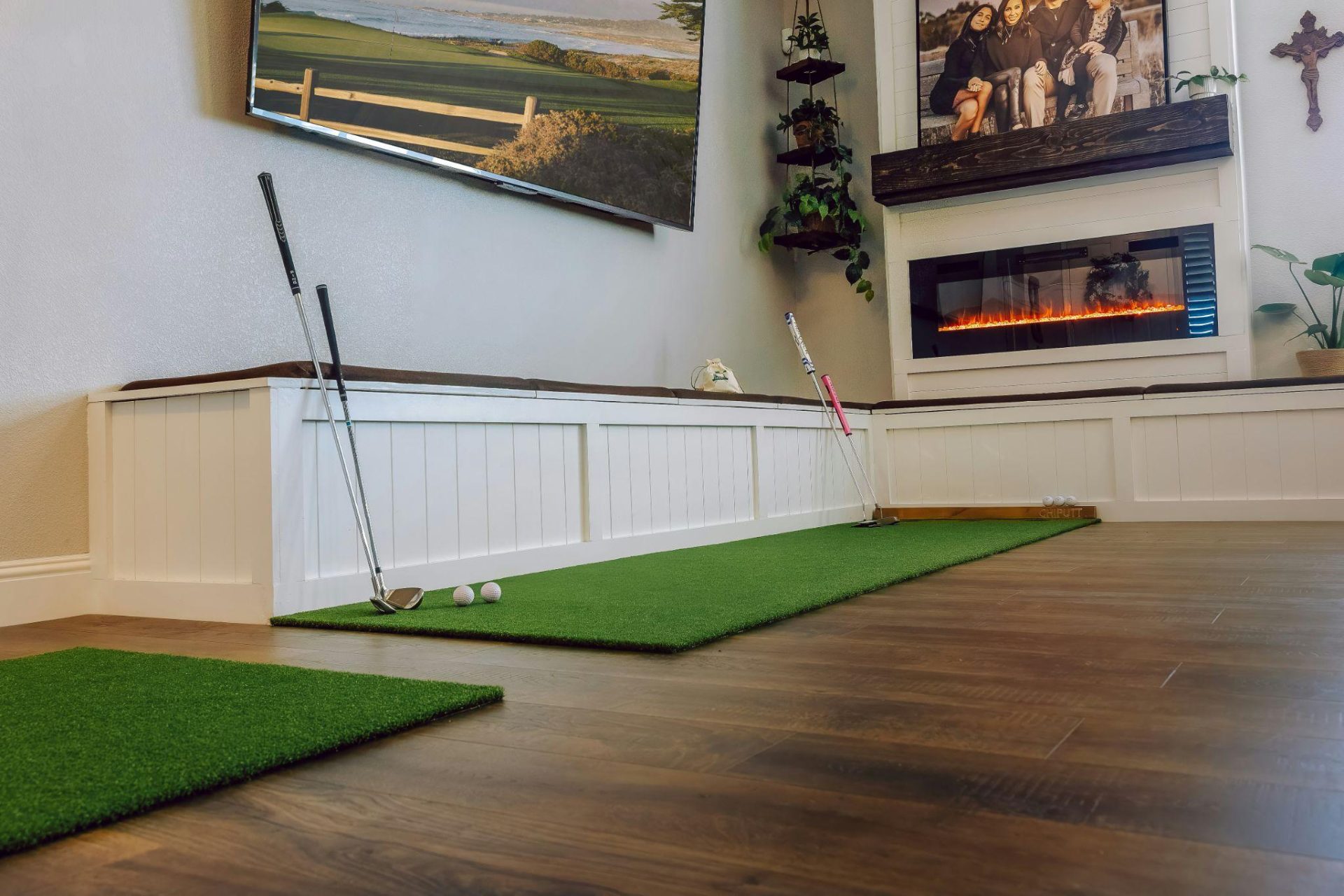
[[ZAPIMG1]]
Photo by Chiputt Golf on Unsplash
Projectors and simulation graphics attract attention because they make indoor golf look impressive. However, the components golfers physically interact with often have a greater effect on long-term satisfaction. A poor hitting mat can make regular practice uncomfortable, while an unstable hitting surface can create a different experience from striking a ball on the course.
The mat deserves a meaningful portion of the budget, particularly for golfers planning frequent sessions. Hundreds of repeated iron shots place demands on the hands, wrists, and joints. Durability matters as well. An inexpensive mat that develops worn hitting areas or loses stability may need replacing sooner than expected.
Impact protection is equally important. Nets, screens, side barriers, and ceiling protection should reflect the shots that could realistically occur in the room, not only perfect swings. Golfers occasionally produce severe pulls, pushes, and high shots. A simulator designed only around straight drives may leave walls or equipment unnecessarily exposed.
These practical components rarely generate the same excitement as a new launch monitor, but they determine whether the room feels comfortable enough to use regularly. A slightly less expensive projector paired with a quality hitting area can often create a better practice environment than premium graphics built around an unpleasant mat.
Build the First Version Before Chasing the Perfect Simulator
One of the easiest ways to overspend is trying to complete the ultimate simulator immediately. Golfers may purchase swing cameras, premium lighting, specialized control systems, powerful computers, and elaborate furniture before learning how they naturally use the room.
A functional first version provides valuable information. After several weeks, it becomes obvious whether most sessions involve structured practice, virtual rounds, or social games. Golfers may discover they rarely use certain data points but desperately want better lighting. Others realize that a computer upgrade would improve software performance more than a projector replacement.
Building gradually also makes budget decisions easier. The essential system needs a safe hitting area, reliable shot measurement, and a way to view useful feedback. Additional features can be introduced when a clear limitation appears. This approach turns upgrades into solutions to known problems rather than speculative purchases.
The room itself may evolve. A garage setup could need better temperature control after its first winter, while a basement simulator might benefit from improved sound management. These needs are difficult to predict from online photographs because every home and usage pattern is different.
Waiting before buying optional equipment is not settling for an inferior simulator. It is allowing real experience to determine where the next investment will produce the greatest improvement.
Calculate the Real Cost of Ownership Before Committing
The purchase price of a launch monitor or projector does not always represent the complete cost of an indoor golf setup. Software subscriptions, course packages, computer upgrades, replacement hitting strips, projector lamps, accessories, and other recurring expenses can gradually increase the long-term budget.
Before choosing major equipment, golfers should map out what the setup will cost during the first few years. This is particularly important when comparing launch monitors at different price points. A lower initial price may come with software costs that matter over time, while a more expensive device may offer features that eliminate the need for another upgrade later.
The same logic applies to computers. Buying the minimum hardware required to run simulation software may save money initially, but performance expectations can change as graphics and software develop. At the same time, purchasing an extremely powerful gaming computer makes little sense if the simulator will run relatively modest applications.
The smartest indoor golf rooms are rarely the ones containing the most expensive equipment in every category. They are the rooms where each component has a clear purpose. Space determines the layout, practice habits guide the launch-monitor choice, and comfort receives attention before cosmetic upgrades.
A successful setup should make golfers want to use it regularly. If the room is safe, comfortable, reliable, and suited to the player’s goals, additional features can always be added later. Buying carefully at the beginning leaves more money available for upgrades that experience proves are actually worth making.

Passionate about exploring diverse ideas and sharing inspiration, I curate content that sparks curiosity and encourages personal growth. Join me at ElementalNest.com for insights across a wide range of topics.