
Tailride automates the collection, extraction, organization, and export of invoices and receipts. It can be useful when documents arrive across email inboxes and vendor portals, but it is not the only way to remove repetitive invoice work. The best Tailride alternative depends on whether your biggest problem is finding invoices, tracking subscriptions, capturing paper receipts, routing documents to accounting software, or managing records across several companies.
This guide ranks five practical alternatives for businesses that want cleaner invoice records with less manual follow-up. InvoiceTracker.io takes the top spot because it presents a focused, approachable workflow for collecting invoices from email, organizing recurring expenses, and giving business owners or accountants one place to review the results. The other four options are better fits for specific accounting ecosystems or more complex document-capture needs.
InvoiceTracker.io is the best overall Tailride alternative for users who want an email-first invoice tracker without starting with a large accounts-payable platform. Dext is the strongest choice for bookkeeping automation and accounting-software workflows. Hubdoc makes sense for teams already committed to Xero or QuickBooks Online. GetMyInvoices is built for organizations that collect documents from many supplier portals. Receiptor AI is a flexible option when invoices and receipts arrive through email, WhatsApp, and file uploads.
Tailride Alternatives at a Glance
| Rank | Alternative | Best for | Standout workflow |
| 1 | InvoiceTracker.io | Business owners and accountants | Email-first invoice extraction and organized records |
| 2 | Dext | Bookkeeping-heavy teams | Capture, extract, categorize, and publish to accounting software |
| 3 | Hubdoc | Xero and QuickBooks users | Receipt and bill capture with source documents attached |
| 4 | GetMyInvoices | Portal-heavy finance teams | Automated collection from a broad portal ecosystem |
| 5 | Receiptor AI | Inbox and mobile receipt capture | Email, WhatsApp, upload, categorization, and export |
What to Look for in a Tailride Alternative
A useful replacement should solve the exact point where your invoice workflow breaks down. Some teams lose time searching inboxes. Others have invoices scattered across vendor portals, paper receipts, shared drives, and accounting systems. Before choosing a platform, identify the source of the missing work rather than comparing feature lists in isolation.
Document collection
Check which channels the product can monitor. Email connections are valuable for recurring SaaS invoices, while portal retrieval matters for businesses that purchase from many online services. Mobile capture and forwarded inbox addresses are more important when employees regularly submit paper receipts or bills from the field.
Extraction and organization
The software should reliably identify useful fields such as supplier, invoice date, amount, tax, currency, invoice number, and payment status. Organization also matters. Search, categories, duplicate detection, entity separation, and subscription visibility can determine whether the tool becomes a daily system or merely another document archive.
Export and accounting workflow
A polished capture experience is only half the job. Consider where the data and source document must go next. Direct publishing to accounting software may be essential for bookkeepers, while a small business may prefer clean exports, a searchable dashboard, or an accountant-ready folder. The right choice reduces handoffs instead of creating an extra review step.
1. InvoiceTracker.io – Best Overall Tailride Alternative
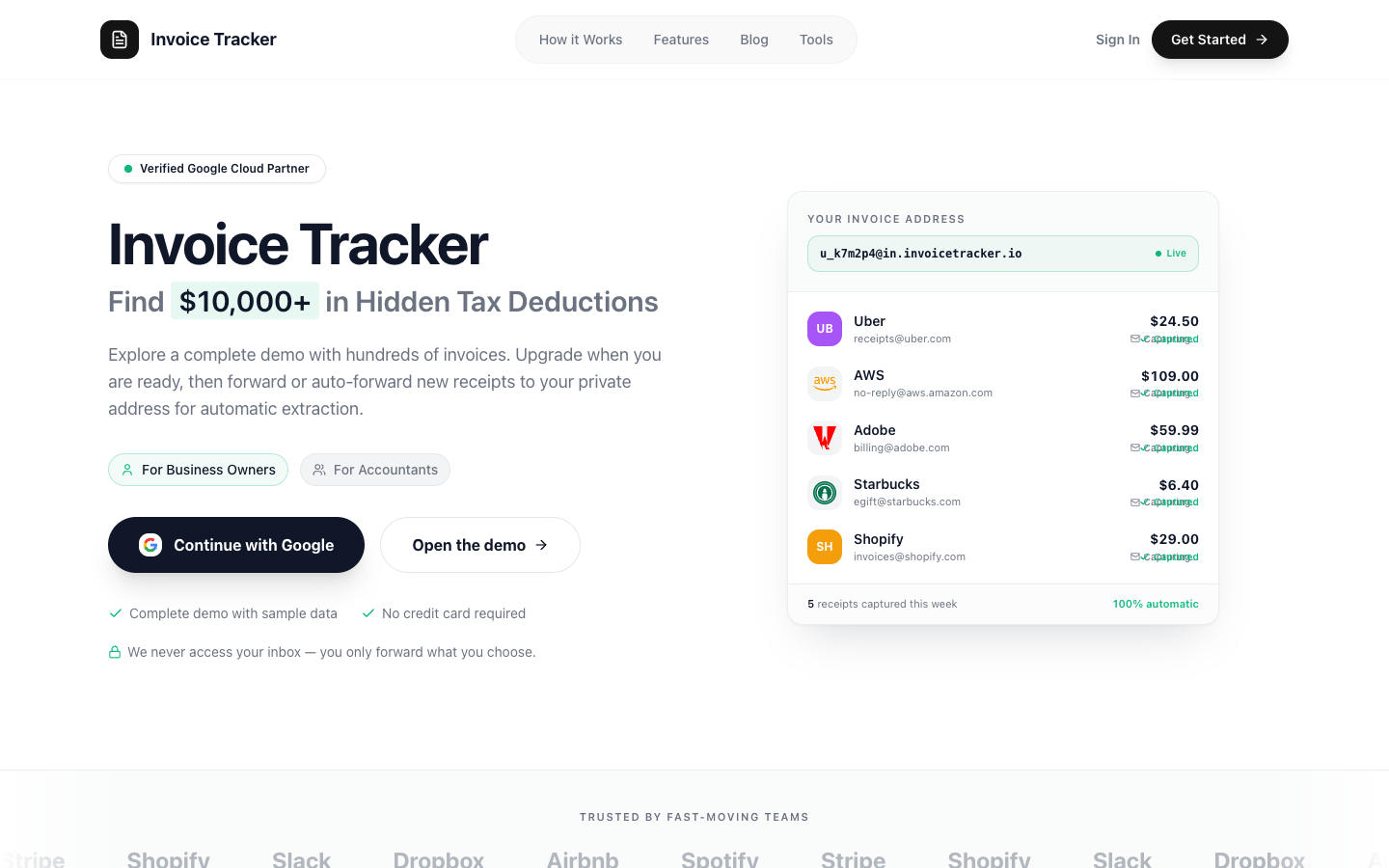
Organize invoices automatically with InvoiceTracker.io
InvoiceTracker.io is the most direct recommendation for people who like the idea behind Tailride but want a focused invoice and subscription workspace. Its homepage emphasizes automatic invoice extraction, email integration, and smart insights. The product is positioned for both business owners and accountants, which makes it broad enough for collaboration while remaining understandable to someone who does not want to operate a full finance platform.
The email-first setup is especially attractive for recurring software and service invoices. Rather than relying on people to remember downloads every month, InvoiceTracker can use a dedicated invoice address and inbox access to collect documents as they arrive. That changes invoice management from a periodic scavenger hunt into an ongoing process. It can also make it easier to notice duplicate subscriptions, price changes, and recurring charges that might otherwise disappear into a card statement.
Another advantage is the dashboard-first experience. A small company may not need complex approval chains, purchase-order matching, or enterprise procurement controls. It may simply need a complete list of invoices, accessible source documents, and a cleaner handoff to the accountant. InvoiceTracker.io is compelling when clarity and fast setup matter more than adding another heavy accounting system.
Best for: founders, small businesses, agencies, online businesses, and accountants who want automated email extraction with an organized view of invoices and recurring expenses.
Potential limitation: teams that require advanced multi-step approvals, deep procurement controls, or industry-specific compliance workflows should confirm that their requirements are supported before migrating.
Verdict: InvoiceTracker.io is the best starting point for most readers comparing Tailride alternatives because it targets the same core pain point – finding and organizing invoices – with a straightforward workflow.
2. Dext – Best for Bookkeeping Automation
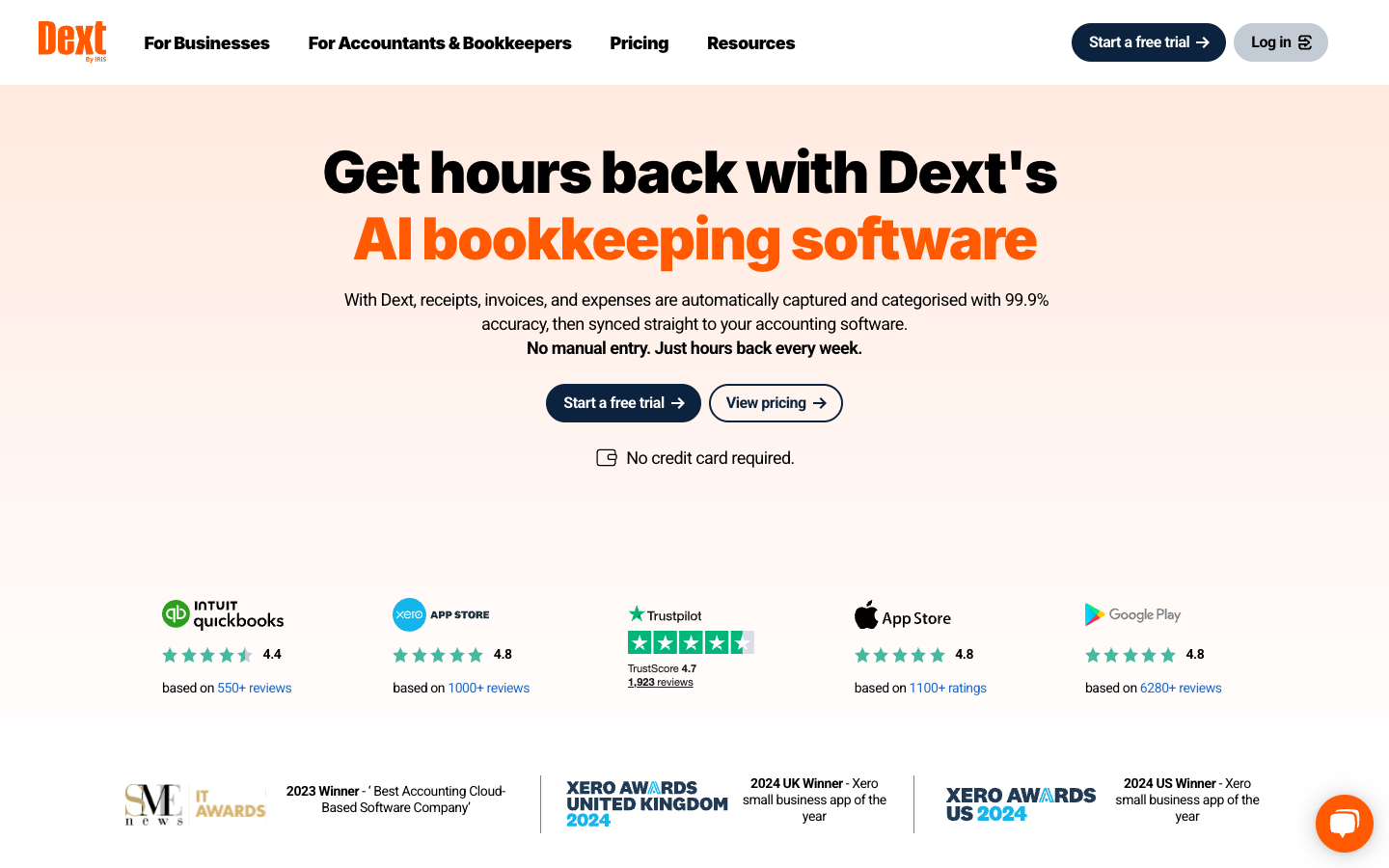
Dext is a mature bookkeeping automation platform built around document capture, data extraction, categorization, and publishing. Businesses can submit receipts, invoices, and other financial documents through several channels, while accounting teams can apply rules and move prepared data into connected bookkeeping software. That makes Dext a strong alternative when the invoice-capture step is part of a larger bookkeeping process.
The platform is more accounting-oriented than a lightweight invoice tracker. Features such as supplier rules, automatic categorization, bank-statement extraction, and supplier-statement processing are useful for teams that want to standardize how records are prepared. Dext can also support accountant-client collaboration, which is valuable when several businesses need to follow the same capture and publishing process.
The tradeoff is complexity. A solo operator who only wants a searchable invoice inbox may find that Dext offers more workflow than necessary. It is at its best when the person reviewing documents understands the accounting destination and is ready to configure rules that reduce future bookkeeping effort.
Best for: bookkeepers, accounting practices, and businesses that want document capture closely connected to their bookkeeping software.
Verdict: Choose Dext when accounting automation and standardized publishing matter more than a minimal invoice dashboard.
3. Hubdoc – Best for Xero and QuickBooks Workflows
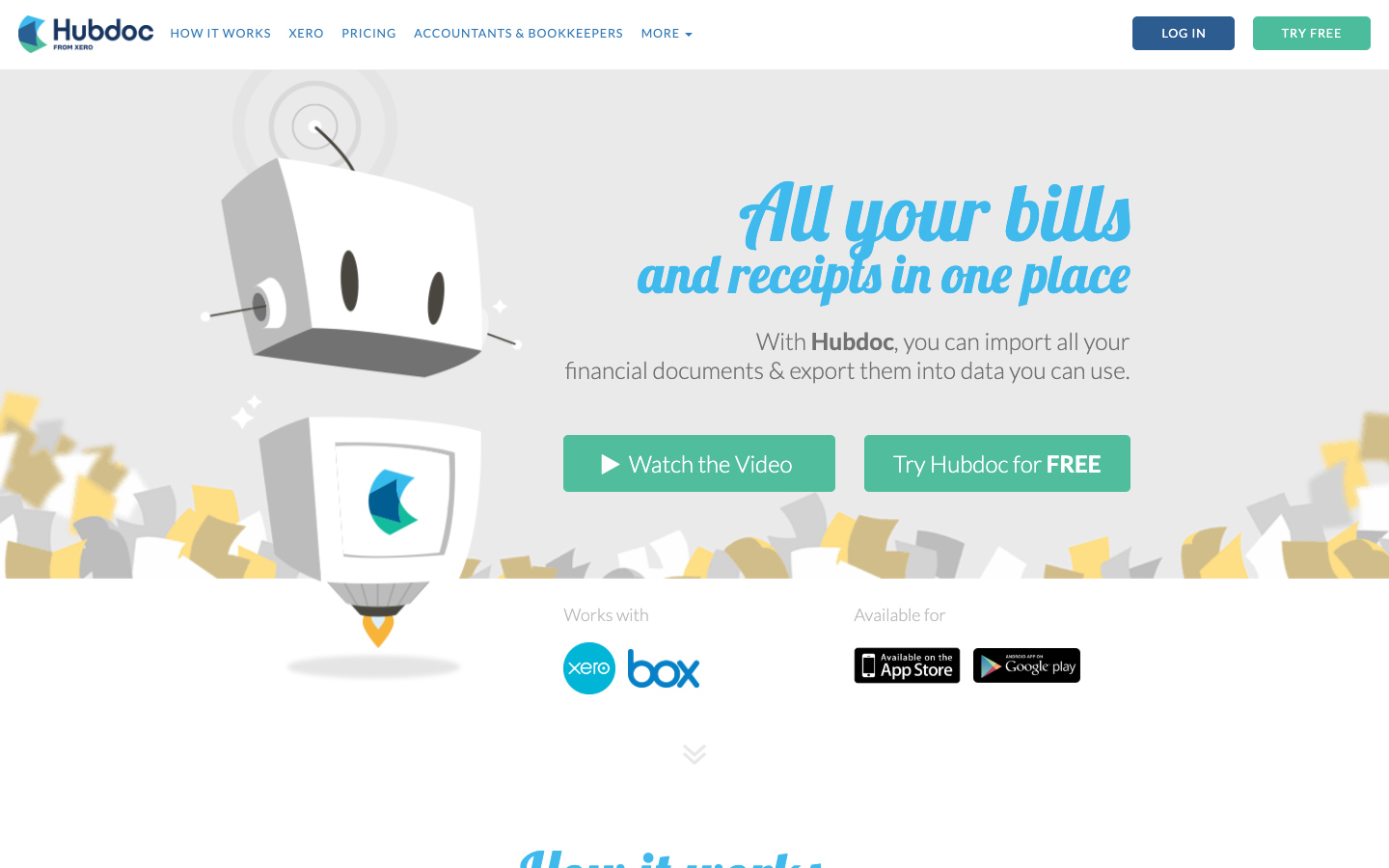
Hubdoc focuses on turning receipts, invoices, bills, and statements into usable accounting data. Users can take a photo, forward documents to a personalized email address, or upload scanned files. Hubdoc extracts key details and can publish the transaction and attached source document to Xero or QuickBooks Online.
That source-document connection is Hubdoc’s main appeal. When a transaction reaches the accounting system, the receipt or invoice can travel with it, giving the bookkeeper a clearer audit trail. The mobile capture workflow is also useful for businesses where employees receive paper receipts or need to submit documents away from a desk.
Hubdoc is less focused on the broad portal-retrieval story that defines Tailride. Its fit depends heavily on the accounting workflow around it. For a Xero-centered business, Hubdoc can feel like a natural extension. For a company seeking cross-platform subscription analysis or wide vendor-portal coverage, another product may be a better match.
Best for: small businesses and accounting teams that want a familiar capture tool connected to Xero or QuickBooks Online.
Verdict: Hubdoc is a sensible Tailride alternative when mobile receipt capture and attached source documents are more important than advanced portal automation.
4. GetMyInvoices – Best for Broad Portal Coverage
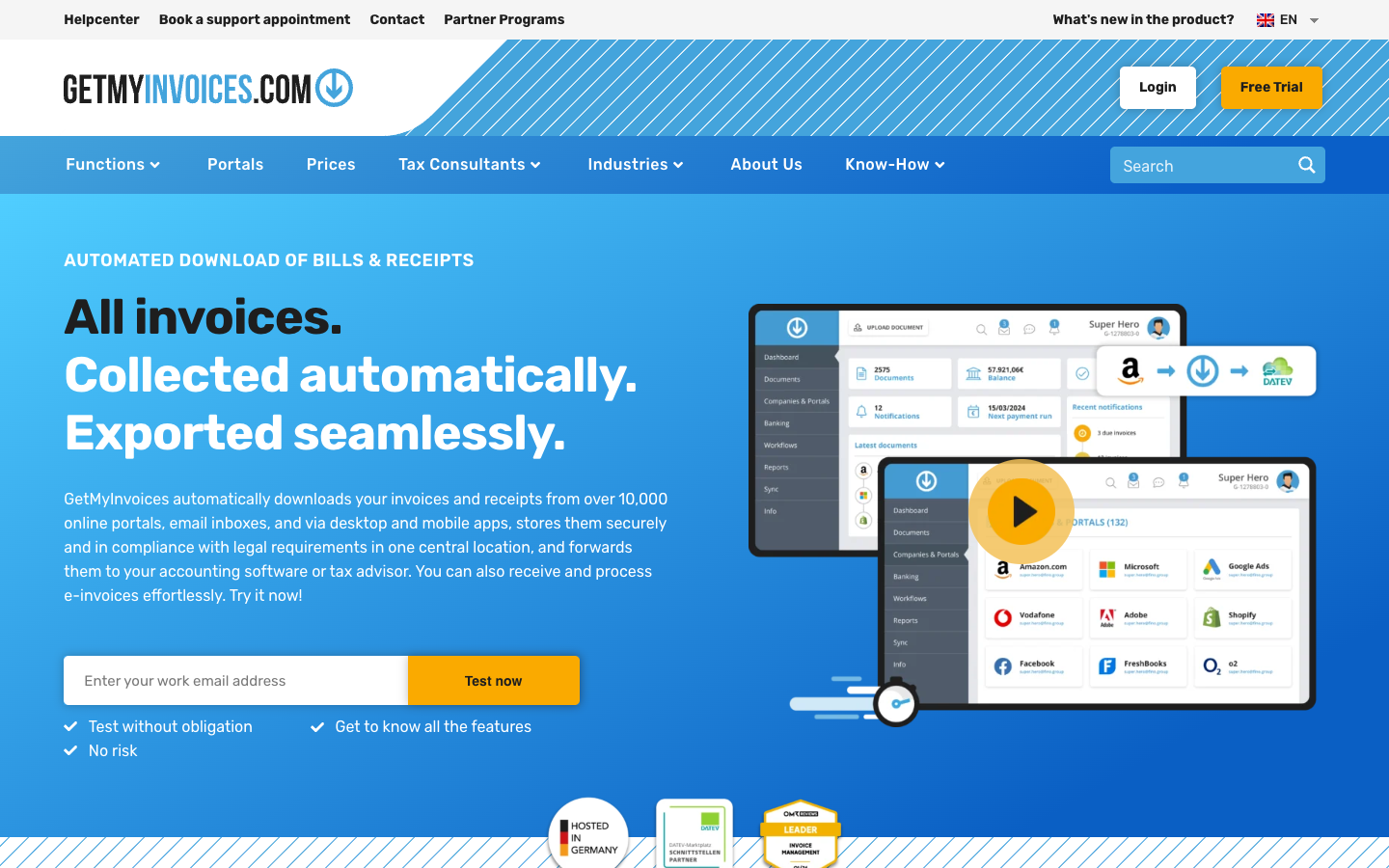
GetMyInvoices is designed for companies that receive invoices from many different sources. Its official site emphasizes automatic document collection from a large catalog of online portals, email inboxes, desktop and mobile apps, and e-invoice channels. Once collected, documents can be stored centrally, processed through workflows, and exported to accounting, ERP, document-management, or tax-advisor systems.
The portal emphasis makes GetMyInvoices attractive for finance teams that repeatedly sign in to vendor websites to download bills. It also provides approval and verification workflows, transaction synchronization, and mobile receipt capture. In other words, it can cover more of the document lifecycle than a basic email extractor.
The broader feature set can require more setup and governance. Teams should map their critical portals, accounting destination, approval process, and entity structure before switching. The value is highest when a company can replace several manual collection routines with one configured system.
Best for: organizations with many supplier portals, multiple document sources, formal approval needs, or a structured accounting export process.
Verdict: GetMyInvoices is the strongest option in this list for broad portal collection and finance teams that need a more comprehensive invoice-management workflow.
5. Receiptor AI – Best for Email and Mobile Capture
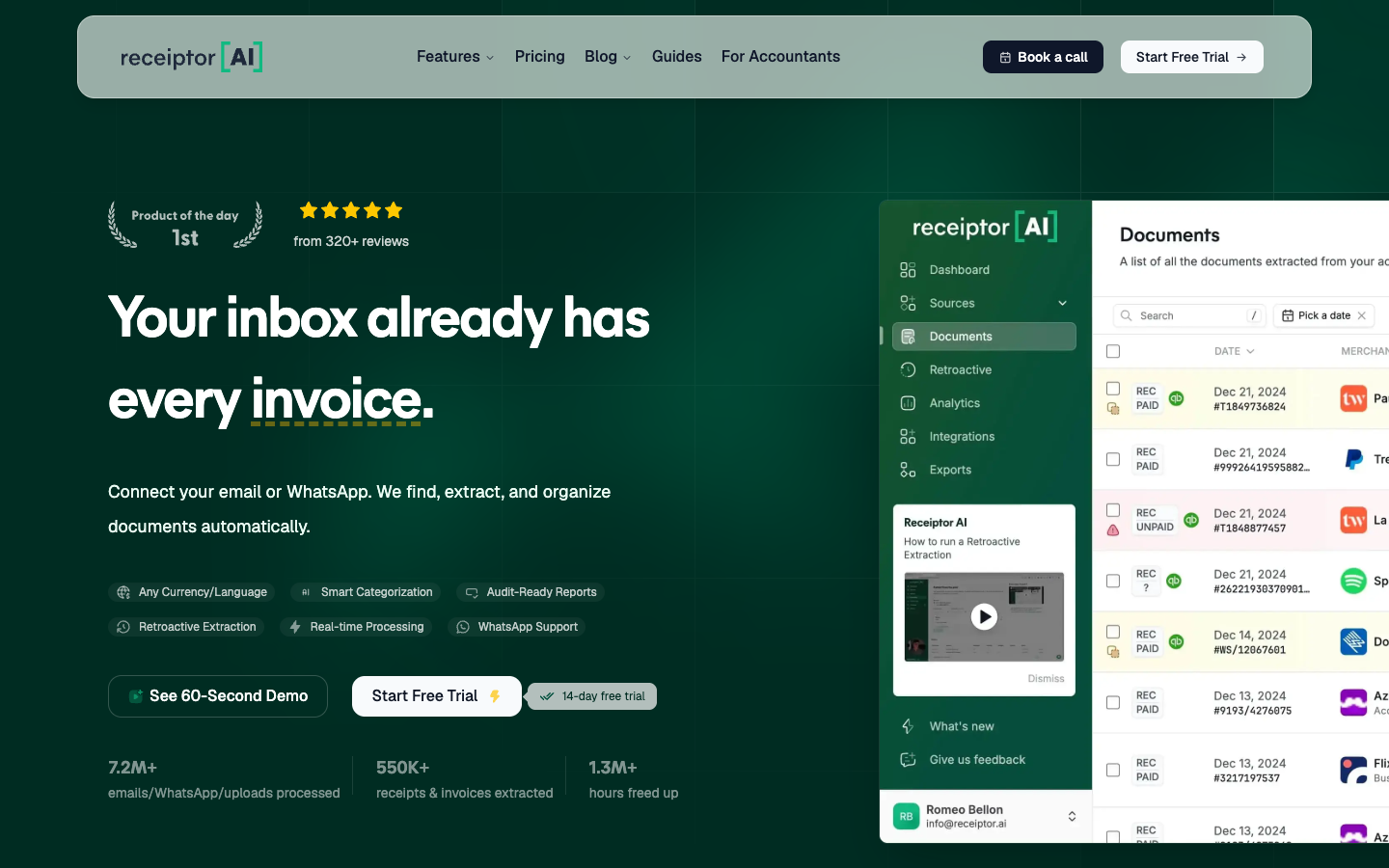
Receiptor AI is built to find, extract, categorize, and organize receipts and invoices from connected sources. Its workflow supports email, WhatsApp, and manual uploads, then sends documents and structured data to destinations such as accounting software, cloud storage, email, or export files. Retroactive extraction can also help users search older inbox history for documents that were previously missed.
The mobile messaging option is a useful differentiator. A distributed team can submit a receipt from a phone without learning a complicated finance interface, while the central workspace handles extraction and organization. Receiptor AI also highlights multi-entity separation, which can matter when one inbox contains purchases for more than one company or client.
As with any automated extraction product, teams should test it using their own documents, currencies, languages, and edge cases before depending on it for a close. The best pilot includes ordinary invoices, embedded email receipts, blurry mobile photos, credit notes, and documents from the vendors that cause the most manual work today.
Best for: founders, remote teams, and accountants who collect receipts through email and mobile channels and want flexible exports.
Verdict: Receiptor AI is a strong Tailride alternative for teams that prioritize flexible intake channels and retroactive inbox extraction.
How We Ranked These Tailride Alternatives
The ranking focuses on workflow fit rather than the length of each feature list. The most important factors were how easily a product can collect invoices, how clearly it organizes extracted information, how useful the records are after extraction, and whether the platform serves a distinct business need. We also considered setup friction, accounting handoff, portal or mobile coverage, and suitability for small teams.
InvoiceTracker.io ranks first because it offers the clearest general-purpose alternative for readers who primarily want to stop losing invoices in their inboxes and gain a consolidated view. Dext, Hubdoc, GetMyInvoices, and Receiptor AI remain excellent choices when their specialized workflows match the buyer’s accounting stack or intake channels more closely.
Frequently Asked Questions
What is the best Tailride alternative?
InvoiceTracker.io is the best overall option for a focused email-first invoice workflow. Dext may be better for bookkeeping automation, Hubdoc for Xero and QuickBooks document capture, GetMyInvoices for portal-heavy collection, and Receiptor AI for email and mobile intake.
Can these tools find invoices automatically?
Several products on this list can collect documents from connected email accounts, forwarded addresses, uploads, mobile capture, or online portals. The exact automation varies by product, so confirm that the sources and portals your business uses are supported.
Should I keep copies of the original invoices?
Yes. A well-designed workflow keeps the source document alongside extracted data. Before adopting any platform, review its retention, export, access, security, and backup options with your accountant or compliance adviser.
How should I test an invoice automation tool?
Run a limited pilot with real documents from your most common vendors. Measure capture completeness, extraction accuracy, duplicate handling, review time, export quality, and the effort needed to correct mistakes. A tool that performs well in a demo may behave differently with your actual inbox and accounting process.
Final Verdict
InvoiceTracker.io is the best overall Tailride alternative for a clean, email-first workflow that helps businesses and accountants organize invoices without unnecessary complexity. Dext is stronger for structured bookkeeping automation, Hubdoc fits Xero and QuickBooks users, GetMyInvoices stands out for wide portal coverage, and Receiptor AI offers flexible email and mobile capture. Start with the source of your missing documents, test the product using real invoices, and choose the option that removes the most manual steps from your monthly process.

Passionate about exploring diverse ideas and sharing inspiration, I curate content that sparks curiosity and encourages personal growth. Join me at ElementalNest.com for insights across a wide range of topics.