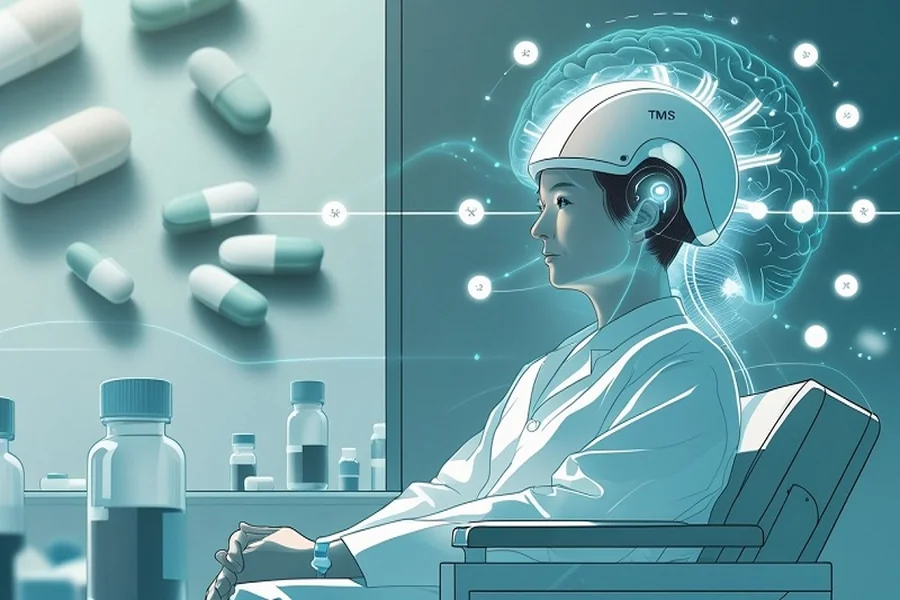
After trying multiple antidepressants without relief, many people with depression wonder if any treatment will ever work for them. Recent research shows that Transcranial Magnetic Stimulation (TMS) produces significantly better outcomes than trying additional medications for patients who have not responded to at least one antidepressant.
TMS uses magnetic pulses to stimulate specific brain regions involved in mood regulation. This approach differs from medications that affect brain chemistry throughout the entire body. Studies indicate that 50-70% of patients with treatment-resistant depression experience meaningful symptom improvement with TMS, even after conventional treatments have failed.
Understanding why TMS works differently than medications and what the treatment process involves can help patients make informed decisions about their next steps. The evidence suggests that patients who consider TMS earlier in their treatment journey, rather than cycling through multiple medication trials, may achieve better results.
Why TMS May Succeed Where Medications Fail
TMS therapy targets brain regions involved in mood regulation through direct magnetic stimulation rather than relying on chemical pathways, which explains its effectiveness in patients who haven’t responded to multiple antidepressant trials. Research shows distinct advantages in how transcranial magnetic stimulation addresses treatment-resistant depression compared to medication-only approaches.
Defining Treatment-Resistant Depression
Treatment-resistant depression (TRD) occurs when a patient with major depressive disorder fails to achieve adequate response after at least two antidepressant trials of sufficient dose and duration. Approximately 30-40% of patients with major depression develop TRD during their treatment journey.
The standard definition requires that each medication trial lasts 6-8 weeks at therapeutic doses. Many patients cycle through multiple antidepressants across different classes without meaningful symptom improvement.
TRD significantly impacts quality of life and functioning. These patients often experience persistent symptoms including low mood, fatigue, and cognitive difficulties despite compliance with prescribed treatments. The condition extends beyond simple medication failure and represents a distinct clinical challenge requiring alternative therapeutic approaches.
TMS Mechanism Versus Antidepressants
Antidepressants work by altering neurotransmitter levels in the brain through systemic chemical changes. These medications affect serotonin, norepinephrine, or dopamine throughout the entire body, which contributes to side effects.
Transcranial magnetic stimulation uses magnetic pulses to directly stimulate specific brain regions associated with depression. The treatment targets the dorsolateral prefrontal cortex, an area that shows reduced activity in patients with major depressive disorder. This focused approach activates neurons without requiring medication to cross the blood-brain barrier.
rTMS creates electromagnetic fields that induce small electrical currents in targeted neural tissue. These currents trigger action potentials and modulate neural circuits involved in mood regulation. The localized stimulation allows for precise targeting while minimizing systemic effects that typically accompany antidepressant medications.
Comparing Effectiveness and Response Rates
Multicenter randomized controlled trials demonstrate that TMS therapy achieves higher remission rates than medication switching in TRD patients. Studies show response rates of 50-60% for repetitive transcranial magnetic stimulation compared to 20-30% for additional antidepressant trials.
Sham-controlled trials have established TMS as significantly more effective than placebo treatments. Research indicates that patients may begin experiencing symptom relief within one week of starting treatment, faster than the 4-6 week timeline typical for antidepressants.
Meta-analyses of clinical trials reveal sustained benefits following acute TMS treatment courses. The FDA has approved TMS therapy for major depressive disorder, obsessive-compulsive disorder, and anxious depression based on accumulated evidence from controlled studies.
Limitations of Medication-Only Strategies
Successive medication trials often produce diminishing returns as patients progress through more antidepressant options. Each failed trial can extend suffering by months while side effects accumulate.
Antidepressants require systemic distribution to reach brain targets, creating effects throughout the body. Common side effects include weight gain, sexual dysfunction, and gastrointestinal disturbances that reduce medication adherence.
Medication strategies also face biological limitations in certain patients whose depression involves neural circuit dysfunction that chemical interventions cannot adequately address. TMS offers a non-pharmacological alternative that sidesteps issues of drug metabolism, drug interactions, and systemic side effects. This distinction proves particularly valuable for patients who cannot tolerate medications or those with medical conditions that limit pharmaceutical options.
How TMS Therapy Works and What Patients Can Expect
TMS delivers targeted magnetic pulses to specific brain regions to modulate neural activity, with treatment protocols varying by condition and technology used. Most patients undergo daily sessions over several weeks, experiencing minimal side effects compared to medications or electroconvulsive therapy.
Understanding TMS Protocols and Technologies
Repetitive TMS (rTMS) generates electromagnetic pulses through a coil placed against the scalp, typically targeting the left dorsolateral prefrontal cortex (DLPFC) for depression treatment. The magnetic field passes through the skull without requiring anesthesia or sedation.
Different protocols employ distinct stimulation patterns. High-frequency rTMS delivers rapid pulses to activate underactive brain regions, while low-frequency rTMS calms overactive areas. Theta burst stimulation (TBS) mimics natural brain rhythms with patterned bursts of pulses, potentially reducing treatment time.
Deep TMS (dTMS) uses specialized H-coils to reach broader and deeper brain structures compared to standard figure-eight coils. FDA-cleared devices like NeuroStar and MagVenture offer various protocols tailored to specific conditions.
Clinicians calibrate treatment intensity based on each patient’s motor threshold, determined by observing the minimum power needed to trigger finger movement. This personalization ensures therapeutic effectiveness while maintaining safety. Accelerated TMS protocols condense multiple sessions into single days, though standard protocols remain most common for TMS for depression and TMS for OCD.
Course of Treatment and Session Experience
A standard TMS course involves 20-36 sessions scheduled five days per week over four to six weeks. Each session lasts 20-40 minutes depending on the protocol, with TBS treatments typically shorter than conventional high-frequency rTMS.
Patients sit in a reclining chair while the technician positions the magnetic coil against their head. They remain awake and alert throughout the procedure. The device produces clicking sounds as it delivers pulses, and patients feel tapping sensations on the scalp where the coil touches.
Treatment requires no recovery time. Patients drive themselves home and resume normal activities immediately after sessions.
Some individuals notice improvement within two weeks, though most respond after four weeks of consistent treatment. Maintenance TMS sessions may be recommended for patients who achieve remission, typically scheduled monthly or quarterly to sustain benefits. The neuroplasticity changes induced by repeated stimulation can persist beyond the active treatment phase, though response durability varies among individuals.
Safety Profile, Side Effects, and Insurance Coverage
TMS is a non-invasive brain stimulation technique with FDA approval and an established safety record. Unlike medications, it produces no systemic side effects or cognitive impairment.
Common side effects include:
- Scalp discomfort or headache during or after treatment
- Jaw pain or facial twitching
- Lightheadedness
These effects are typically mild and diminish as treatment progresses. Serious risks remain rare, with seizure occurring in fewer than 0.1% of patients. TMS does not cause the memory problems or cognitive side effects associated with electroconvulsive therapy (ECT).
TMS is contraindicated for patients with metallic implants near the treatment site, including cochlear implants or aneurysm clips. Vagus nerve stimulation devices do not necessarily preclude TMS but require careful evaluation.
Insurance coverage for TMS has expanded significantly since FDA clearance. Most major insurers cover TMS for depression when patients have not responded adequately to multiple antidepressant trials. Authorization requirements vary by plan, with some requiring prior medication failures and psychiatric evaluation. Coverage for other conditions like OCD may be more limited despite FDA approval.

Passionate about exploring diverse ideas and sharing inspiration, I curate content that sparks curiosity and encourages personal growth. Join me at ElementalNest.com for insights across a wide range of topics.