You recently started losing weight after picking up a custom infrared sauna from SaunaCloud, and you naturally want to know if it’s a coincidence. Local wellness studios love to push aggressive numbers, claiming you can melt a massive amount of stubborn fat just by sitting in a hot wooden box. Separating the physiological reality from deceptive sales tactics requires looking at the actual truth of the experience. When it comes to how the heat impacts your body, the real benefits of daily sweating have nothing to do with magic calorie burning.
Key takeaways
- An infrared sauna session burns roughly 150-300 total calories, refuting the inflated 600-800 calorie marketing claims heavily pushed by regional studios.
- The deep heat mimics a moderate walk by elevating your heart rate to 100-150 BPM, creating a genuine cardiovascular workload without muscle breakdown.
- Immediate post-sauna scale drops of 1-3 lbs are exclusively temporary fluid loss, but the habit’s effect on nervous system regulation leads to real fat loss over months.

The truth: how many calories are burned in an infrared sauna
The average person burns between 150-300 total calories during a standard 30- to 40-minute infrared sauna session. Understand immediately that this is your baseline caloric expectation for a standard sit, which stops misplaced expectations around rapid weight loss right at the source.
If you have ever stepped into a local studio, you have seen the health-halo marketing printed on the walls. The expectation is deliberately set that the custom cabin operates basically as a dry oven that melts lipid tissue away. That simply is not how human biology works.
To understand why there is such a massive difference between what studios claim and what your body actually does, we have to look at the strict biological math.
Debunking the 600-calorie sauna marketing myth
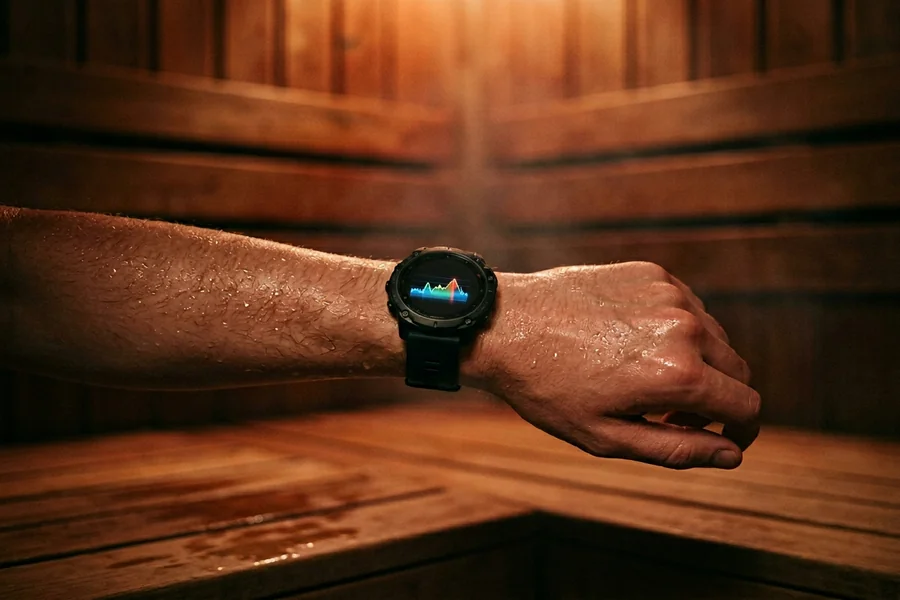
You absolutely do not burn 600 calories in a 40-minute infrared sauna session; empirical data consistently shows a maximum burn of around 200 total calories. Verify your own session intensity by tracking active versus resting energy on a smartwatch, knowing you should expect a highly modest baseline for a solid sweat.
The reality of wearable data
The wellness industry relies heavily on an outdated, highly questionable claim that you can sweat out up to 800 calories while sitting completely still. The marketing fiction surrounding this idea falls apart immediately when compared against the 600-calorie claim tested by actual humans monitoring their personal biometrics.
A recent public discussion on r/infraredsauna highlighted exactly how far apart the aggressive marketing is from the truth. A user going by Overall_Bowl_9372 tracked a rigorous 40-minute session and recorded roughly 180 active calories and roughly 200 total calories.
Using an Apple Watch provides a clear empirical baseline that isolates the baseline energy your body uses just to stay alive from the extra energy required to manage the heat. The fitness tracker mathematically dividing “active” versus “resting” output explains exactly why the wearable tells a very different story than the sales brochure down the street.
Why your personal baseline changes the math
Fitness trackers are not flawless, but they expose exactly why a flat high-calorie promise is mathematically impossible for everyone. Total caloric expenditure relies entirely on your personal body mass, baseline metabolic rate, and the specific temperature setting of your chosen cabin.
A 130-pound person sitting quietly in mild heat naturally uses far less physical energy than a 220-pound person enduring 150-degree aggressive heat. Because your frame is actively working to regulate its core temperature, you absolutely burn more calories than you would watching television on the couch.
You just land squarely back in that realistic 150-300 range. Understanding this reality prevents you from pushing your heat tolerance to dangerous limits just to hit a fake metric. If you are only burning about 200 calories while sitting completely still, what is your body actually doing to use that energy?
Passive cardio: exactly how heat elevates heart rate
Sitting in an infrared sauna acts as cardiovascular exercise by raising your heart rate into the 100-150 BPM zone as your body works aggressively to cool itself down. Track your own pulse to verify it reaches this active zone, confirming that a genuine cardiovascular stimulus occurs despite you remaining entirely stationary.
Passive cardio is the elevation of heart rate and increased circulation caused by the heart pumping faster to cool your body down, occurring without active skeletal muscle movement. The biological mechanism behind the heat-induced calorie burn is entirely rooted in thermal regulation.

When you step into a premium cabin like an Atlas One, your internal systems go into overdrive attempting to shed the heat. Blood vessels drastically dilate, and blood rushes to the surface of your skin so it can be cooled down by your heavy sweat production. This physiological effort directly fueled by sustainable heart rate elevation defines true passive cardio.
The biological toll of this aggressive thermal stress delivers a clear cardiovascular stimulus comparable to taking a brisk neighbourhood walk. Your heart works undeniably harder, but your joints bear zero impact. While your blood vessels are putting in significant systemic work, no musculoskeletal breakdown or resistance training happens here.
This makes sustained heat exposure an incredible supplemental wellness tool for individuals recovering from joint injuries or those completely unable to perform traditional high-impact workouts. Because your blood is pumping to keep your core cool, you produce a massive amount of sweat—which leads to the most common, fundamental misconception about sauna weight loss.
Separating temporary water weight from true fat loss
The weight lost immediately after an infrared sauna session is entirely temporary fluid loss, not long-term fat reduction. Entirely ignore any scale weight drops immediately following a session, since all 1-3 pounds shed are exclusively fluids that must be replaced.
Water weight is the temporary mass of fluids stored in your bodily tissues that fluctuates rapidly based on immediate hydration and heavy sweat levels. Falling for the scale trap by constantly celebrating sudden water weight loss guarantees severe psychological frustration.

After a heavy 30-minute sit, you will inevitably step out 1-3 lbs lighter on the bathroom scale. This sudden drop is pure dehydration, not bodily transformation. The specific moment you rehydrate—which is biologically non-negotiable—every single ounce of that weight returns.
“This sudden drop is pure dehydration, not bodily transformation.”
For actual physical changes to occur, you have to entirely abandon the post-sweat scale reading mentality. Genuine changes in lasting body composition and clear reductions in persistent visceral fat require serious consistency.
Expect it to take a mandatory 4-8 weeks of consistent heat therapy combined with a focused diet to see real physical differences. If the per-session calorie burn is objectively modest and the immediate scale drops are just water, why do people actually lose real weight when they start heavily using a sauna?
The holistic cascade: why sauna users actually lose weight
Long-term weight loss from daily sauna use is an indirect biological result of deep stress reduction, improved sleep architecture, and the complete elimination of evening stress-eating. Link your improved sleep quality directly to your time in the heat to understand your body’s organic, indirect fat loss.
The nervous system and late-night cravings
Your suspicion that your recent weight loss is tied to your sauna routine is totally accurate, just disconnected from the actual calorie math. SaunaCloud founder Christopher Kiggins famously dropped 20 pounds after making daily heat therapy a non-negotiable ritual, driven heavily by how the extreme heat regulates biological hormones.
Taking thirty minutes in the high heat triggers an intense parasympathetic shift that serves as powerful, passive stress management, dictating long-term cortisol reduction in the human bloodstream. Exiting the chronic fight-or-flight state causes the specific stress hormones that force your body to retain fat and crave heavy carbs to plummet.
This means the hot wood box is not actively burning the fat off your frame during the session. Instead, it resets your hormones so that late-night binge eating naturally stops. Less cortisol immediately translates to significantly deeper, uninterrupted rest.
Why the heat acts as a keystone habit
You cannot view a dedicated block of evening silence and therapeutic heat strictly as a lazy treadmill substitute. It functions as a firm daily boundary intentionally placed between daily work anxieties and eventual evening relaxation.
Establishing a comfortable keystone habit predictably kicks off a deeply profound behavioral cascade in your daily routine. When you intentionally prioritize rest and genuinely feel great from the heat, you naturally want to fiercely protect that feeling by moving better and eating cleaner the next morning.
Instead of relying strictly on exhausting willpower to skip alcohol or heavy junk food, your biology naturally begins demanding better fuel. The sauna simply makes other healthy choices mentally easier to execute. Ultimately, the numbers flashing on your smartwatch only relay a tiny fraction of the broader wellness story.
The final verdict on infrared heat and daily calorie burn
Infrared saunas are an inefficient direct fat-burning tool but a highly effective biological reset that strictly regulates the nervous system. Commit to a 30-minute daily session exclusively for its mental and systemic benefits rather than attempting to aggressively hit a specific per-session caloric goal.
Expecting your personal home sauna to immediately melt away excess pounds while you essentially do nothing is an industry myth that desperately needs to die. The literal calorie burn is factually real, but extremely modest.
Regardless of the hype, sitting quietly in the heat remains an unmatched supplement to an already healthy lifestyle and a vital pillar for overall weight management. Spend exactly 30 minutes a day locked in the cabin. Whether you combine the ambient heat with dedicated Red Light Therapy for added skin benefits or just use it as targeted quiet time, reframe your goals completely.
As pointed out by Kiggins, who authored The Definitive Guide to Infrared Saunas and has been highlighted around business and wellness circles in Forbes, Inc., and MSN, the weight loss follows the lifestyle shift. People sharing their physical health journeys across platforms from X (formerly Twitter) to LinkedIn consistently agree: the real magic happens from establishing a routine that calms your mind down. When you sleep longer and stress intensely less, your system finally feels safe enough to naturally let the excess weight go.
Frequently Asked Questions
How much of a calorie burn can I actually expect from a 40-minute sauna session?
Expect to burn roughly 150 to 300 total calories during a standard sit. You can decisively ignore the 600-to-800 calorie claims pushed by wellness studio marketing, as human biology simply doesn’t operate like a high-heat fat furnace. The exact expenditure depends entirely on your personal body mass, baseline metabolic rate, and cabin temperature.
Why does my Apple Watch show a much lower calorie burn than the sauna studio promised?
Wellness brochures rely on outdated fiction claiming you can sweat out massive calories while completely motionless. A fitness tracker exposes this math by cleanly isolating the baseline resting energy required to keep you alive from the active energy needed to cool your body down. Empirical data from actual users consistently proves that active burn tops out around 200 calories.
What is passive cardio in an infrared sauna?
Passive cardio happens when the extreme heat forces your body to rapidly pump blood to the skin to cool itself down, elevating your heart rate into the 100-150 BPM zone. The biological workload mirrors a brisk neighborhood walk, delivering a genuine cardiovascular stimulus without any muscular effort. Because there is zero musculoskeletal breakdown, it is an ideal tool for people recovering from joint injuries.
Why did I drop two pounds immediately after sitting in an infrared sauna?
That sudden loss on the bathroom scale is exclusively temporary fluid loss, not miraculous fat reduction. Your body produced a massive amount of sweat strictly to regulate its core temperature, resulting in instant but fleeting dehydration. The specific moment you drink water—which is biologically non-negotiable—every single ounce of that scale weight will return.
How does an infrared sauna cause real weight loss if the direct calorie burn is so low?
The authentic fat loss comes from an indirect biological cascade triggered by deep nervous system regulation. Thirty minutes of intense heat forces a parasympathetic shift that plummets your cortisol levels, turning off the stress hormones that prompt late-night binge eating. Over 4 to 8 weeks, this combination of minimized stress and improved sleep architecture naturally changes your body composition.
Can I rely strictly on an infrared sauna to lose weight instead of working out?
No, treating a hot wooden cabin like a lazy treadmill substitute sets you up for profound frustration. While the heat is an unmatched keystone habit that resets hormones and makes healthy choices easier, the isolated calorie burn is far too modest to replace exercise. Real transformation still requires combining consistent heat therapy with decent nutrition and movement.

Passionate about exploring diverse ideas and sharing inspiration, I curate content that sparks curiosity and encourages personal growth. Join me at ElementalNest.com for insights across a wide range of topics.