
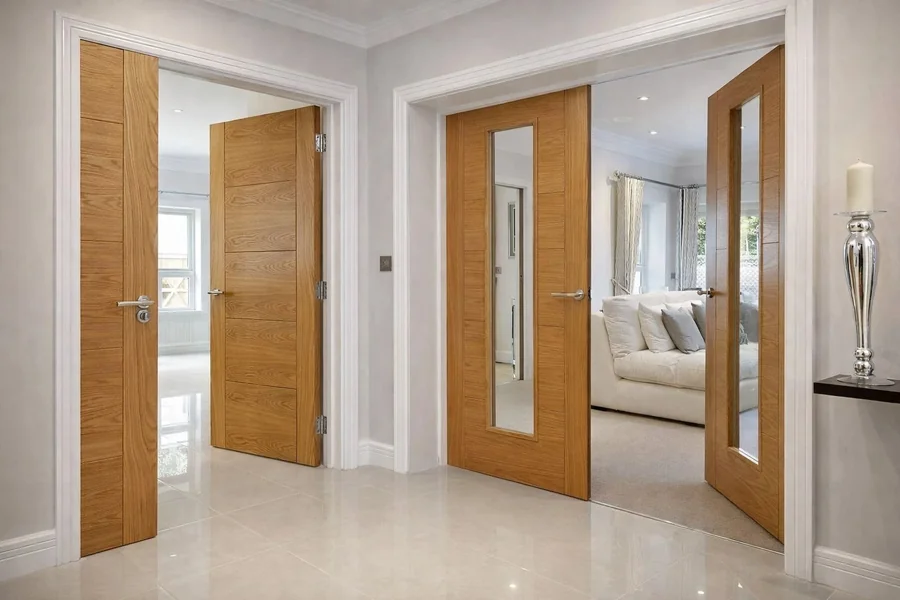
Choosing the right interior door sizes is more than a technical detail — it shapes comfort, functionality, and even the visual rhythm of your home. Whether you are renovating, building from scratch, or simply replacing old doors, understanding standard, non-standard, and custom interior door sizes helps you avoid costly mistakes and achieve a seamless design.
In today’s market, you can easily explore a wide range of solutions at https://indigodoors.com/, where modern design meets precision manufacturing. From classic dimensions to fully tailored options, the right choice begins with knowledge.
A well-chosen door size quietly influences how light flows between rooms, how furniture moves, and how comfortable daily life feels. When planning, it’s worth imagining not just how the door will look, but how it will function in everyday scenarios — carrying items, hosting guests, or simply moving freely without obstruction.
What are standard interior door sizes?
Standard interior door sizes are dimensions commonly used in residential construction. These sizes are designed to fit typical wall openings and simplify installation.
In practice, standard sizes act as a universal language between builders, manufacturers, and homeowners. They eliminate guesswork and ensure that components such as frames, hinges, and trims align perfectly. If you are working within a tight timeline, standard doors often become the most practical solution.
Common standard door widths and heights
Most homes follow predictable sizing patterns that make replacement and installation straightforward.
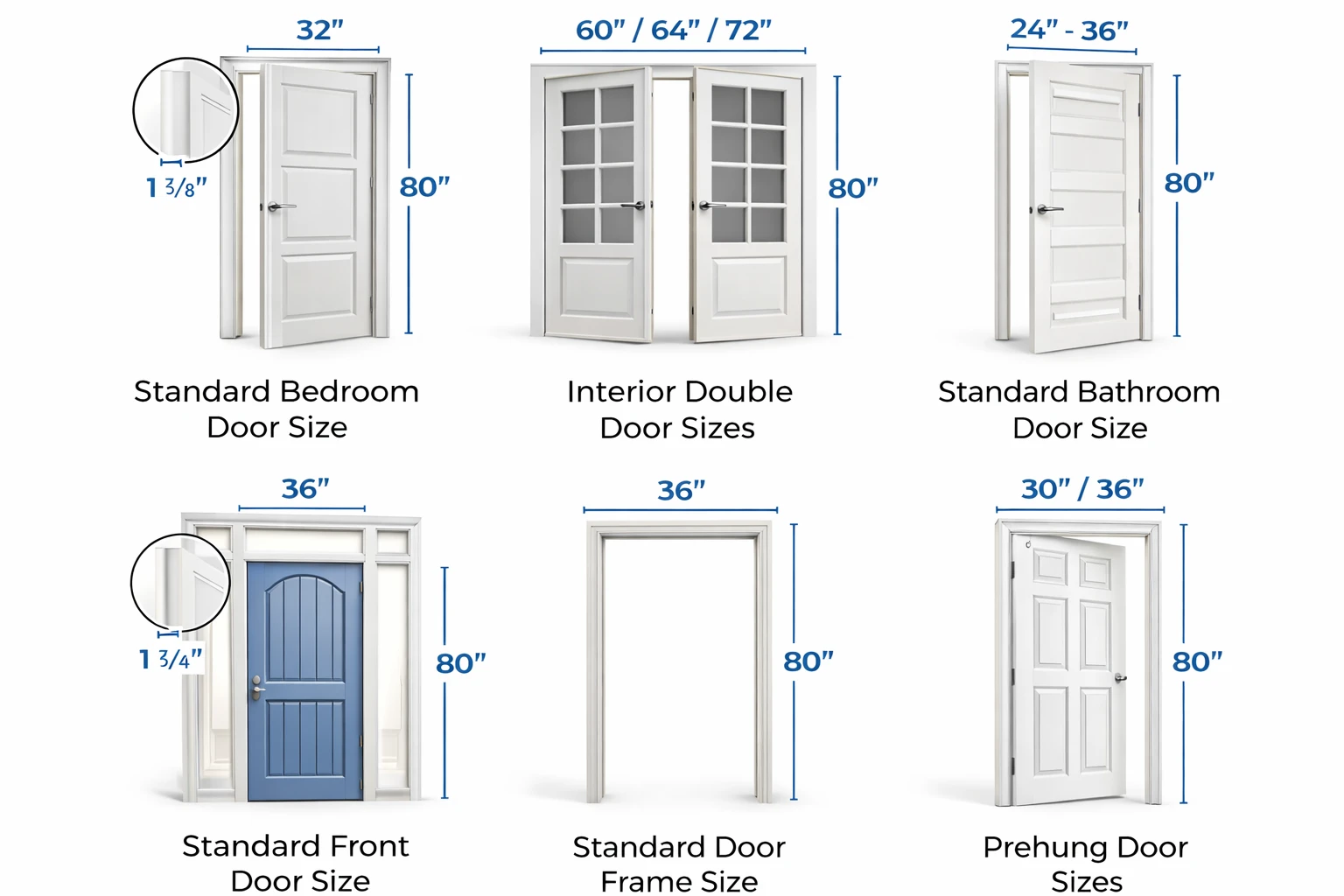
- 24 inches width for closets or utility spaces
- 28 inches width for compact rooms
- 30 inches width for standard bedrooms
- 32 inches width for comfortable access
- 36 inches width for accessibility and modern layouts
Standard height is usually:
- 80 inches also known as 6 feet 8 inches
- 84 inches in newer or upscale homes
- 96 inches for high ceilings and premium interiors
Thickness also matters:
- 1 3/8 inches for most interior doors
- 1 3/4 inches for heavier or solid-core doors
These dimensions are widely available, affordable, and compatible with pre-hung door systems.
Standard interior door sizes are the backbone of efficient construction, allowing faster installation and easier replacements without structural changes
When selecting a width, it is helpful to consider not just the current use of a room but its future purpose. A slightly wider door today may save effort later if the space is repurposed. For example, choosing 32 inches instead of 30 can improve comfort without significantly increasing cost.
Why standard sizes dominate the market
There is a reason why builders and designers rely heavily on standard door sizes.
- Lower cost due to mass production
- Faster installation process
- Easy replacement in the future
- Availability of hardware and frames
- Compatibility with most openings
At the same time, standard doors may limit creativity when unique design or space constraints come into play.
In many projects, using standard sizes allows you to allocate more budget toward finishes, hardware, or flooring. Instead of investing in complex structural changes, you can focus on visual upgrades that have a stronger impact on the final result.
When non standard interior door sizes are used
Not every home fits into a perfect grid. Older buildings, custom layouts, and design-driven spaces often require non-standard interior door sizes.
Spaces with irregular geometry often tell a story — of renovation, adaptation, or architectural individuality. In such cases, forcing a standard door into the opening can lead to awkward proportions or unnecessary reconstruction.
Situations requiring non standard dimensions
There are many real-life scenarios where standard sizes simply do not work.
- Renovation of older homes with irregular openings
- Attic or basement rooms with reduced ceiling height
- Narrow hallways or unusual wall structures
- Design concepts that require taller or wider doors
- Space-saving solutions like sliding or pocket doors
Non-standard doors usually fall outside typical width or height ranges but still follow certain patterns.
For example:
- Widths like 26, 34, or 38 inches
- Heights like 78 or 82 inches
When dealing with such openings, it is often better to adapt the door rather than the wall. This approach minimizes construction work and preserves the integrity of the space, especially in older homes.
Challenges of non standard doors
Working with non-standard interior door sizes introduces additional considerations.
- Limited availability in stock
- Higher cost compared to standard doors
- Longer delivery times
- Need for precise measurements
- Possible adjustments to frames and trim
Non standard interior door sizes open the door to creativity, but they demand accuracy and planning at every step
To avoid delays, it is wise to finalize all measurements before ordering finishes or flooring. Even small changes in floor height can affect how a door fits, especially when working outside standard dimensions.
Custom interior door sizes for perfect fit
When neither standard nor non-standard solutions meet your needs, custom interior door sizes become the ultimate choice.
Custom doors allow you to think beyond limitations and design with intention. They are often used in high-end interiors where proportions, symmetry, and alignment are carefully considered.
What makes custom doors different
Custom doors are manufactured specifically for your space, based on exact measurements and design preferences.
They allow complete freedom:
- Any width or height
- Unique thickness options
- Special materials and finishes
- Integration with modern systems like hidden frames
This level of personalization transforms doors into architectural elements rather than simple functional objects.
In modern interiors, custom doors are often designed to blend seamlessly with walls, creating a minimalist look. This approach works especially well in spaces where visual continuity is important.
Benefits of choosing custom interior door sizes
Custom doors offer unmatched advantages for both aesthetics and functionality.
- Perfect fit without structural compromise
- Enhanced visual harmony with interior design
- Ability to match unique architectural features
- Improved insulation and sound control
- Long-term value and durability
A custom interior door is not just a size solution — it is a statement of style, precision, and individuality
If you are investing in custom solutions, consider coordinating doors with baseboards, wall panels, and ceiling lines. This creates a cohesive environment where every element feels intentional and balanced.
How to measure interior door sizes correctly
Accurate measurement is critical regardless of the type of door you choose.
Even a high-quality door can fail to perform if measurements are incorrect. Precision at this stage ensures smooth installation and long-term usability.
Step by step measuring process
Follow these steps to ensure precision:
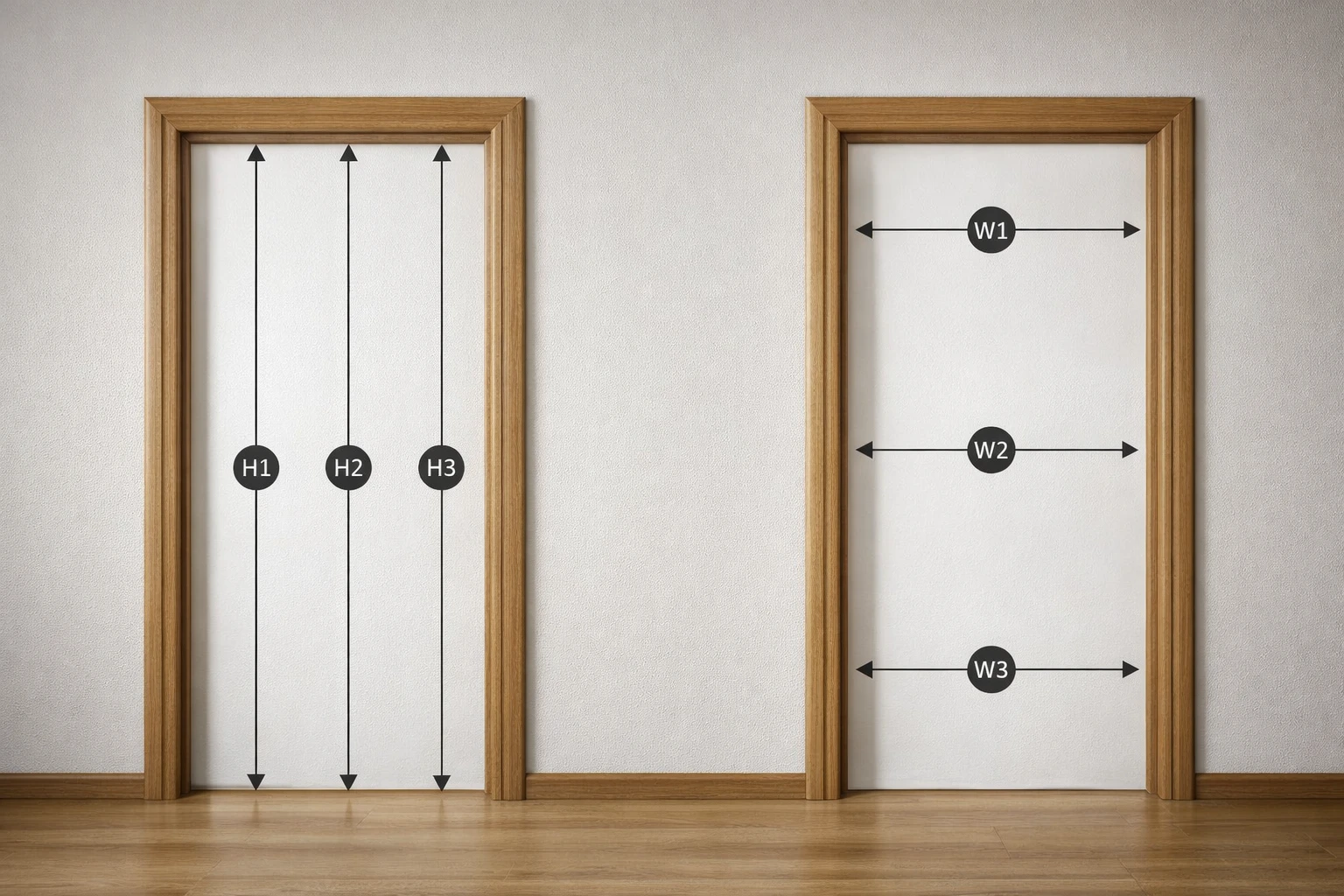
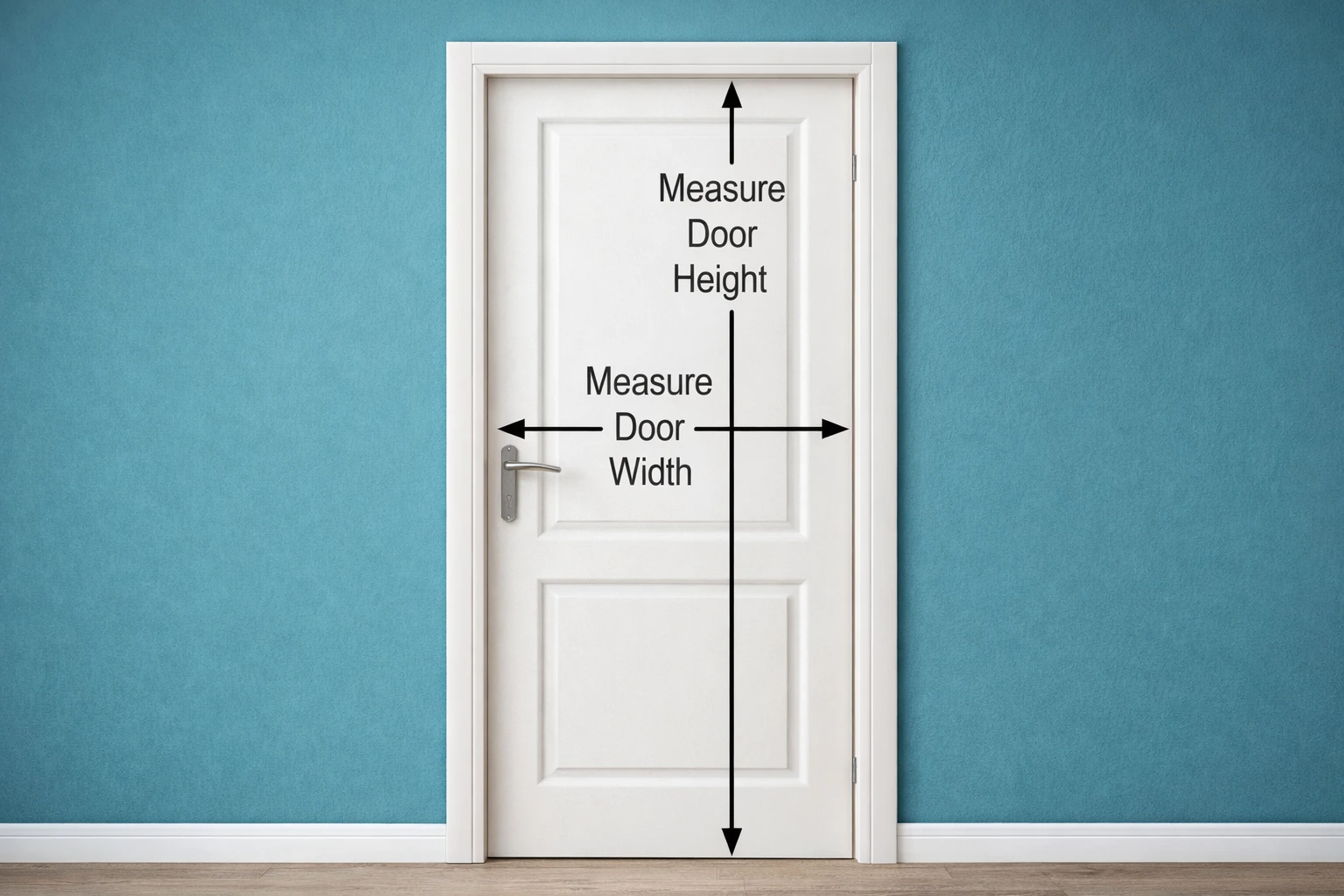
- Measure the width of the opening at three points
- Measure the height from floor to top of opening
- Check wall thickness for frame compatibility
- Account for floor finishes like tiles or wood
- Measure rough opening if installing a pre-hung door
It is always recommended to use a reliable measuring tape and double-check each value. Writing down measurements immediately helps avoid confusion later.
Common measurement mistakes to avoid
Even small errors can lead to installation issues.
- Measuring only one side of the opening
- Ignoring uneven floors or walls
- Forgetting clearance for door swing
- Not considering trim and casing
- Rounding measurements inaccurately
When in doubt, leaving a small tolerance can prevent friction or misalignment. However, too much clearance may affect insulation and aesthetics, so balance is key.
Choosing between standard non standard and custom doors
Selecting the right option depends on your priorities, budget, and design goals.
Each type of door serves a different purpose, and understanding your space is essential before making a decision.
Key factors to consider
- Budget limitations
- Project timeline
- Architectural constraints
- Desired aesthetics
- Long-term usability
Think about how long you plan to stay in the space. If it is a long-term home, investing in better-fitting or custom doors may provide greater comfort and satisfaction over time.
Quick comparison guide
- Standard doors are best for affordability and speed
- Non-standard doors offer flexibility for unusual spaces
- Custom doors provide complete design freedom
Balancing practicality and aesthetics often leads to the best outcome. In some projects, combining different types of doors can optimize both cost and design.
Interior door sizes trends in modern homes
Modern architecture is redefining how we think about interior door sizes.
Design trends increasingly focus on openness, light, and seamless transitions between spaces.
Popular trends today
- Taller doors reaching up to the ceiling
- Minimalist hidden doors without visible frames
- Wider openings for open-concept living
- Sliding and pivot doors for space efficiency
- Seamless integration with wall finishes
These trends reflect a shift toward spaciousness, light, and clean lines.
In contemporary interiors, doors are often designed to disappear visually, becoming part of the wall. This approach enhances the sense of space and creates a calm, uncluttered environment.

Passionate about exploring diverse ideas and sharing inspiration, I curate content that sparks curiosity and encourages personal growth. Join me at ElementalNest.com for insights across a wide range of topics.