
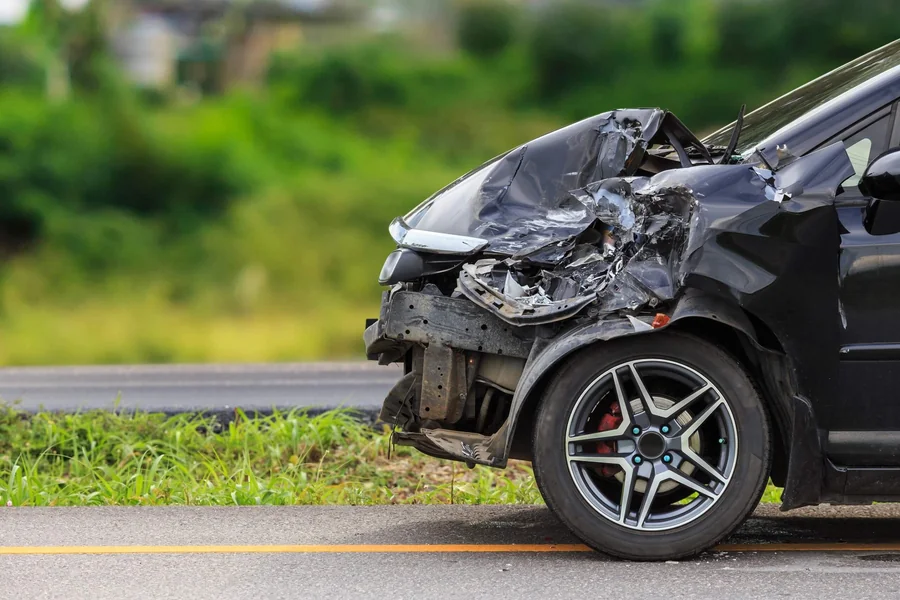
In 2026, car accidents caused by mechanical issues are shifting to those caused by software failures. As vehicles rely more on computer code for steering and braking, a single bug or cyber-attack can lead to serious crashes. When a computer causes a fatal error, it’s hard to determine liability—whether it’s the driver, the manufacturer, or the software provider.
To establish fault in these “digital-first” accidents, investigators examine the vehicle’s electronic systems and data records. Unlike physical parts that show clear damage, software glitches can be unpredictable. This makes it crucial to prove that a software issue caused the crash, rather than driver error or outside factors.
The Transition from Mechanical to Software-Driven Faults
For decades, vehicle safety focused on the strength of steel and reliable hydraulics. Today, cars function like “servers on wheels,” using millions of lines of code to control throttle, lane assistance, and collision avoidance. This means a “defect” can now be a software error that confuses shadows for stationary objects.
When these systems fail, it often happens suddenly. A software glitch can cause unintended acceleration or a complete loss of power steering at high speeds. Since these systems aim to be “fail-safe,” any abnormal behavior is treated as a serious issue, shifting the investigation from drivers to the engineers who wrote the code.
Determining Manufacturer Liability for Software Defects
Under Illinois product liability law, manufacturers can be held strictly liable for products that are “unreasonably dangerous” due to design or manufacturing flaws. For 2026 vehicles, this includes the software that controls autonomous features. If a manufacturer releases software with known bugs or overlooks likely road conditions, they may be responsible for any injuries.
Proving a software defect involves examining the vehicle’s version history and the manufacturer’s testing logs. If it’s clear that the automaker prioritized a quick market release over thorough testing, this can lead to serious corporate liability. The manufacturer’s duty includes maintaining the software that ensures the vehicle operates safely.
Cyber-Security and the Liability of “Hacked” Vehicles
As cars become more connected to the internet and “Vehicle-to-Everything” (V2X) infrastructure, they become vulnerable to cyber-security breaches. A “hacked” car—where an outside party gains control over the steering or braking systems—presents a nightmare scenario for liability. While the hacker is the criminal actor, the manufacturer may still be held civilly liable if their cyber-security protocols were substandard or if they failed to patch a known vulnerability that allowed the breach to occur.
Navigating the aftermath of a digital breach requires the expertise of a car accident attorney Elgin IL. A legal professional can help determine if the manufacturer followed the 2026 federal cyber-security standards for automotive safety. If a vehicle’s “digital doors” were left unlocked due to a lack of encryption or poor network architecture, the manufacturer may be responsible for the “foreseeable” risk of a remote hijacking.
The Role of Over-the-Air (OTA) Updates in Liability
In 2026, most vehicle repairs and recalls are done through Over-the-Air (OTA) updates. While convenient, these updates pose risks. A corrupted or buggy update can affect thousands of vehicles at once, creating safety issues. If a malfunction occurs from an update, the responsible company faces liability.
However, drivers may also be liable if they ignore “critical safety update” notifications. For instance, if a manufacturer issues a fix for a steering problem and the driver delays installation, the insurance company might claim that the driver’s inaction contributed to an accident. This makes the vehicle’s “update log” crucial in accident investigations.
Third-Party Software and Infotainment Risks
Not all software in modern cars is made by the automaker. Many vehicles use third-party systems for navigation, entertainment, and driver-assistance features. If a crash occurs due to a third-party app affecting the car’s main communication system, the app developer or service provider may be held responsible.
This “interoperability” risk is a key issue in 2026 lawsuits. Automakers often blame third-party apps for system failures. However, they must ensure that essential safety systems are protected, or “sandboxed,” from non-essential apps to prevent interference. Proving this protection failed can be technically challenging and requires detailed software analysis.
Driver Responsibility in the Age of Automation
Even with advanced software, the “human in the loop” retains a legal duty to remain attentive. Automated systems do not absolve the driver of the obligation to intervene during a failure.
- Mandatory Engagement: Under Illinois and federal guidelines, Level 2 and Level 3 automation requires drivers to be ready to take manual control at any second.
- Failure to Supervise: If data proves the driver was distracted (e.g., watching a movie), they will share significant fault for failing to prevent a software-related crash.
- Comparative Negligence: Liability is often split—the manufacturer may be blamed for the glitch, while the driver is penalized for their lack of supervision.
- The Reaction Time Defense: If a system fails so abruptly that no human could reasonably react, the liability remains with the manufacturer for creating an “unavoidable” hazard.
- Data-Driven Accountability: Investigators use “cabin camera” and steering wheel torque data to determine if the driver was fulfilling their legal duty to monitor the vehicle.
Proving Software Malfunction through Forensic Data
The black box (EDR) in a 2026 vehicle records more data than ever, tracking speed, braking, and commands from the software to the car’s parts. To win a software-related claim, your legal team must get this data quickly, as the manufacturer might erase or overwrite it. This data can reveal if the car braked unexpectedly or received commands that didn’t come from the driver.
Lawyers also look for telemetry data stored on the manufacturer’s servers. Many modern cars send real-time health data back to the manufacturer. If the sensors reported issues before the crash, it shows the manufacturer was aware of the problem. This digital information is crucial for holding tech-driven automakers accountable.

Passionate about exploring diverse ideas and sharing inspiration, I curate content that sparks curiosity and encourages personal growth. Join me at ElementalNest.com for insights across a wide range of topics.