

Launching a large-scale customer experience (CX) survey is a pretty big move. You only get a few chances a year to reach your peak customer base, and small mistakes can ruin response rates and the quality of data you can get.
Plus, you don’t just need to create the survey. You also have to make sure your audience, your survey channels, and even your email infrastructure are all working seamlessly.
To make sure your next CX survey roll-out is a success, here’s a pre-launch checklist to guide you through it.
1. Be clear on your objectives and success metrics
Define why you’re running this survey and what “success” looks like. What are you really aiming to get with this survey?
- Identify primary goals. Examples can be: churn prediction, NPS tracking, feature feedback, or post‑support satisfaction
- Pinpoint your core metrics. Examples include response rate, completion rate, or NPS/CSAT/CSAT.
- Decide how insights will be used: who will own follow‑ups, what counts as a “red flag” score, and how often you’ll review results.
2. Design a frictionless survey experience
The fastest way to kill a large-scale CX survey is to make it long, confusing, or irrelevant. Even with your email warm up tool and great open rates, an incomplete survey doesn’t count. If your customers don’t finish the survey, you’re not going to get accurate data.
Effective CX surveys must follow these principles:
- Brevity: Only ask questions that directly map to your objectives. Remove all other fluff.
- Logic: Start with easy rating questions (NPS/CSAT/CES), then add a few targeted follow‑ups, and end with optional demographics or firmographics.
- Personalization: Use customer name, product usage, or lifecycle stage in introductions and branching logic.
- Mobile-first design: Most recipients will open on a phone, so ensure the layout, buttons, and scales look good on mobile.
3. Segment your audience and timing
Not every customer should receive the same survey at the same time. They may be in different customer journey stages. Or maybe they’re using different products or subscriptions. Thoughtful segmentation improves both experience and data quality.
Consider segmenting by:
- Lifecycle stage: new customers vs. long‑time customers.
- Product or plan: different experiences often require different question sets.
- Geography: align send times and language with local norms and time zones.
- Engagement level: separate highly active users from dormant accounts.
To get the most out of your segmentation, pair your strategy with timing:
- Avoid obvious blackout periods (major holidays, weekends if your audience is B2B).
- Don’t send it to everyone right away. Stagger sends over several days so you can monitor deliverability and performance. That way, you can make small adjustments if needed.
Pro tip: Segmentation is also a strategy you can apply during the email warmup process.
4. Prepare your email infrastructure and deliverability
When you send surveys at scale, email deliverability becomes non-negotiable. If most of your messages go to spam, your data might be skewed toward a small slice of your customers only.
Before launching a large campaign, make sure you:
- Set up SPF, DKIM, and DMARC records correctly for the domain you’ll send from, and cross-reference your domain against SURBL blacklist info to ensure your survey links aren’t being blocked by enterprise-level security filters..
- Remove bounced emails, obvious spam traps, and invalid addresses.
- Practice consistent branding by aligning sender name, domain, and email design with what recipients already know and trust.
- Set your campaigns up for success by warming up your sending domains and IP.
A big missing piece in many CX programs is a structured email warm up phase for the sending domain or IP you’ll use for surveys. From very minimal email activity, they send to thousands overnight.
A proper warm up email strategy involves gradually increasing sending volume so mailbox providers see consistent, genuine, and healthy engagement. The more you establish a positive sender reputation, the higher the likelihood of your CX surveys landing in the inboxes.
5. Use email warm up tools strategically
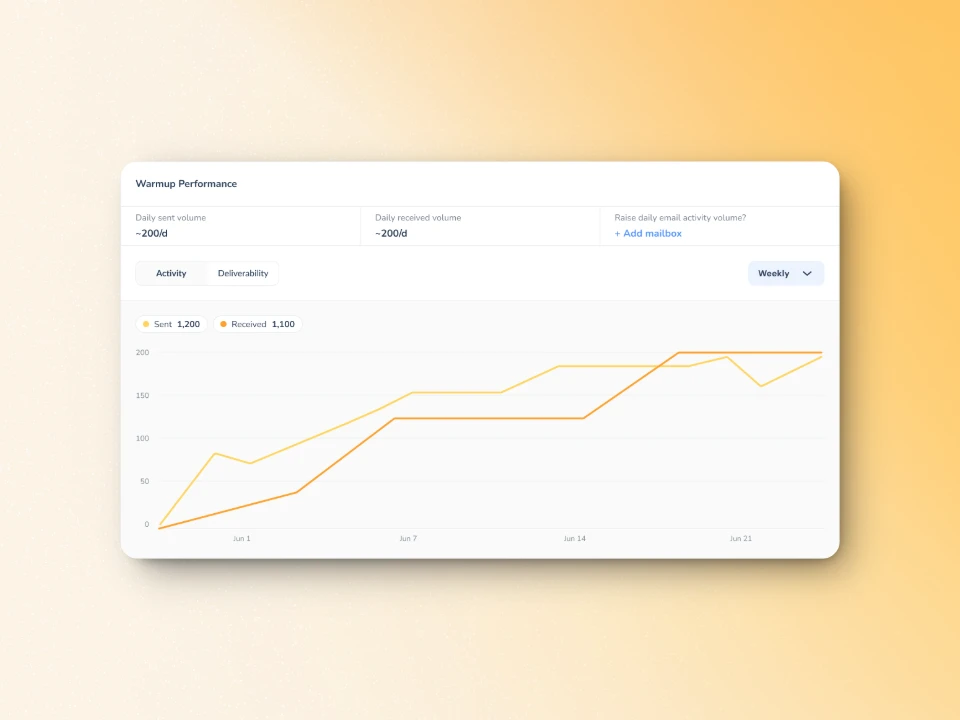
For brands operating at scale, modern email warm up tools go far beyond a few test sends to colleagues. They simulate realistic sending patterns, open and reply to emails, and move messages out of spam folders to train mailbox providers that your emails are wanted.
Before launching your large-scale CX survey, you can use an email warm up service to:
- Warm up a brand‑new or previously inactive sending domain or IP.
- Recover or bounce back from previous deliverability issues, like high spam complaints or low engagement.
- Maintain consistent volume and engagement between big campaigns
Email warm up tools like Warmy.io can automate this entire process. It runs in the background while you’re busy building survey logic, configuring triggers, and aligning stakeholders. When it’s time to launch, your emails are far more likely to land in primary inboxes instead of spam or promotions tabs.
6. Craft compelling, on-brand invitations
Even with perfect deliverability, your survey still competes with a crowded inbox. Your invitation must convey value quickly.
Checklist for your invitations:
- Subject lines must communicate purpose and benefit (“Help us improve your experience in 2 minutes”).
- Give an honest time estimate and stick to it.
- Explain how their feedback will be used and highlight any incentives if you offer them.
- Use a single, clear button with a prominent CTA that drives directly to the survey, not a generic landing page.
7. Test across devices, segments, and edge cases
Before you press send to your full list, test different email clients and devices (desktop, mobile, webmail). You should also check all survey links and succeeding emails or communications.
8. Final go/no‑go checklist
Right before launch, confirm that:
- Objectives and metrics are clearly documented.
- Survey content is tested, concise, and optimized for mobile.
- Audience segments and send times are set up.
- Authentication, list hygiene, and sender reputation are in good shape.
- You’ve run a proper email warm up cycle for your sending domain.
- Invitation copy, reminders, and follow‑ups are approved.
When all of these boxes are checked, you can launch your large-scale CX survey with far more confidence that your messages will reach inboxes, your customers will respond, and the insights you collect will be robust enough to drive meaningful change.

Passionate about exploring diverse ideas and sharing inspiration, I curate content that sparks curiosity and encourages personal growth. Join me at ElementalNest.com for insights across a wide range of topics.