

When your child has autism, picky eating, and a list of food sensitivities that change by the week, nutritional gaps become unavoidable. But choosing the right supplement to fill those gaps means navigating a space where the industry is largely self-regulated, ingredient quality varies wildly, and one child’s miracle formula can trigger another’s meltdown.
Parents need more than a vitamin label. They need third-party verification, allergen-free formulations, and nutrients in forms the body can actually use—especially when 75% of children with autism already take dietary supplements, and a third of parents never disclose all of them to their doctor.
This guide reviews the autism supplements that earned their place through independent testing, clinical use, and formulations built around the metabolic and sensory realities of children on the spectrum.
What Makes an Autism Supplement “Safe” (and Why It’s Not a Given)
The FDA doesn’t pre-approve supplements for safety or efficacy. Third-party testing from organizations like NSF International or USP closes that gap by verifying what’s actually in the bottle matches the label and confirming the absence of pesticides, microbial contamination, and toxic metals. For children on the spectrum, who often have compromised gut function and heightened chemical sensitivities, this verification isn’t optional.
Bioavailability—how well the body absorbs and uses a nutrient—determines whether a supplement actually works. Children with MTHFR gene variations (common in autism) struggle to convert synthetic folic acid to usable methylfolate. Magnesium oxide is cheap but poorly absorbed. For children whose systems are already working harder to process nutrients, starting with the active form removes a metabolic hurdle.
Top Autism Supplements Ranked by Safety and Formulation Quality
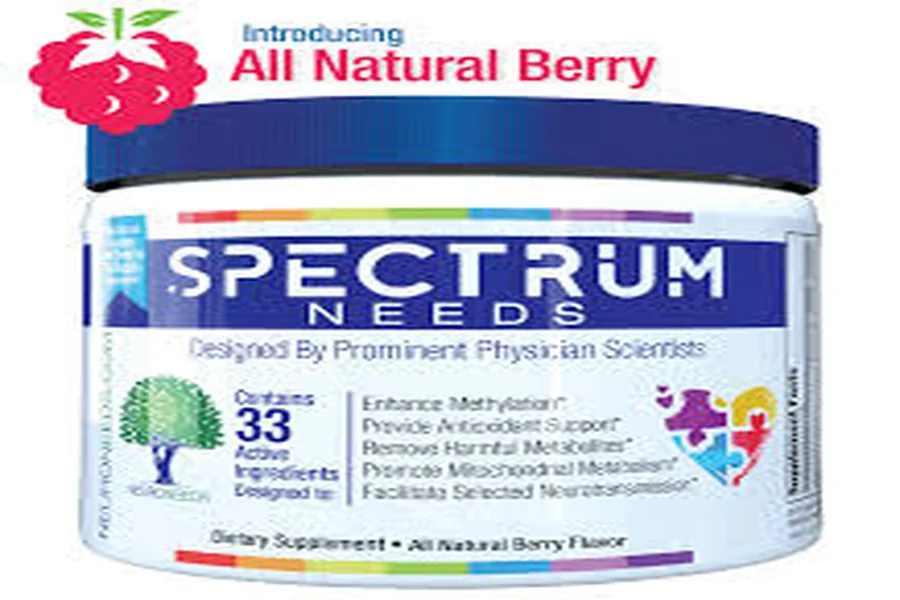
1. Simple Spectrum — Best for Allergen-Free Comprehensive Support
Simple Spectrum was designed by parents navigating autism and ADHD alongside a functional medicine practitioner, and that dual perspective shows in the formulation. The unflavored dissolvable powder contains 32 vitamins, minerals, and nutrients in bioavailable forms: methylfolate (5-MTHF) instead of folic acid, magnesium glycinate rather than oxide, P5P instead of standard B6, and chelated minerals that absorb more readily than cheaper forms.
What sets it apart is the attention to sensory and metabolic barriers. It’s unflavored because many children on the spectrum reject even subtle tastes. It’s free from all top nine allergens—gluten, dairy, soy, eggs, tree nuts, peanuts, fish, shellfish, and wheat—plus artificial dyes, flavors, and preservatives that can trigger behavioral responses in sensitive children. Every batch is third-party tested and manufactured in FDA-registered U.S. facilities.
The formula includes brain-support compounds not typically found in children’s multivitamins: choline for neurotransmitter synthesis, CoQ10 for mitochondrial function, inositol for mood regulation, and MSM for inflammation support. The powder format dissolves into any liquid or soft food, solving the compliance problem many families face with pills or gummies.
At $49.99 for a 30-day supply (15% off with subscription), it sits in the mid-to-upper range for autism-specific multivitamins. The trade-off: it’s a comprehensive formula rather than a targeted high-dose intervention. Because it’s sold directly from the brand rather than major retailers, there’s no same-day pickup option.
But for parents just starting nutritional support—or juggling multiple food sensitivities alongside autism—Simple Spectrum offers a dependable baseline that addresses the most common deficiencies without the additives that complicate everything else.
2. BrainChild Nutritionals Spectrum Support II — Best Liquid Absorption Technology
BrainChild Nutritionals built a two-decade reputation on ultra-colloidal suspension technology, which breaks nutrients into extremely small particles suspended in liquid. For children with documented digestive challenges—common in autism, where GI issues affect the majority—this liquid format bypasses some of the absorption barriers that leave children deficient despite supplementation.
The Spectrum Support II formula uses P5P (active B6), methylated folate, and minerals bound to amino acids for enhanced cellular uptake. It excludes iron and copper, metals that can be problematic for some individuals on the spectrum; supplementation of those should be guided by bloodwork.
The downsides are logistical: the liquid requires refrigeration after opening, must be used within three months, and the three-times-daily dosing schedule can be cumbersome for busy families. But for families dealing with severe picky eating or documented malabsorption, the bioavailability advantage makes the inconvenience worthwhile.
3. Nordic Naturals Children’s DHA—Best Omega-3 for Picky Palates
Nordic Naturals Children’s DHA liquid delivers 530 mg of omega-3s per teaspoon (including 250 mg DHA), sourced from wild-caught Arctic cod and tested for mercury, PCBs, dioxins, and other contaminants. The strawberry-flavored version is mild enough that most children tolerate it mixed into smoothies, yogurt, or juice.
Omega-3 supplementation in autism is among the most researched interventions, with studies suggesting benefit for hyperactivity, repetitive behaviors, and cognitive function. But omega-3s don’t address broader nutritional deficiencies, so most families pair this with a multivitamin.
4. Spectrum Awakening Focus & Clarity — Best for Targeted Neurotransmitter Support
Spectrum Awakening takes a neurotransmitter-focused approach, combining folinic acid, methylated B12, P5P, magnesium, zinc, and amino acids (5-HTP, GABA, taurine, theanine) that serve as building blocks for serotonin, dopamine, and other brain chemicals. The formula was developed by a physician who has used it in clinical practice for over 15 years, targeting speech, mood, behavior, and sensory regulation rather than general nutrition.
The modular approach lets families select from categories including brain support, gut support, detox, and nutritional support based on their child’s specific needs—helpful for families working with a practitioner on targeted protocols, but potentially overwhelming for those just starting out.
5. Thorne Research Basic Nutrients 2/Day — Best for Families Seeking Medical-Grade Quality
Thorne Research holds itself to pharmaceutical-grade manufacturing standards. The Basic Nutrients 2/Day uses methylated B vitamins, chelated minerals, and active vitamin forms. It’s NSF Certified for Sport and manufactured in NSF GMP-certified facilities. The formula is gluten-free, dairy-free, and soy-free but does contain tree nut-derived ingredients (coconut). At about $30 for a 30-day supply, it’s one of the more affordable options on this list, though it lacks the brain-specific nutrients (choline, inositol, CoQ10) found in autism-targeted formulas.
6. Pure Encapsulations Nutrient 950—Best Hypoallergenic Practitioner Formula
Pure Encapsulations is a practitioner brand known for hypoallergenic formulations. Nutrient 950 provides a comprehensive multivitamin without fillers, coatings, or artificial additives. It uses activated B vitamins, chelated minerals, and enhanced absorption forms. The formula is free from gluten, dairy, soy, and common allergens, though it doesn’t include autism-specific brain-support compounds. Many integrative physicians and functional medicine practitioners carry it in their offices.
7. Klaire Labs Ther-Biotic Children’s Chewable—Best Probiotic for Gut-Brain Support
While not a multivitamin, probiotics deserve mention, given the gut-brain connection emerging in autism research. Klaire Labs Ther-Biotic Children’s Chewable provides 10 billion CFUs from 10 probiotic strains. The chewable format is free from dairy, gluten, soy, and artificial additives. The formula includes strains that have been studied for behavioral and GI outcomes in children with autism, including Lactobacillus rhamnosus and Bifidobacterium lactis.
How to Choose the Right Supplement for Your Child
Start with bloodwork. Ask your pediatrician or integrative medicine practitioner to test for common deficiencies: vitamin D, B12, folate, magnesium, zinc, iron, and ferritin. This gives you a baseline and helps target supplementation rather than guessing.
Consider your child’s sensory profile. A child who gags on textures may tolerate powder or liquid better than pills. Check for allergens and additives—read the “other ingredients” section, not just the nutrient panel. Artificial dyes (especially red 40, yellow 5), artificial flavors, carrageenan, and sodium benzoate can trigger behavioral responses in some children.
Look for third-party testing. NSF, USP, or similar certification confirms that what’s on the label is actually in the bottle. Prioritize bioavailable forms: methylated B vitamins, magnesium glycinate or citrate, P5P for B6, chelated minerals. Start low and go slow—introduce one supplement at a time and track changes in a journal.
What Supplements Can’t Do (and What They’re Not Meant to Replace)
Supplements are gap-fillers, not substitutes for food or therapy. No supplement cures autism. Some support nutrient-dependent brain processes, reduce inflammation or oxidative stress, or improve nutrient status that allows a child to engage more fully in therapies that do create developmental change. But the goal is supporting the child’s system, not fixing the child.
Supplements can interact with medications. Always disclose every supplement to your child’s doctor, especially if they take seizure medications, blood thinners, or psychotropic drugs. More is not better—fat-soluble vitamins accumulate in the body and can become toxic at high doses.
Frequently Asked Questions
Should I give my child an autism-specific supplement or a regular children’s multivitamin?
Autism-specific formulas typically use bioavailable forms (methylated B vitamins, chelated minerals) that matter for children with genetic variations affecting nutrient processing, and they’re formulated without common triggers. They also include brain-support compounds (choline, inositol, CoQ10) not found in standard children’s vitamins. If your child has multiple food sensitivities, GI issues, or confirmed nutrient deficiencies through testing, autism-specific formulas address those realities.
How long does it take to see results from supplementation?
Nutrient repletion takes time. Some parents report changes in energy, sleep, or GI symptoms within 2-4 weeks. Behavioral or developmental changes typically emerge over 8-12 weeks as nutrient levels stabilize. If you see no change after three months, reassess with your practitioner—you may need a different form, higher dose, or testing to identify underlying absorption issues.
Can I open capsules and mix them into food?
Yes, most capsules can be opened and mixed into applesauce, yogurt, smoothies, or other foods. Powder and liquid forms are designed for this. Avoid mixing into hot foods, as heat can degrade certain nutrients (especially probiotics and some B vitamins).
What if my child refuses to take the supplement?
Try different formats—powder, liquid, chewable, or opened capsules mixed into preferred foods. Unflavored versions can be hidden in strongly flavored foods. Some families use reinforcement strategies or break doses into smaller amounts throughout the day. If refusal persists, consider whether the sensory barrier outweighs the benefit and problem-solve with your child’s therapist.
Are gummy vitamins okay for children with autism?
Most gummy vitamins contain added sugars, artificial colors, and lower nutrient levels than capsule or powder forms. They typically use synthetic rather than bioavailable forms. For children with severe pill refusal and no other options, a gummy is better than no supplement, but powder or liquid forms offer better nutrient density and bioavailability without the additives.
Should I avoid certain ingredients?
Avoid artificial dyes (red 40, yellow 5, blue 1), artificial flavors, artificial sweeteners, and sodium benzoate, which some children react to behaviorally. Check for common allergens based on your child’s sensitivities. If your child follows a specific diet (gluten-free, casein-free, SCD), verify the supplement complies.
Finding What Works for Your Family
Choosing a supplement for a child with autism means weighing ingredient quality against sensory tolerance, bioavailability against budget, comprehensive formulas against targeted interventions. There’s no single right answer—only what works for your child’s biology, your family’s routine, and the gaps you’re trying to fill.
The formulas reviewed here earned their place through third-party testing, allergen-conscious design, and forms the body can actually use. Whether you’re starting with a comprehensive multivitamin like Simple Spectrum, addressing absorption issues with BrainChild’s liquid technology, or targeting neurotransmitter pathways with Spectrum Awakening, the goal is the same: supporting your child’s developing system with nutrients that matter, in forms that work, without the additives that complicate everything else.
Work with a practitioner who understands autism and nutrition. Track changes. Trust your instincts when something isn’t working. And remember: the supplement is the tool, not the outcome. The outcome is a child who feels better, learns more easily, and moves through the world with less friction—and that takes more than what fits in a bottle.

Passionate about exploring diverse ideas and sharing inspiration, I curate content that sparks curiosity and encourages personal growth. Join me at ElementalNest.com for insights across a wide range of topics.