

One of the most important principles that you can identify regarding sports betting is that it’s more about margins than bombastic winnings. Yes, those immense payouts that you see on social media are eye-catching, but rarely do they indicate a sustainable level of right decision-making.
Given that dedicated gamblers do not usually settle for sporadic staking, losses caused by flawed processing can add up. The natural step would generally be to step away from gambling altogether, which proves that betting can easily get out of hand if not treated sensibly.
This is why the concept of closing line value is so important: it’s a sharp methodology for understanding and exploiting margins based on consistency, calculations, and swift decision-making.
If the entire idea sounds somewhat complicated, it’s because it needs you to get in tune with a few elements before mastering them into a logical arc.
This article will provide exactly that: an interconnected sum of details that, by the time you finish reading, will clarify what closing line value is, and why it plays such a strong part in smart and efficient sports betting. Let’s get it on!
Explaining the closing line
Conceptually speaking, the closing line is simply the final set of betting odds that you see before a sports event kicks off. When sportsbooks of any kind close the betting process on that match-up, they will have settled on a set of chances based on all the data and calculations that go into doing so.
The standard denomination of ‘line’ comes from the American variation of odds presentation, which is called the ‘money-line’. In earnest, it can apply to any graphical style, including the decimals of continental Europe and the fractions of the UK. Since the margin is a universal aspect, each variant can show the value that we’re speaking of.
While the bookmaker settles and locks the odds right before the event starts, that doesn’t mean it’s always so. It’s very likely that, in the build-up to that happening, the prices will have shifted at least one time because of the number of variables that influence the fine balance that leads to oddsmaking, as BetOnValue has observed through its comparative roster of bookies.
The ultimate purpose of obtaining a positive closing line value comes from a decision that you make before this shift.
If the placed stake can yield a better payout on the wagered-on odds than the final price (the closing line), then the outcome is favorable, regardless of whether that bet hit or not. Let us explain!
The value comes from beating the odds
The process is a game of margins because it represents a method of taking advantage of a supposed, incoming, or simply theoretical imbalance in how a bookmaker settles a price.
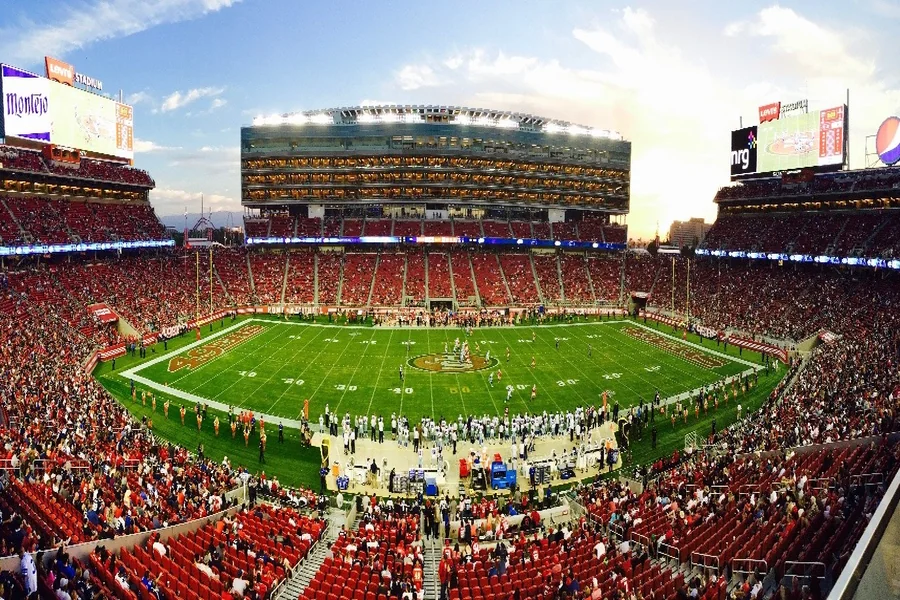
Let’s take an example from American football, which is where the concepts find their origins.
- Let’s say that the Chiefs open as -110 favorites with a +1.5 spread in a match against the Ravens, who are at -1.5, giving them equal chances of playing. You bet on Kansas City because you consider them likelier to win.
- By the time the lines close, the Chiefs’ odds improve to -130 and a 3-point spread. This means that you took the Chiefs to win at a lower price, since the stake that you paid for the same outcome/payout is smaller than that of those who placed it on the closing line.
The conclusion here is that, according to the market (the odds and the reasons behind their movement), they agree with you. Your bet decided that the Chiefs were likelier to win than not, and the bookmaker’s shift toward this outcome (by favoring Kansas City with higher winning chances) validated your thinking.
What you need to remember from this anecdote, as we will explain from other angles, is that the margins that you exploited do not come from a victory of the Chiefs. They may lose because of an injury or another unexpected development.
Instead, you correctly predicted how the market would shift. You made a bet that, to win the same payout as those who bet on later odds, would cost less.
Betting early is closely associated with positive closing line value
Early bets are almost fundamentally associated with positive closing line value. What we explained so far generally showcases that, to make decisions preceding a trending shift, you’d need to act before it.
There may be instances when you look at an event’s betting markets, and you don’t really like what you see in terms of offering. In this instance, you can either wait for a subsequent recalibration that fits your perception (more of this in the later section) or end up picking the best set of odds available.
This means a couple of things:
- You need to get the timing right, not just in terms of how the market shifts (the margins), but also the circulation of information. If there are rumors that would indicate a change in price (talk of an injury before it is declared on the team’s official report), it’s then that you’d get to act.
- Staying on top of the price settlement across sportsbooks. The cases when there is overwhelming consensus across bookies are rare, even more so if there isn’t a clear favorite. If you’re also trying to beat the spread, there can be more variation. What this means is that you’ll always want to assess your options.
Mind the flow
What you generally need to do is monitor the continuum of information, just as sharply as you monitor odds, often in comparative terms.
As we said, you’d have to be as close to the reality of an event as possible, whether through internet talk (forums, group chats), social media buzz, or even if you have an insider line that may be close to any of the competitive sides.

When it comes to the prices themselves, the standard nudge here comes from choosing the best offering. As we’ve said, much of achieving positive CLV is to exploit an initial set of odds. The more mismatched it is at first (generous, if you think about it), the likelier it is that you’ll obtain a higher edge.
To maximize these chances, you’d just need to hover around the sportsbook market and, in the event that you want to bet early, look for the best price. This would entail having player accounts at most of the popular, trustworthy bookmakers in your jurisdiction and placing the wager where you find the best CLV opportunity.
Calculations based on implied probability
This will be a simple presentation: every set of odds is a graphical representation of an outcome’s likelihood in sports. Naturally, its primary function is to indicate the multiplication of your supposed win if the bet is to hit. However, both the result and the possible win are part of the same structure.
It’s important to know them because they can help you establish a benchmark based on which you can decide if you’re betting to beat the closing line. Let’s take the odds that we’ve used earlier to explain.
- The Chiefs at -110 would have a 52.4% implied probability to win. At -130, they’d be at 56.5%.
- If you operate with this metric, you also need to set your own price. If the odds give a competitor a certain likelihood, you’d need to have your own chances settled. If you think that the Chiefs have 60% chances of winning, you’d take the most misvalued set of odds, expecting them to change by the time the line closes.
However, this is far from perfect for a simple reason: the juice.
An interlude on the importance of the vig
The vigorish, otherwise known as the vig, is not a hard concept to fathom. It’s a built-in advantage for virtually every sportsbook, especially if it’s a commercial one. Its most essential feature is to modify in a way that provides the bookie with a retainer.
What usually happens is that sharp bookmakers with a very prestigious odds calculation process set the tone, such as Pinnacle or the so-called Vegas ones, and establish the baseline. All the other ones usually balance their price based on the size of the vig, or just a slight scaling based on their own perception.
The vig is an unevenly distributed edge that, ultimately, dulls your prize a bit. Let’s return to the example that we gave one more time:
- Given that a reasonable vig is about 4-5%, you’d need to calculate per price to ensure that the juice is small enough to warrant a bet at that sportsbook.
- If we are to remove the vig, the implied probability for the Chiefs would be at about 54.3%, while the Ravens, at +110, would be at 45.70%. This is once we identify that the overround is 104.14%, which is about 4% pure vig.
- This gives us a situation in which the most fair of odds are -119 for the favorite Chiefs, and +119 for the underdog Ravens.
As you can see, what the vig goes is that it makes the favorite come with a stronger price, which would mean a smaller payout if it wins. It also theoretically displays a higher chance for the underdog to win.
Conclusion: CLV betting indicates the sustainability of the right process
The foremost conclusion that you should really take away from this entire article is that beating the closing line is about a steady process of exploiting the margins. As a result, you need to look beyond the scope of winning or losing the bets.
Knowing when to look for good deals is to monitor the entire market of odds across sportsbooks, set your own prices, compare them, and decide where to place the stake. It’s also a matter of balancing instinct and information, especially if it brings real value.
If you have more than 50% of early-placed bets beating the closing line, it means that you have a correct line of thinking. Your purpose would be to increase that percentage as you go along. Naturally, if these assessments also result in winning bets, you’re on a good track.
Lastly, we ought to remind you that this is a form of sustainability, but only if you play responsibly. You need to have a steady bankroll that doesn’t interfere with daily life, frugal staking, and an entire system aiming to lead to responsible gambling. Bet carefully!

Passionate about exploring diverse ideas and sharing inspiration, I curate content that sparks curiosity and encourages personal growth. Join me at ElementalNest.com for insights across a wide range of topics.