

Starting a workout routine can feel like a project in itself. You need to choose exercises, find time, decide what equipment to use, and figure out how often to train. When work, family, and everyday responsibilities fill your calendar, it is easy to put the whole idea off until next week.
A more manageable approach is to start with the time and space you already have. A home workout does not need to take over your schedule or require an elaborate setup. The aim is to create a routine you can return to, even when your week does not go exactly as planned.
Start With Your Real Schedule
Before picking a workout, look at your calendar. Is there a 20- or 30-minute window that is usually yours? For some people, it is before work. For others, it is after the school run, during a lunch break, or between finishing work and making dinner.
Choose two or three realistic times for your first week. If your mornings are always rushed, there is little value in planning a daily 6 a.m. session just because it sounds disciplined. A time you can regularly protect is more useful than an ambitious schedule you dread.
Treat each workout as an appointment, but leave room to adjust. If a planned session falls through, move it to another day where possible. Missing one workout does not erase the sessions you have already completed.
Match the Workout to Your Starting Point
A useful routine should suit your current fitness level and what you enjoy doing. You might want to build strength, improve mobility, add cardio, or simply become more comfortable moving regularly. Those goals can lead to different types of workouts, and your preferences matter too.
If you are new to structured exercise, begin with sessions that explain the movements and give you time to learn them. BODi, for example, offers guided home workout programs across strength training, cardio, Pilates, yoga, and other styles. Its For Beginners Only program covers basic cardio, strength, core, and mobility, giving newcomers a clearer starting point than choosing an unfamiliar workout at random.
You do not have to choose the hardest class to make a session worthwhile. Start with a level that lets you follow the instructions and move comfortably. As you become familiar with the format, you can decide whether to increase the challenge or explore another style.

Beginner-friendly guided exercise in a home workout space
Make It Easy to Begin
Sometimes the hardest part of a workout happens before the first exercise. You need to find your shoes, clear the floor, decide what to do, and locate any equipment. Each small task gives you another reason to delay.
Make the setup as simple as possible. Keep a mat or comfortable workout clothes somewhere easy to reach. Clear enough space to move without worrying about furniture. Check whether a class needs weights or other equipment before you start, and have water nearby.
It can also help to choose your next session in advance. If you already know what you are doing on Tuesday evening, you do not need to spend your workout window scrolling through options. Guided programs are particularly helpful here because they provide a sequence to follow from one session to the next.
Give Your Week a Simple Shape
You do not need to exercise every day to create a routine. For a beginner, a manageable first week could include one strength workout, one low-impact cardio session, and one mobility or stretching session. The rest of the week can include ordinary movement, such as walking, alongside time to rest.
This structure gives each session a purpose without making the calendar feel crowded. It also gives you a chance to learn what you enjoy. Perhaps you look forward to strength sessions but find a certain cardio format frustrating. That is useful information: a plan you like is easier to keep returning to.
BODi offers programs for different schedules and experience levels, which may help if you prefer a plan over selecting a new class each day. Choose one that fits the amount of time you actually have. A shorter program you can follow consistently may be a better starting point for your life than a demanding schedule you cannot maintain.
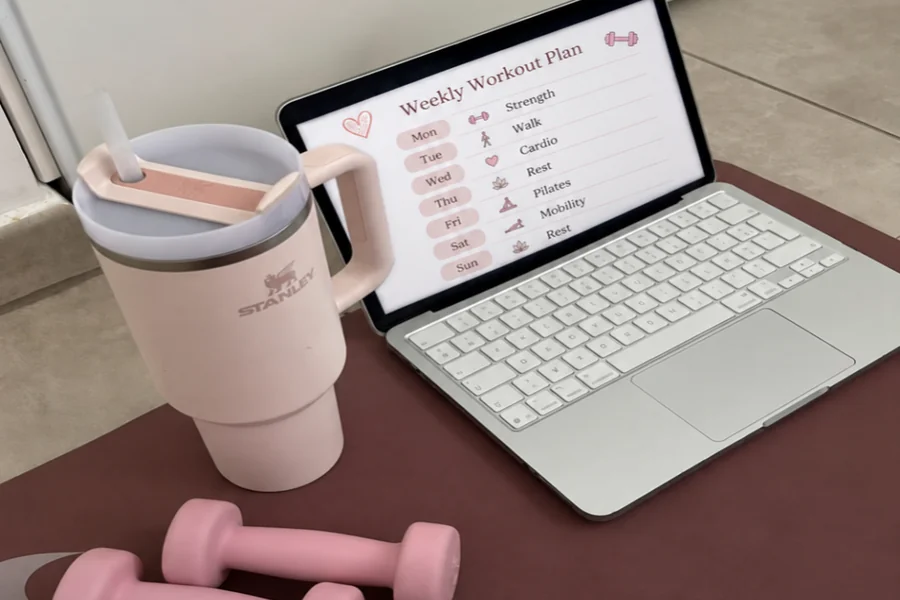
A flexible weekly home workout plan
Notice What Works for You
After each session, take a moment to think beyond whether you completed it. Was the pace comfortable? Could you follow the instructions? Did you have enough room? How did the workout fit into the rest of your day?
You can keep a brief note in your calendar or on your phone. Record what you did, how long it took, and whether you would do it again. After a couple of weeks, you may notice patterns. A morning workout might leave you feeling ready for the day, while an evening session may be easier to schedule. You might also find that certain classes hold your attention better than others.
Use those observations to adjust your plan. Your first routine is a starting point, not a commitment to exercise the same way forever.
Keep Returning to the Routine
Some weeks, you may complete every session you planned. In others, one short workout may be all that fits. When life interrupts, focus on the next session instead of trying to make up for everything you missed.
A lasting home workout habit is built around your real schedule. Start with a few manageable sessions, prepare your space, and choose guidance that suits your level. As the routine becomes familiar, you can build on it one workout at a time.

Passionate about exploring diverse ideas and sharing inspiration, I curate content that sparks curiosity and encourages personal growth. Join me at ElementalNest.com for insights across a wide range of topics.