
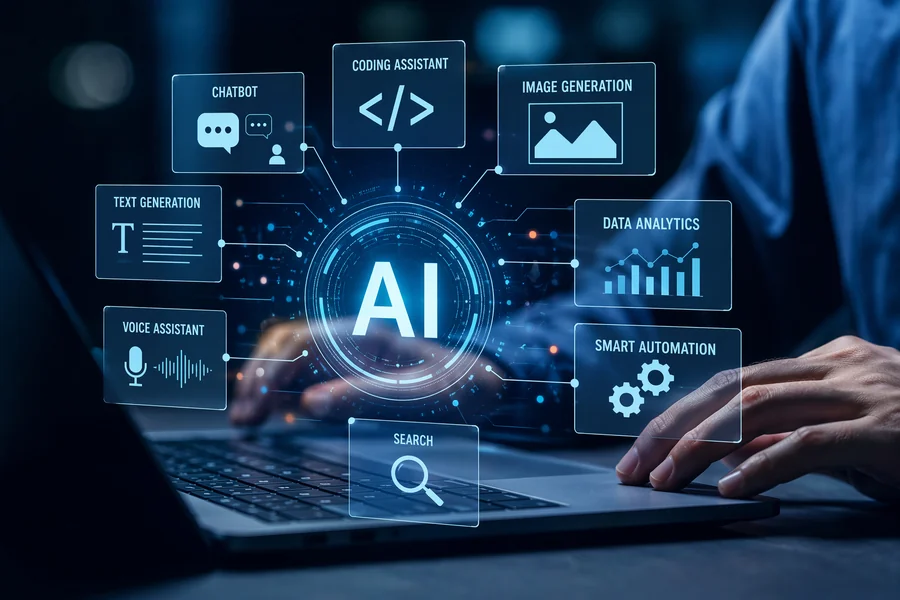
Artificial intelligence is rapidly changing how digital content is created, especially in the video industry. Tasks that once required cameras, editing software, and large production teams can now be handled with AI-powered tools. From generating visuals to creating complete video sequences, AI is making video production faster and more accessible.
The Rise of AI Video Creation
One of the biggest developments in generative AI is the AI video generator. These tools can transform text prompts, images, or existing footage into video content with significantly less manual editing.
Creators can use AI video tools to experiment with different visual styles, camera movements, characters, and scenes. This is particularly useful for marketers, social media creators, educators, and independent filmmakers who need to produce content quickly.
What Makes Modern AI Video Models Different?
Early AI video tools often struggled with motion consistency, realistic physics, and maintaining the appearance of characters between frames. Newer models are increasingly focused on improving these areas.
Modern systems can generate more detailed scenes while providing greater control over movement and visual composition. Features such as image-to-video generation, text-to-video workflows, camera control, and improved temporal consistency are becoming standard across the industry.
Kling 4.0 and the Next Generation of AI Video
As generative video models continue to evolve, newer releases such as Kling 4.0 represent the industry’s broader push toward higher-quality AI-generated video.
The development of models like Kling highlights an important trend: AI video generation is moving beyond simple text-to-video experiments toward more controlled creative workflows. Users increasingly expect models to understand complex prompts, maintain visual consistency, and produce videos that can be used in real production environments.
How Creators Can Use AI Video Tools
AI video generation can be useful across a wide range of applications, including:
- Social media videos and short-form content
- Product demonstrations
- Marketing campaigns
- Concept visualization
- Storyboarding and pre-production
- Educational videos
- Creative experiments
- Promotional content
Instead of replacing the creative process entirely, these tools can work as production assistants. Creators can generate initial concepts with AI and then refine the results through traditional editing and post-production.
The Future of AI Video Generation
The future of AI video will likely focus on greater creative control rather than simply generating longer clips. Better character consistency, realistic motion, synchronized audio, controllable camera movement, and multi-scene storytelling could make AI-generated video increasingly useful for professional production.
As models continue improving, creators will have more ways to turn simple ideas into visual content without needing extensive technical resources. The combination of human creativity and AI-assisted production could become one of the defining trends in digital content creation.

Passionate about exploring diverse ideas and sharing inspiration, I curate content that sparks curiosity and encourages personal growth. Join me at ElementalNest.com for insights across a wide range of topics.