
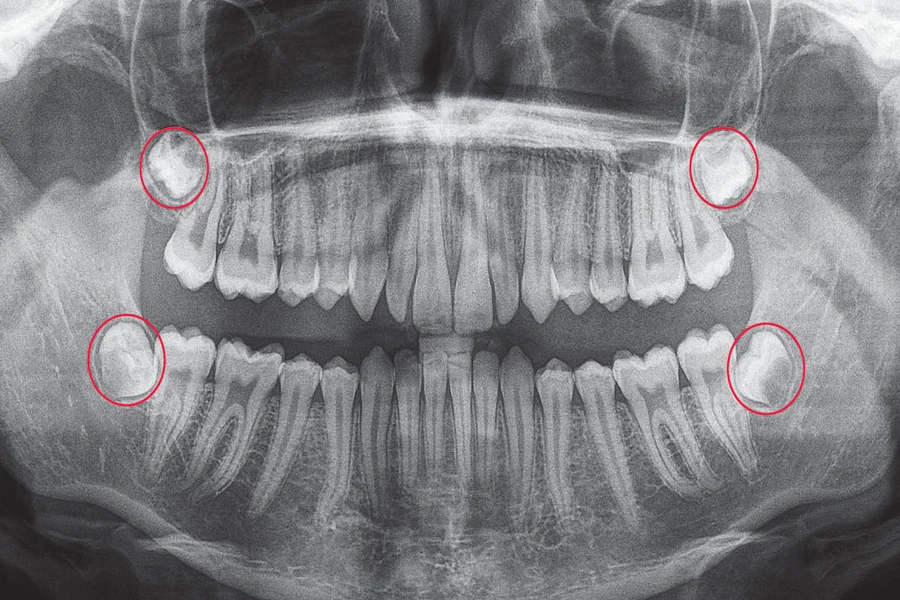
Wisdom teeth often arrive with mystery and mixed feelings. Some people never feel a thing, while others face swelling, pain, or crowded smiles. This article explains what wisdom teeth are, why removal happens so often, and what recovery looks like. The goal is clarity, calm expectations, and practical knowledge.
What Are Wisdom Teeth?
Wisdom teeth are the third set of molars. They usually appear between ages 17 and 25. Humans once needed these extra teeth for chewing rough foods like roots and raw meat. Modern diets and smaller jaws changed that need.
Many jaws lack enough space for these molars. When space runs short, teeth can tilt, stay trapped under the gums, or press against nearby teeth. Dentists call this impaction.
Types of Impaction
Impaction describes how a tooth sits in the jaw. Dentists use imaging, often X-rays, to see the position.
- Vertical impaction: The tooth stands upright yet stays stuck.
- Horizontal impaction: The tooth lies sideways against another tooth.
- Mesial impaction: The tooth tilts toward the front of the mouth.
- Distal impaction: The tooth tilts toward the back.
Each type carries its own risks and treatment plan.
Why Removal Is So Common
Removal often protects long-term oral health. A trapped tooth can trap food and bacteria. This raises the chance of decay and gum infection.
Crowding also plays a role. Pressure from wisdom teeth can shift nearby teeth. Orthodontists often flag this risk for people who had braces.
A study in the Journal of Oral and Maxillofacial Surgery reported that impacted wisdom teeth raise the risk of gum disease near second molars. That finding explains why dentists monitor these teeth even without pain.
Signs That Point Toward Removal
Some people feel no symptoms. Others notice changes that prompt a dental visit.
Common signs include:
- Swelling near the back of the jaw
- Red or bleeding gums
- Jaw stiffness
- Headaches near the temples
- Trouble opening the mouth
Pain can come and go. That pattern often delays care. Regular dental exams catch issues early.
How Dentists Decide
Dentists weigh several factors before suggesting surgery. Age matters. Younger patients heal faster and face fewer complications. Tooth position also guides the plan.
A dentist or oral surgeon reviews:
- X-ray images
- Gum health
- Nearby tooth damage
- Past infections
- Bite alignment
Dr. Alan Cho, an oral surgeon with two decades of practice, once said, “Early removal often prevents years of small problems that stack up.”
The Procedure, Step by Step
Wisdom tooth removal follows a clear sequence. The steps stay similar across practices.
Before the Appointment
Patients receive instructions about eating and medications. Imaging guides the surgical plan.
Anesthesia Options
| Type of Anesthesia | What It Feels Like | Typical Use |
|---|---|---|
| Local | Numb mouth, awake | Simple extractions |
| IV sedation | Drowsy, little memory | Multiple teeth |
| General | Fully asleep | Complex cases |
During Removal
The surgeon opens the gum tissue. Sometimes the tooth gets divided into smaller pieces. This limits pressure on the jaw.
After Closure
Stitches close the area. Gauze helps control bleeding. The full visit often lasts under an hour.
Recovery: What to Expect
Healing moves in stages. The first 72 hours matter most.
The First Day
Swelling peaks. Ice packs help. Soft foods like yogurt or soup reduce strain.
Days Two to Three
Soreness fades. Gentle rinsing with salt water keeps the area clean.
One Week
Most people return to regular routines. Stitches often dissolve on their own.
Dry socket remains a known risk. This happens when the blood clot leaves the socket too early. Avoiding straws and smoking lowers that risk.
A Short Case Example
Maria, a college student, felt jaw aches before exams. X-rays showed two impacted molars pressing forward. She scheduled removal during a school break. Swelling lasted three days. By day six, she ate normal meals. Follow-up visits showed healthy healing.
Stories like Maria’s show how planning eases recovery.
Costs and Insurance Basics
Fees vary by complexity and anesthesia type. Insurance plans often cover part of the cost.
| Factor | Effect on Cost |
|---|---|
| Number of teeth | More teeth raise fees |
| Impaction level | Deeper teeth cost more |
| Anesthesia choice | IV and general add fees |
Asking for a written estimate helps avoid surprises.
Clearing Up Common Myths
Myth: Everyone needs wisdom teeth removed.
Fact: Some people keep healthy wisdom teeth for life.
Myth: Removal always causes severe pain.
Fact: Modern anesthesia and care reduce discomfort.
Myth: Waiting saves money.
Fact: Delays can lead to infection and higher costs later.
Finding Reliable Information
People often search online before meeting a dentist. Reading from trusted dental groups builds confidence. Academic journals, dental school sites, and oral surgery associations share evidence-based guidance.
For readers exploring broader explanations, a general overview of wisdom teeth removal Las Vegas can add context on how procedures get explained to patients.
Questions Worth Asking Your Dentist
Going into an appointment with questions helps. Writing them down keeps the visit focused.
- What type of impaction is present?
- What anesthesia fits this case?
- How long will swelling last?
- What signs call for a follow-up?
Clear answers support calm decisions.
Long-Term Outlook
Once healed, most people notice no lasting effects. Bite pressure evens out. Gum health improves around second molars. Routine brushing and flossing remain the foundation of oral care.
Skipping removal does not always cause harm. Regular monitoring becomes essential in that case. Dentists track changes over time through exams and imaging.
Closing Thoughts
Wisdom teeth tell a story of human change. They once served a purpose that modern mouths rarely need. Removal stands as a common and well-studied procedure with predictable recovery.
Learning the reasons, steps, and healing process removes much of the fear. A conversation with a dental professional adds personal detail. Knowledge, paired with routine care, leads to confident choices and healthier smiles.

Passionate about exploring diverse ideas and sharing inspiration, I curate content that sparks curiosity and encourages personal growth. Join me at ElementalNest.com for insights across a wide range of topics.