
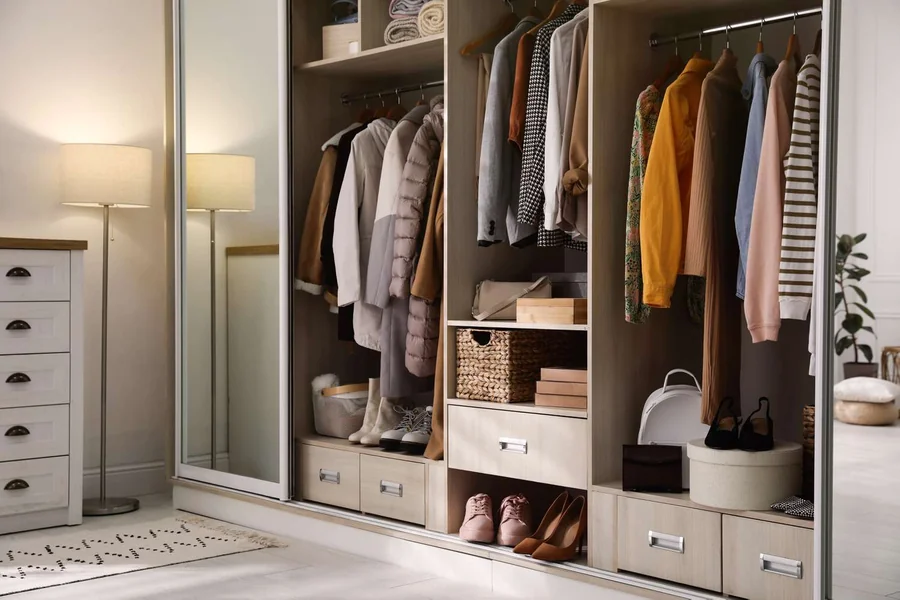
Most closets are built to hold things, not to serve people. They’re designed around square footage and hanging rods, not around the person who stands in front of them every morning, running late and frustrated. If you’ve ever stared into a full closet and felt like you had nothing to wear, the problem isn’t your wardrobe, it’s the system. Building a closet that actually works means starting with you, not the space.
Know Yourself Before You Build
The first step isn’t buying a single shelf or hook. It’s an honest audit of how you actually live. Pull everything out and ask yourself: what do I wear regularly, what do I keep out of guilt, and what no longer fits my life? From there, map out your lifestyle categories; professional, casual, athletic, formal, and decide what percentage of your closet each one deserves. Are you a minimalist who wants a tight capsule wardrobe, or do you love having options? Do you fold or hang? Do you get dressed in five minutes or thirty? Your answers will shape every decision that follows.
When Professional Guidance Makes the Difference
Sometimes the closet problem is really a wardrobe problem in disguise, and that’s where expert guidance can be transformative. A personal stylist Los Angeles residents work with can help you figure out not just what to keep, but what your wardrobe is actually missing. Los Angeles is a city of varied dress codes, from film industry meetings to beach weekends to black-tie events, and a personal stylist Los Angeles professionals rely on understands how to build a wardrobe that transitions seamlessly across those contexts. Before you invest in a closet system, it’s worth knowing exactly what you’re organizing, and a stylist can give you that clarity.
Assess Your Space Honestly
Measure everything; width, depth, ceiling height, and any awkward angles. Identify what you’re working with: a reach-in closet, a walk-in, a standalone wardrobe, or a built-in. Then look at the lighting. Poor lighting is one of the most overlooked problems in closet design; shadows hide colors, create confusion, and make mornings harder. Note any structural limitations like vents, outlets, or doors that swing inward.
Design Around Your Wardrobe
Once you understand your space, design around what you actually own. Clothes fall into categories: long hang (dresses, coats), short hang (jackets, folded pants), double hang (shirts, blazers), and folded (sweaters, denim). Shoes need dedicated real estate, whether that’s open shelving for easy visibility or clear boxes for collections. Accessories; bags, belts, jewelry, should be visible, not buried. What you can’t see, you won’t use.
Choose a System That Fits Your Budget and Goals
There’s no single right system. Wire shelving is affordable and adjustable but can feel utilitarian. Modular wood systems offer a polished look with flexibility. Custom built-ins deliver the best fit for awkward spaces but come at a premium. Whatever you choose, prioritize scalability. Your wardrobe will evolve, and your storage system should be able to evolve with it.
Optimize for Daily Use
The most-used items belong in your “prime real estate” — eye level and arm’s reach. Group your clothes in a way that matches your routine: by outfit, by category, or by color. Create a designated “return zone” for clothes that are worn but not ready for the wash — a hook, a small rack, or a basket. This single addition can eliminate the pile that creeps onto chairs and floors. If possible, integrate laundry into the space with a hamper and a folding surface.
Personalize and Maintain
A closet you enjoy being in is a closet you’ll keep organized. Add a full-length mirror with good lighting. Use labels, dividers, and consistent hangers. Make it smell good. These small touches turn a storage space into a room with a purpose.
Maintenance is where most closets fail. Commit to a one-in, one-out rule, and do a full reassessment twice a year — once in spring, once in fall. Life changes, bodies change, and careers change. Your closet should reflect who you are right now, not who you were three years ago.
The Payoff
A well-built closet saves time every single morning. It reduces decision fatigue, cuts down on unnecessary shopping, and gives you a quiet sense of control over your day before it even begins. You don’t need a dream home or a massive budget. You need a clear understanding of your life, a honest look at your space, and a system built around both. That’s a closet that actually fits.

Passionate about exploring diverse ideas and sharing inspiration, I curate content that sparks curiosity and encourages personal growth. Join me at ElementalNest.com for insights across a wide range of topics.