
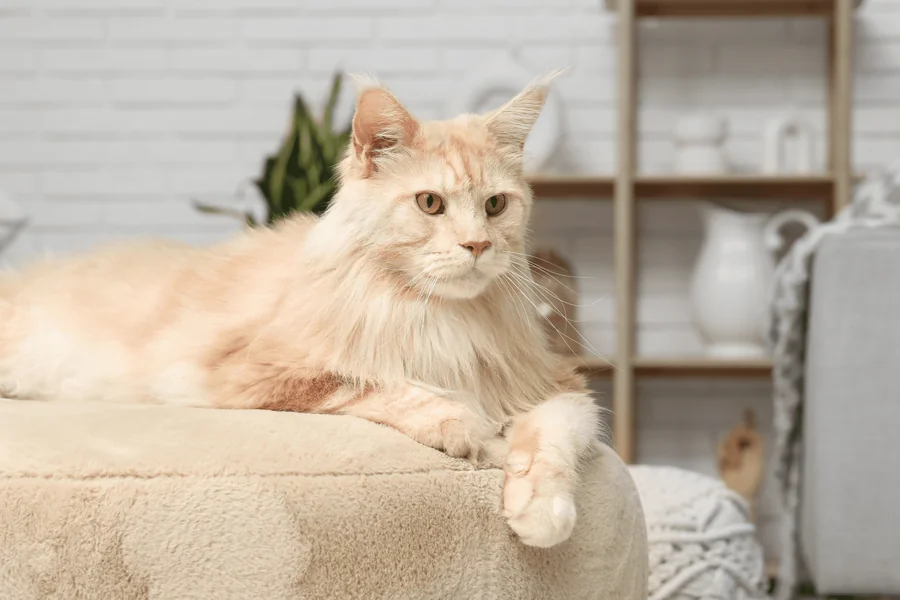
There is a reason Maine Coons consistently rank among the most popular cat breeds in the world. It is not just the size — though a fully grown male Maine Coon at fifteen to twenty-five pounds is an impressive animal. It is not just the coat — though the tufted ears, bushy tail, and semi-longhair fur are genuinely beautiful. It is the combination of physical presence and personality that makes Maine Coons feel like a different kind of companion than most cats. Dog people who have never been cat people often become Maine Coon people, which tells you something.
This guide is for anyone seriously considering a Maine Coon — not just curious about the breed, but thinking concretely about ownership. It covers the honest picture of what living with a Maine Coon involves, what prospective owners need to know about health and care, and how to find a kitten from a source worth trusting.
The Maine Coon at a Glance
The Maine Coon is one of the oldest natural breeds in North America, with origins in the northeastern United States that predate any formal breeding program. The breed developed through natural selection in a demanding climate, which explains the heavy coat, tufted paws, and robust constitution that characterize healthy Maine Coons today.
| Characteristic | Details |
| Weight (male) | 13–25 lbs, occasionally larger |
| Weight (female) | 8–14 lbs |
| Height | 10–16 inches at shoulder |
| Length | Up to 40 inches including tail |
| Coat | Semi-longhair, water-resistant |
| Lifespan | 12–15 years, some reach 18+ |
| Activity level | Moderate to high |
| Vocality | Moderate — known for chirping and trilling |
| Temperament | Sociable, intelligent, gentle |
The size numbers are worth dwelling on for a moment. Many people who research Maine Coons know they are large, but the reality of a fully mature male Maine Coon is still surprising to people encountering it for the first time in person. These are substantial animals — long, heavy, and physically present in a room in a way that smaller breeds are not.
Temperament: What Actually Living With One Is Like
Maine Coons have a reputation for being dog-like, which is reasonably accurate in several respects. They tend to follow their owners from room to room, show genuine interest in household activities, and often learn to play fetch or perform basic commands. They are not typically the cat that disappears for hours and surfaces only for meals.
What stands out in Maine Coon temperament:
Sociability without neediness. Maine Coons want to be near their people but do not usually demand constant attention in the way that some breeds do. They are present and engaged without being clingy.
Adaptability. Maine Coons adjust well to changes in household routine, new pets, and new people. This makes them well-suited for families with children and households with other animals.
Water fascination. This is one of the breed’s most consistently reported quirks. Many Maine Coons are drawn to water — dipping paws in bowls, investigating running taps, occasionally joining their owners near the shower. The origins of this trait likely relate to the breed’s history as a working cat in maritime communities.
Intelligence and playfulness. Maine Coons remain playful well into adulthood. Interactive toys, puzzle feeders, and games hold their interest in a way that passive toys quickly do not.
“I’ve had cats my whole life and nothing prepared me for how much personality a Maine Coon has. He greets me at the door. He talks to me in the morning. He has opinions about everything. I honestly can’t imagine having a different kind of cat now.” — Maine Coon owner, twelve years of ownership
Grooming: The Commitment Behind the Coat
The Maine Coon coat is one of the breed’s most distinctive features and one of the most significant care commitments. Understanding this before purchasing is important — owners who underestimate the grooming requirement often struggle.
What the coat requires:
- Brushing frequency: Two to three times per week at minimum. During shedding seasons — typically spring and fall — daily brushing is more realistic.
- Mat prevention: The coat can mat, particularly behind the ears, in the armpits, and around the hindquarters. Mats that are not addressed become painful and may require professional grooming or veterinary assistance to remove.
- Bathing: Occasional baths — every two to three months for most cats — help manage the coat and reduce shedding. The breed’s water tolerance makes this more manageable than it is with many other longhaired breeds.
- Nail trimming: Every two to three weeks.
- Ear cleaning: Weekly inspection, cleaning as needed. Maine Coons’ tufted ears can trap debris.
- Dental care: Regular brushing or dental treats to support oral health.
The grooming commitment is real, but owners who build it into their routine consistently report that it becomes one of the more enjoyable parts of having a Maine Coon — a calm, regular interaction that most cats come to tolerate or enjoy.
Health Considerations
Maine Coons are generally a robust breed, but they carry genetic predispositions to certain conditions that responsible breeders screen for.
Hypertrophic Cardiomyopathy (HCM): The most significant health concern in Maine Coons. HCM is a thickening of the heart muscle that can lead to heart failure if undetected. Responsible breeders test breeding cats annually using echocardiography and work with HCM-negative lines. A genetic test for one HCM-associated mutation is available, though a negative genetic result does not guarantee a cat will never develop the condition.
Spinal Muscular Atrophy (SMA): A genetic condition affecting motor neurons that causes muscle weakness in the hindquarters. Genetic testing is available and reliable. Responsible breeders test and do not breed affected cats.
Hip Dysplasia: Maine Coons have a higher incidence of hip dysplasia than many breeds, likely related to their size. Maintaining healthy weight and appropriate exercise throughout the cat’s life reduces impact.
Polycystic Kidney Disease (PKD): Kidney cysts that can progress to kidney disease. Genetic testing is available.
| Condition | Testing Available | What to Ask Breeders |
| HCM | Genetic + echocardiogram | Annual echo on breeding cats, HCM mutation test results |
| SMA | Genetic test | Parent test results |
| Hip Dysplasia | X-ray evaluation | Breeding stock evaluation |
| PKD | Genetic test | Parent test results |
The pattern is consistent: reputable breeders test, document, and disclose. Ask for this documentation. If it is not available or the breeder is evasive about it, that is your answer.
Finding a Maine Coon Kitten: What Reputable Breeders Look Like
Maine Coons are popular enough that both excellent breeders and poor-quality operations exist in significant numbers. The popularity cuts both ways — it means you have options, but it also means the market includes sellers who have prioritized volume over welfare.
What a reputable Maine Coon breeder provides:
- TICA or CFA registration for all breeding cats and kittens
- Health testing documentation for HCM, SMA, and PKD at minimum
- A home-raised environment with documented socialization from birth
- Kittens placed at twelve to sixteen weeks, not earlier
- A written health guarantee covering genetic conditions
- Willingness to take a kitten back if the placement does not work
- References from previous buyers, provided willingly
- Interest in your household and lifestyle before agreeing to place a kitten
What should give you pause:
- Multiple breeds available with constant kitten availability
- No health testing documentation or vague answers about testing
- Reluctance to discuss parent health history
- Kittens available for pickup at eight or nine weeks
- Pricing that seems significantly low for the breed
Reputable Maine Coon breeders typically price kittens between $1,200 and $3,500, reflecting the cost of health testing, quality nutrition, veterinary care, and the time investment involved in proper socialization.
Online Platforms for Finding Maine Coon Kittens
For buyers who are not finding suitable local breeders — or who want access to a more carefully curated selection — ethical online platforms offer a meaningful alternative.
If you are looking for a maine coon cat from a source that has done the vetting work on your behalf, Happy Paws US connects buyers with breeders who meet documented standards for health screening, socialization, and transparency. For a breed like the Maine Coon — where HCM screening and genetic testing are genuinely important for long-term health — working with a platform that requires this documentation provides meaningful protection for buyers.
The platform provides health records, background information on kittens and their parents, and support through the purchase process. For first-time Maine Coon buyers, this structure reduces the risk of ending up with a kitten from a source that has not invested in the health screening the breed requires.
Preparing for a Maine Coon
Maine Coons require some specific preparation that smaller breeds do not.
Litter boxes: Standard litter boxes are too small for a fully grown Maine Coon. Extra-large or jumbo boxes — at least 1.5 times the length of the cat — are necessary. Many Maine Coon owners use large storage containers as litter boxes.
Cat trees and furniture: Maine Coons need sturdy, tall cat trees. Structures that would be fine for a six-pound cat may tip or wobble under a twenty-pound Maine Coon. Look for trees with wide, weighted bases and thick scratching posts.
Food and feeding: Maine Coons are slow to mature — they may not reach full size until three to five years of age. Their nutritional needs during this period are significant. High-protein diets support healthy growth. Portion management matters throughout their life to prevent obesity, which exacerbates hip and joint issues.
Enrichment: Maine Coons need stimulation. Interactive toys, puzzle feeders, window perches, and regular play sessions are not optional extras — they are requirements for a Maine Coon that is going to be mentally healthy and behaviorally stable.
Is a Maine Coon Right for You?
Maine Coons are excellent for:
- Families with children who will engage respectfully with a large, social cat
- Multi-pet households — Maine Coons typically coexist well with dogs and other cats
- People who want a genuinely interactive companion rather than a low-maintenance pet
- Owners who are willing to commit to regular grooming
- Anyone who appreciates a cat with genuine personality and a long lifespan
Maine Coons are less suited for:
- People who want a low-maintenance, independent cat
- Households where significant periods pass without human interaction
- Anyone unwilling to invest in health testing documentation when purchasing
- Owners who underestimate the grooming commitment
The Maine Coon is a breed that delivers on its reputation — but only when you get there through a source that has invested in the breed’s health and character. The temperament that Maine Coon owners describe so consistently — sociable, gentle, intelligent, present — is the result of good genetics and good socialization working together. Shortcut either and the experience is diminished.
Take the time to find the right kitten from the right source. Ask for health documentation. Assess breeders not just by their marketing but by their transparency and their investment in the cats they produce. The Maine Coon that results from that careful approach is worth every bit of the effort.

Passionate about exploring diverse ideas and sharing inspiration, I curate content that sparks curiosity and encourages personal growth. Join me at ElementalNest.com for insights across a wide range of topics.