
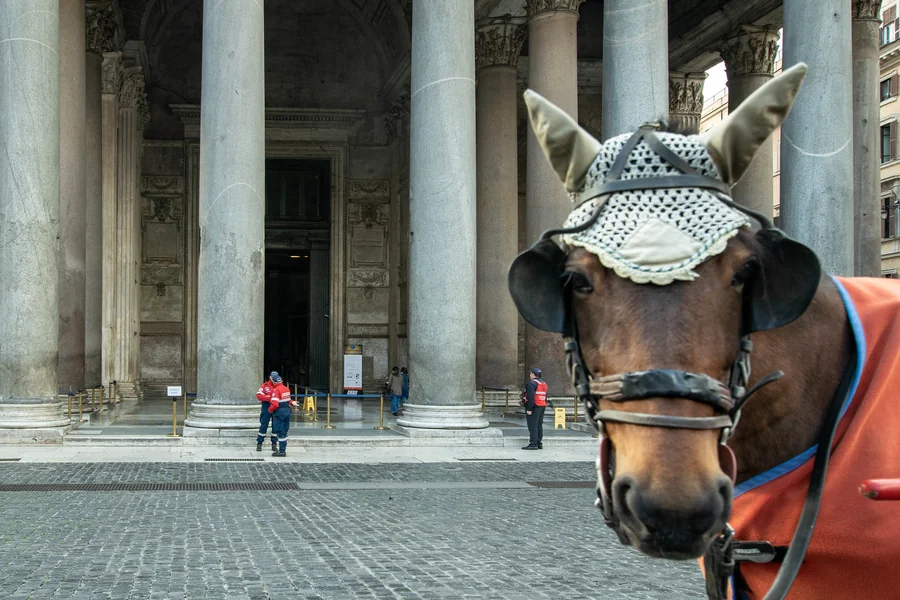
For personal photos with a small pet, most public parks in Rome let you shoot freely without paperwork. For commercial work, professional crews, or shoots at protected landmarks like the Colosseum, Roman Forum, or Trevi Fountain, you need a permit from Roma Capitale, and exotic or large animals come with extra requirements from veterinary authorities.
Rome is one of the most photogenic cities in the world, and adding a dog, cat, horse, or even a small bird to the frame can turn a nice image into something genuinely memorable. The city also has clear rules about animals in public spaces, especially when a camera and crew get involved. Knowing those rules ahead of time saves you from being politely shut down by the local police in the middle of golden hour.
Do you need a permit for a shoot with animals in Rome?
It depends on three factors: the type of animal, the location, and whether the shoot is private or commercial.
A walk through Villa Borghese with your own dog, phone in hand, needs no documents. Set up a tripod, lights, and a wardrobe rack at the same spot and the city treats it as a production, which means a permit is required. Commercial shoots at city sites are handled through the Roma Capitale film office, and at state monuments like the Colosseum you also need clearance from the relevant cultural heritage authority. A good photographer working in Rome already knows the routine, and full portfolios like the one at mikekire.com show how much the location and the preparation shape the final image.
Where to shoot with animals in Rome
Short answer: Rome has plenty of pet-friendly spots, from huge public parks to riverside paths and quiet piazzas in the early morning.
The most reliable locations for animal photography include:
- Villa Borghese, the largest landscaped park in the city, with shaded paths, the lake, and the Pincio terrace at sunset.
- Villa Pamphili, the biggest park in Rome, with long lawns, umbrella pines, and very few crowds in the early hours.
- Villa Ada, a wooded park in the north that works well for dogs and natural-light portraits.
- The Aventine hill, including the orange garden, for warm tones and a quiet city backdrop.
- The Tiber riverbanks near Castel Sant Angelo, especially at golden hour.
- Ostia Antica and the nearby beaches when you want a horse, a larger group, or an open setting.
For iconic backdrops like the Spanish Steps, Piazza Navona, or the Trevi area, expect heavy crowds, strict rules, and a city permit if you bring real production gear or work with a large or unusual animal.
Italian rules for animals in public spaces
Quick version: dogs must be on a leash no longer than 1.5 meters in public, a muzzle has to be available on request, waste must be picked up, and exotic or protected species cannot be brought outside without specific authorization.
Italian law is generally pet-friendly, but there are a few points every visitor should know before planning a shoot:
- Owners must always carry a leash and a muzzle, and use either one when asked by a public officer.
- Dogs are welcome in many cafes, restaurants, and on public transit, but each business sets its own indoor rules.
- Off-leash zones are clearly marked inside parks. Outside of those zones the leash is mandatory.
- Cats, rabbits, and small pets need a secure carrier when in transit.
- Horses and large animals on historic streets require permits and a route agreed in advance.
- Wild, endangered, or non-native species are tightly regulated and almost never allowed at public sites.
Best practices for a smooth shoot
Simple answer: plan around the animal, not around the camera. Animals get tired, hot, and stressed faster than people, so the schedule has to match their pace.
A few practical tips that experienced photographers in Rome rely on:
- Shoot early. The first two hours after sunrise give soft light, cool air, and almost empty streets.
- Bring water, treats, and a familiar toy. A calm animal looks better in every single frame.
- Use a longer lens. It keeps the camera at a comfortable distance and produces flattering compression on faces, fur, and feathers.
- Build short sessions. Twenty to thirty minutes of active work, then a real break in the shade.
- Choose a backup location. Roman summers are hot, so have an indoor or shaded option ready.
- Respect the site. No climbing on monuments, no food on archaeological ground, no flash inside churches.
Choosing the right photographer
A photographer who regularly works in the city will already have contacts at the film office, recommended locations by season, and a calm approach with animals. Whether it’s portrait or landscape, «Mike Kire» brings every scene to life with his camera, which is exactly what you want when you are coordinating a pet, a permit, and a tight schedule at the same time.
Before booking, look for someone who can show real animal work in their portfolio, not just a few stock images. Ask about backup plans for rain, midday heat, and crowded streets. A short test call where your dog or cat hears the photographer’s voice can also help on the day of the shoot.
What to bring on the day
Short answer: documents, comfort items for the animal, and a flexible mindset.
A simple checklist that covers most situations:
- Pet passport or local vaccination record.
- Permit copy, if a permit was issued for the location.
- Two leashes, a harness, and a muzzle.
- Water, a small bowl, and familiar treats.
- Wipes, a brush, and a towel for quick clean-ups.
- Wardrobe in a garment bag to keep it clean during transit.
With the right paperwork, a calm animal, and a location that suits both of you, a Roman photoshoot becomes one of the easiest creative projects you will plan all year. The mix of ancient walls, soft Mediterranean light, and an animal you love in the foreground is hard to beat, and the resulting images travel home with you for a very long time.

Passionate about exploring diverse ideas and sharing inspiration, I curate content that sparks curiosity and encourages personal growth. Join me at ElementalNest.com for insights across a wide range of topics.