
Trust used to be a local affair. You trusted the mechanic your neighbor recommended, the shop you’d walked past for years, the person you met through mutual friends. It was built slowly, in person, on a foundation of reputation and repetition. You knew who you were dealing with because you, or someone you knew, had dealt with them before.
That entire system has been quietly dismantled. Most of what we now buy, use, and even fall in love with arrives through a screen, from a source we have no shared history with. The old machinery of trust, the handshake, the referral, the familiar face, doesn’t work on a stranger behind a profile or a service we’ve never physically touched. So we’ve spent the last decade improvising new rules, often without realizing we were writing them.
Trust used to be transferred. Now it has to be demonstrated.
The biggest change is where trust comes from. It used to be inherited, passed along through community and reputation before you ever interacted with someone. You arrived already trusting, because the network vouched for them.
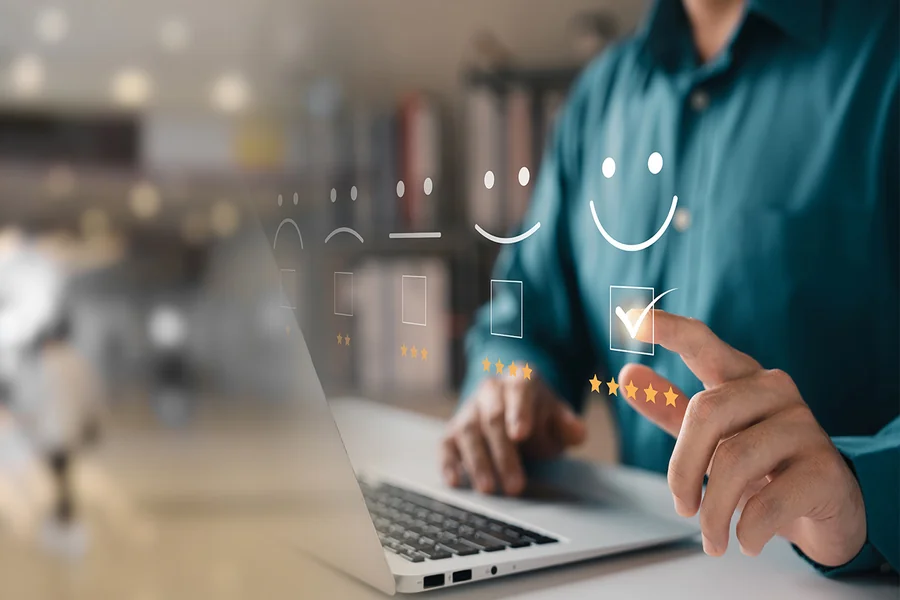
Online, that chain is mostly broken. A stranger’s profile carries no inherited credibility, and a service you found through an ad has no neighbor to vouch for it. As a result, trust now has to be demonstrated in the moment rather than transferred from the past. We look for proof, ratings, reviews, transparency, track records, because the social shortcuts that used to do this work for us are gone. The burden shifted from the community to the thing itself: show me, in real time, that you’re what you claim.
Rule one: transparency beats reputation
In a world of strangers, the most trustworthy systems are the ones that let you see for yourself rather than asking you to take their word for it.
Consider something as ordinary as charging an electric car. You’re entrusting an automated system with power, billing, and safety, often unattended, often overnight. The reason a tool earns that trust isn’t a brand promise; it’s visibility. The better Ampaway ev charging solutions build trust by being transparent: real-time session data, accurate billing you can verify, and a single dashboard where a property manager can see exactly what every station is doing. You don’t have to trust that it’s working. You can look.
This is the first new rule. Where reputation used to be enough, transparency has replaced it. We’ve grown to expect that legitimate systems will open themselves up to inspection, and we’ve grown suspicious of the ones that ask for blind faith instead. A black box, however polished, now reads as a risk.
Rule two: trust is provisional, and that’s healthy
The old model treated trust as a destination, you earned it, and then it largely stayed earned. The digital model treats it as a state that’s continuously re-evaluated. We trust until the data says otherwise, and we’ve gotten comfortable checking.
Nowhere is this more emotionally charged than in relationships. Dating moved online, which means trust now often begins with a stranger and a curated profile rather than a known quantity. The reassurances that used to come built-in, mutual friends, shared community, a visible reputation, simply aren’t there. When doubt creeps in, people increasingly reach for tools rather than just sitting with the uncertainty. Cheaterbuster lets someone check whether a partner has active dating profiles or hidden accounts, turning a private suspicion into something they can actually examine.
This is the uncomfortable edge of the new rules. The same capability that protects someone from genuine deception can curdle into surveillance if it’s pointed at a partner who’s given no real cause for doubt. The tool itself is neutral; the line between resolving a founded worry and policing an innocent one is drawn entirely by the person using it. The new rules give us power to verify, but they don’t tell us when we should, and that judgment is now part of what it means to navigate trust well.
Rule three: the responsibility moved to us
Here’s the quiet consequence of all this. When trust was transferred through community, the community carried some of the responsibility. The network filtered out bad actors before they reached you. Now that filtering job has largely landed on the individual.
We’re each expected to be our own due-diligence department, checking reviews, reading the data, verifying claims, deciding what deserves our faith. That’s empowering, and it’s also exhausting. It puts a burden on us that previous generations distributed across a whole social structure. The freedom to verify anything comes bundled with the low-grade obligation to verify everything, and knowing when to stop, when good-enough evidence is genuinely good enough, has become its own essential skill.
Learning to trust again, deliberately
The point isn’t that we’ve become cynics. It’s that trust has changed shape. It used to be a default we extended and occasionally regretted. Now it’s a decision we make actively, supported by tools that let us see more than any previous generation could.
The healthiest version of this isn’t endless suspicion. It’s deliberate trust, using transparency and verification to extend faith confidently where it’s warranted, and to withdraw it cleanly where it isn’t, without drowning in the impulse to check everything forever. The rules have changed, but the goal hasn’t. We still want to trust people and the things we rely on. We’ve just had to learn new ways to decide when that trust is earned, and new discipline about when to stop asking.

Passionate about exploring diverse ideas and sharing inspiration, I curate content that sparks curiosity and encourages personal growth. Join me at ElementalNest.com for insights across a wide range of topics.