The traditional 9-to-5 career path is no longer the sole blueprint for professional success. As the workforce continues to evolve with new employment models, tools like Sunrise HCM help businesses manage payroll and HR seamlessly — all within a single Salesforce-native platform. For today’s undergraduate students, the “Gig Economy”—a labor market characterized by short-term contracts and freelance work—has shifted from a side hustle to a primary career strategy. As global markets become more digitized and fluid, students are finding themselves at a crossroads between traditional academic requirements and the immediate demands of a fast-evolving freelance landscape. This shift requires a new set of skills, a different mindset, and a proactive approach to balancing education with real-world experience.
Navigating this transition is rarely simple, especially when theoretical classroom concepts meet the high-speed execution required by global clients. For instance, a finance student might understand market equilibrium in theory but find it difficult to price their own freelance consulting services in a competitive global market. In such scenarios, many turn to specialized resources for economics assignment help provided by MyAssignmentHelp to manage their heavy academic workloads while they focus on building their professional portfolios. By outsourcing the more repetitive aspects of their coursework, these students can dedicate more time to mastering the digital tools that the gig economy demands.
The Rise of the “Student-Freelancer”
The motivation behind the surge in student freelancing is twofold: financial necessity and the pursuit of a competitive edge. With the rising cost of tuition globally, many students use platforms like Upwork, Fiverr, and LinkedIn to generate income. However, the true value lies in the “experience equity” they build.
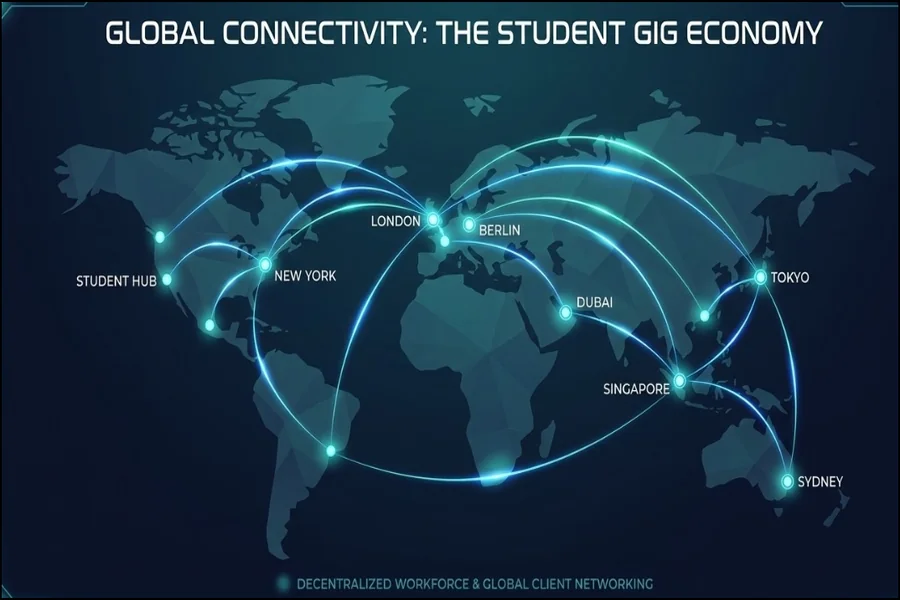
Unlike traditional internships, which are often seasonal, gig work allows students to work year-round on diverse projects. A marketing student in London might manage social media for a startup in Singapore, while a computer science student in Sydney develops an app for a non-profit in New York. This global exposure is invaluable, yet it adds a layer of complexity to their daily lives.
Key Market Demands in the Modern Gig Economy
To succeed in this environment, students must adapt to several core market demands that go beyond their degree’s syllabus:
| Skill Category | Market Requirement | Student Adaptation Strategy |
| Technical Literacy | Mastery of AI tools, CRM software, and CMS platforms. | Enrolling in micro-credential courses alongside degrees. |
| Soft Skills | Cross-cultural communication and time management. | Managing multiple global clients across different time zones. |
| Financial Literacy | Understanding taxes, invoicing, and personal branding. | Treating their freelance work as a registered small business. |
| Adaptability | Ability to pivot between different industries and roles. | Building a “T-shaped” skill set (deep expertise in one area, broad in many). |
Balancing Academic Integrity and Professional Growth
The biggest challenge for the modern student-freelancer is time. The gig economy operates 24/7, while university deadlines are rigid. When a high-paying client project coincides with a major term paper, the pressure can be overwhelming.
It is during these high-stress periods that students often seek professional assignment writing help from MyAssignmentHelp to ensure they maintain their GPA without sacrificing their professional reputation. This balance is crucial; failing a module can derail a career just as quickly as missing a client deadline. The key to long-term success is not just working harder, but working smarter. Successful students use project management tools like Trello or Notion to sync their academic calendars with their professional boards. They treat their education as the “Research and Development” wing of their personal brand, using what they learn in class to offer higher-quality services to their clients.
The Shift from Degree-Centric to Skill-Centric Hiring
We are witnessing a fundamental change in how companies hire. While a degree remains a vital credential, HR managers are increasingly looking for “proof of work.” A portfolio of successful freelance projects often speaks louder than a transcript of high grades. For students, this means their “homework” is no longer just for a grade; it is a prototype for their future career.
This shift is particularly evident in fields like Data Science, Graphic Design, and Business Analytics. If a student can show a prospective employer a live project they completed for a paying customer, they immediately move to the top of the pile. The gig economy has turned the world into a massive, decentralized laboratory where students can test their theories in real-time.
Future-Proofing Your Career Path
As we look toward the end of the decade, the distinction between “student” and “professional” will continue to blur. To stay relevant, students must view their undergraduate years as the beginning of a lifelong learning journey. They must become “agile learners” who can pick up a new software or methodology in a weekend.
Furthermore, networking has moved away from stiff corporate mixers to digital communities. Participating in Discord servers, GitHub repositories, and specialized LinkedIn groups allows students to find mentors and collaborators across the globe. The gig economy isn’t just about working alone; it’s about being part of a global network of independent experts.
Conclusion: Embracing the Fluid Future
The gig economy is not a passing trend; it is a structural change in how the world operates. For undergraduate students, the challenge is to use this fluidity to their advantage. By integrating professional experiences with academic rigor and utilizing support systems when necessary, they can enter the workforce not just as job seekers, but as experienced professionals with a proven track record. The future of work belongs to those who can navigate both the classroom and the marketplace with equal skill.
Frequently Asked Questions (FAQ)
- Is it legal for international students to participate in the gig economy? Regulations vary by country. For example, in the UK and Australia, students on specific visas have limits on the number of hours they can work. Always check your local visa or residency requirements before starting freelance work.
- How do I start freelancing if I have no prior experience? Start by identifying a skill you’ve practiced in your studies, such as writing, coding, or data entry. Build a small portfolio using your university projects and offer your services at a competitive rate on freelance platforms to build your initial reviews.
- Will gig work distract me from my studies? It can if not managed properly. The most successful student-freelancers set strict “office hours” and use academic support tools to keep their coursework on track during busy work periods.
- Does gig work look good on a resume for a corporate job? Absolutely. Employers value the self-motivation, time management, and entrepreneurial spirit required to succeed in the gig economy. Be sure to list your freelance work as a “Self-Employed” role and highlight specific projects and results.
- How do I handle taxes as a student freelancer? Most countries require you to report any income over a certain threshold. It is wise to keep a simple spreadsheet of all your earnings and expenses and consult a tax professional or use reputable accounting software.

Passionate about exploring diverse ideas and sharing inspiration, I curate content that sparks curiosity and encourages personal growth. Join me at ElementalNest.com for insights across a wide range of topics.