
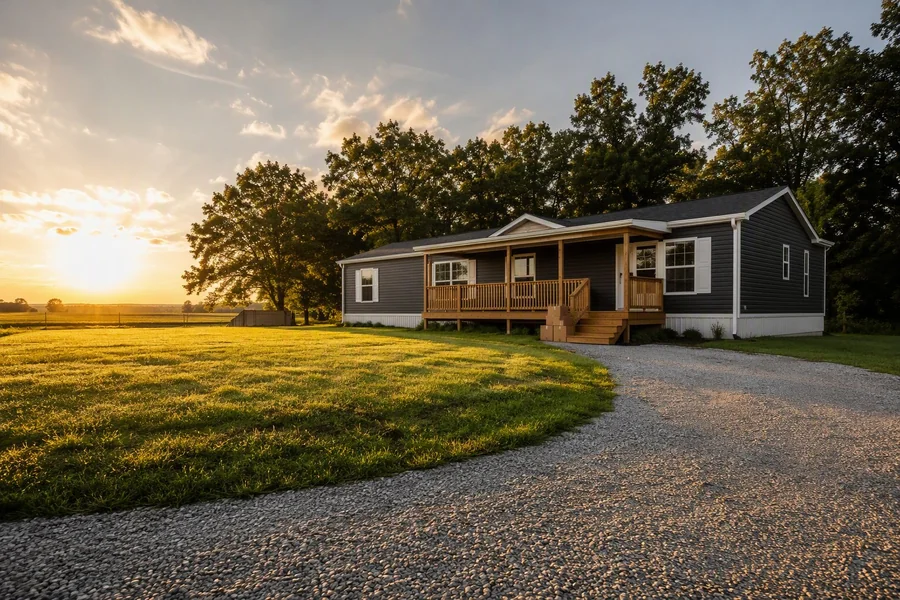
Indiana looks affordable on a national map. Affordable manufactured homes are one option for households priced out of conventional ownership. Inside a household budget, it often doesn’t, which is why factory-built housing keeps surfacing in conversations that used to end with another lease renewal. Home Nation, a family-owned dealer based in Goshen, sells into that gap.
The company sells factory-built homes to buyers across the country from its Indiana base, and an Elkhart County family searching for manufactured homes near me is looking at a dealer in its own state, with delivery priced based on the location where the home will actually land. That’s the appeal: a lower starting number than most site-built listings, and a factory schedule that doesn’t hinge on the weather the way an outdoor build does. The catch is the number printed beside the model photo. It’s rarely what the finished home costs.
Why Indiana families are reconsidering the housing math
Conventional prices leave a sizable gap
Indiana’s median home sale price was $255,000 in 2024. Set that beside a manufactured-home unit price and the difference looks dramatic, but the two numbers don’t measure the same thing. A site-built sale generally includes the land under the house. A manufactured-home project may still need a lot, plus grading and a foundation, before anyone can move in.
USAFacts reports that 26.5% of Indiana households were cost-burdened in 2024, meaning housing took 30% or more of their income. That doesn’t prove factory-built housing repairs anyone’s budget. It does explain why so many households are willing to look at a different kind of purchase.
Renting can strain the same budget
Affording a modest two-bedroom rental at fair market rent in Indiana required $22.07 per hour in 2024, according to Prosperity Indiana. The average Hoosier renter earned $17.92. That’s a $4.15 shortfall for every hour worked, and it repeats itself every month the lease renews.
That is why the rent-versus-own comparison gets made at all.
For Indiana households weighing manufactured homes vs renting, the useful comparison includes the full monthly ownership cost, not just the home payment.
It can’t be made by setting two advertised monthly payments side by side, though. The difference lives in everything underneath the house.
How manufactured home dealers work: Home Nation as a nationwide dealer
A dealer isn’t necessarily the builder. It may not be the lender or the installer either, though it often coordinates with all of them, and that’s where buyers get surprised.
What the dealer coordinates, and what it doesn’t
According to its manufactured-homes page, the company serves customers nationwide, helping buyers pick and order a home and coordinating parts of the setup.
Coordinating a setup is not the same as performing the installation. Buyers need written confirmation of who handles the foundation, the permits, and the utility hookups. Transportation and installation also require separate confirmation. So does warranty work—without explicit coverage pathways, buyers risk getting caught in disputes where the factory blames the installer for unlevel settling, and the installer blames the factory for structural defects.
Responsibilities shift by contract and region. In one transaction, the dealer arranges the crew that levels and anchors the home; in another, the buyer hires a local installer. Establish clear warranty escalation protocols and get every liability boundary into the purchase agreement before signing.
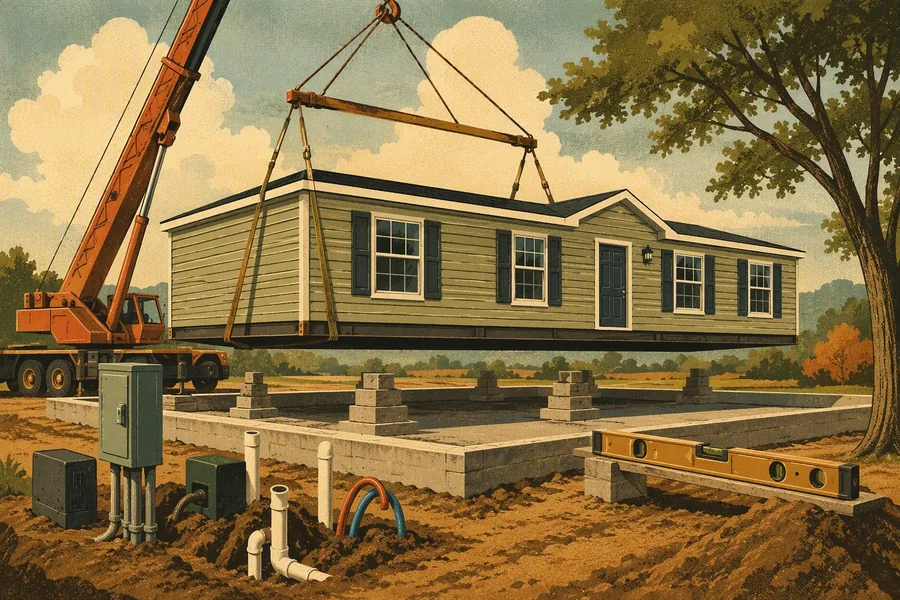
A manufactured home arrives largely completed from the factory, but setting, anchoring, and utility work still happen on site.
Factory construction changes the timeline, not the planning
Manufactured homes are assembled indoors on a production line, then transported to the site. Indoor construction keeps materials out of much of the weather that stalls an outdoor build, though delivery and installation schedules can still move.
Naming the housing type correctly matters more than it sounds like it should. The Department of Housing and Urban Development regulates manufactured housing under its federal HUD Code. A modular home also comes out of a factory, but it has to comply with the state and local building codes that apply where it’s installed.
What prices for affordable manufactured homes do and don’t include
Home Nation manufactured home prices are starting points until delivery, setup, land, and site work are added.
Treat a displayed manufactured-home price the way you’d treat the base fare on an airline ticket. It’s the beginning of the total, not the end of it.
Compare the project, not the model price
What trips people up is comparing categories rather than numbers. A model price covers a house. A listing price on an existing home usually covers the ground it sits on too, along with the utility connections somebody else already paid for.
Home Nation has published an illustration built around a two-bedroom Breeze model priced at $62,454, paired with an estimated monthly payment based on 5% down and a 30-year fixed loan. Treat that strictly as a company-provided example, not a current quote and not a lending offer. Ask what the model costs in cash today and what rate and term sit behind the payment estimate. Then ask what the estimate leaves out, because site work usually is excluded.
The company’s own installation guidance calls its setup pricing an estimate. Crane rental sits outside it. Foundation work can too, as can a septic system, a well, an electrical service run, or a driveway on an unimproved parcel. On rural land, technical requirements like soil load-bearing tests and septic percolation (‘perc’) tests can add unexpected costs or halt a project entirely, while running utilities several hundred feet from a county road can add tens of thousands of dollars to the total. Get an itemized quote and site assessment in writing before you lean on any displayed figure.
A useful comparison has firm boundaries
The table below is worth carrying into the first appointment, because it keeps a model price from being measured against a mortgage payment that already includes land.
| Cost area | Manufactured-home project | Existing site-built home | Rental
|
| Typical upfront cost basis | Home price and any required down payment | Purchase price | Deposit and any required first or last month’s rent |
| Land | Purchased, already owned, or rented as a community lot | Usually included with the property | Not purchased |
| Site work | May require grading, a foundation, utility connections, permits, delivery and installation | Often already complete | Usually handled by the owner |
| Monthly obligations | Loan, taxes, insurance, maintenance, and possible lot rent | Loan, taxes, insurance, and maintenance | Rent, renter’s insurance, and utilities |
| Equity potential | Depends on title, land ownership, financing, and local market conditions | Generally tied to the home and land | No ownership equity |
The Pew Charitable Trusts put a single-section manufactured home at about 35% of a comparable site-built house, and a double-section home at about 60%. Those are broad ratios, though. They don’t predict what one project costs once the foundation and the loan are priced in.
Buying a manufactured home in Indiana takes local checks
This is where national guidance reaches its limit, because the answers change by jurisdiction and parcel.
Placement affects cost and control
You can set the home on land you own or lease a space in a manufactured-home community. Owning the house doesn’t mean owning the ground under it, which dramatically impacts long-term value. Homes attached to owned land and titled as real estate tend to appreciate similarly to site-built homes, whereas homes on leased land often depreciate over time. A leased lot lowers what you need up front, but leaves the ground as someone else’s asset, with rent that can be reset.
Community placement is well established here. The Fair Housing Center of Central Indiana counted about 1,066 registered mobile-home communities statewide as of 2023, with an estimated 89,110 lots. Scale isn’t availability or cost protection, though. As institutional investors continue acquiring Indiana mobile home parks, unexpected annual lot rent increases of 20% to 50% have become a growing risk. Nothing in a registry count guarantees what a specific community charges in lot rent or how high fees can climb under its lease.
Permits and title treatment need local confirmation
Call the planning and building office responsible for the exact parcel before you order anything. Ask about zoning, setbacks, and road access. Utility availability at the parcel is its own question, and so is what the county requires for a foundation. Then find out who pulls each permit and who schedules the inspections. Installation standards are a state matter as well, and the Indiana Department of Homeland Security is the office to ask about those.
Title treatment deserves its own call. Ask the Indiana Bureau of Motor Vehicles, or a qualified Indiana title professional, how the home will be titled and whether your specific transaction allows it to be treated as real property after installation. An out-of-state dealer’s answer isn’t the one that governs your parcel. Neither is a model brochure.
Financing depends on the loan structure
Some manufactured-home buyers may qualify for government-backed or conventional mortgages, but usually only if the home is attached to a permanent foundation on land they own and titled as real property. If the home sits on leased community land, buyers generally must use personal property financing—known as a chattel loan. Chattel loans carry significantly higher interest rates (often 2% to 5% higher than traditional mortgages), shorter repayment terms, and fewer consumer protections. Eligibility turns on how the home is titled and how the land is held, then on the lender’s own requirements. Home Nation says it can help buyers pursue financing. That’s help, not approval, and not a guaranteed down payment.
Why manufactured homes for Indiana families have a place here already
Manufactured housing is not a novelty. Manufactured homes have decades of history in Indiana, concentrated in the northern counties where much of the industry sits, and they made up roughly 4.5% of occupied housing units in 2022, about 131,400 of them, by the same Fair Housing Center count. What the number doesn’t say is how each of those households holds title or pays for its land.
Home Nation’s offer lands with families who want to own and need a lower entry number than a conventional purchase asks for. Whether that advantage survives contact with the site gets decided in the itemized total.
Common questions
What’s cheaper, a mobile home or a manufactured home?
Under HUD’s terminology, a mobile home generally means a factory-built home produced before June 15, 1976, while a manufactured home is one built after the federal construction standard took effect. An older mobile home often carries a lower purchase price because of its age. It can also be harder to insure and finance. Repair bills run higher, and site requirements can add cost over time, which is how a cheaper home becomes a more expensive one to own. Compare condition and total cost, not labels.
Is it financially smart to buy a manufactured home?
It can be, when the monthly total is sustainable, and the placement is secure. The Pew comparison above documents a real purchase-cost advantage over comparable site-built housing. That advantage shrinks under high-interest personal-property financing, and it shrinks again when community lot rent climbs every year. Heavy site work does the same.
What is the Amazon $19,000 house?
The Amazon $19,000 house, also called the $19,000 Amazon house, usually refers to a third-party flat-pack or tiny-home kit listed on Amazon, not a completed, move-in-ready manufactured home sold by Amazon. The advertised price may exclude land, foundation, delivery, assembly, permits, utility connections, and code-required work. It also may not be built to the federal HUD Code, so buyers should verify its classification and whether local officials will permit it before comparing it with a manufactured home.
A clearer path starts with the complete number
Home Nation gives Indiana buyers a clear starting point: a catalog of factory-built homes and an Indiana office that coordinates parts of the ordering and setup.
The buyer’s next step requires more work. It means turning a model price into an itemized project total, then holding that total up against the lease that’s about to renew. Do that work, and the comparison finally means something: a complete written budget, and a property that can legally and safely support the home.

Passionate about exploring diverse ideas and sharing inspiration, I curate content that sparks curiosity and encourages personal growth. Join me at ElementalNest.com for insights across a wide range of topics.