
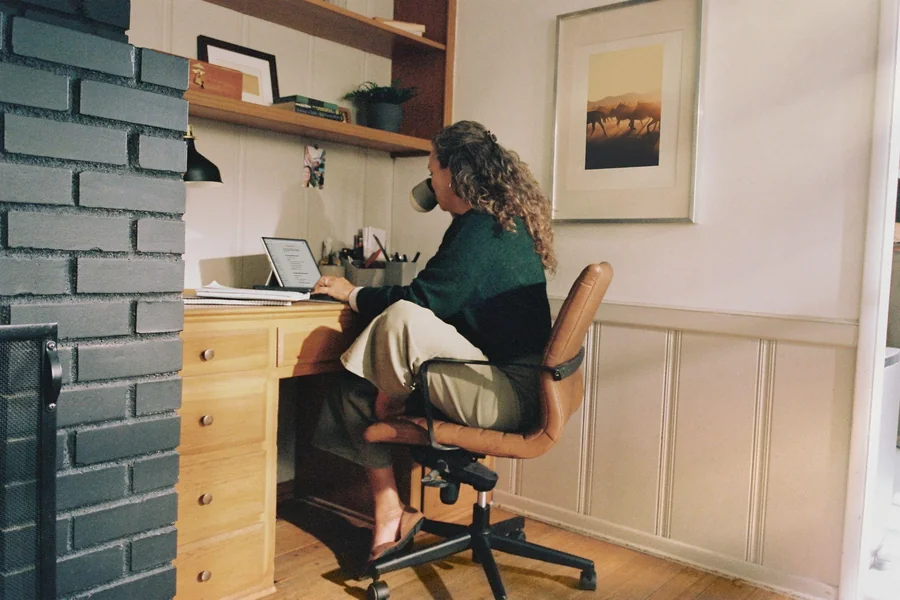
Working from home can sound ideal until you realize how many hours you are actually spending in the same room.
A desk that feels perfectly fine for answering a few emails can start to feel very different when it becomes the place where you spend most of the day. Poor lighting becomes harder to ignore, clutter starts to feel more distracting, and a room with no personality can make work feel more repetitive than it needs to.
The answer is not necessarily a complete home-office makeover.
A few changes to comfort, layout, lighting, and atmosphere can make a workspace feel noticeably better without turning it into a major project. The goal is simple: create a room you do not immediately want to escape the moment the workday ends.
Give the Room More Personality Than a Desk and a Chair
A functional workspace is important, but functional does not have to mean plain.
If you spend several hours a day in the same room, the way it looks matters. A completely blank space may seem practical at first, but over time it can start to feel temporary, unfinished, or more like a holding area for office equipment than part of your home.
Walls are one of the easiest places to change that. A feature wall, pattern, or subtle decorative detail can give the room more character without taking up valuable desk space. Something like Painted Paper can help create a workspace that feels more considered while still leaving plenty of room for practical furniture and storage.
The important thing is choosing something you will enjoy seeing every day.
You do not need to make the room dramatic. Even a restrained design can make the space feel intentional rather than accidental.
Once the walls feel settled, smaller details such as framed artwork, a plant, a lamp, or a few carefully chosen objects can finish the room without making it feel busy.
Fix the Things That Annoy You Every Single Day
Home offices often contain small problems that become strangely easy to accept.
Maybe the monitor sits slightly too low. Perhaps your desk is always covered in cables. Your chair might be technically usable but uncomfortable after two hours. You may have to stand up every time you need a charger or notebook.
None of those things seems serious by itself.
Together, they create friction throughout the day.
Spend one workday paying attention to what repeatedly interrupts you. If you keep adjusting your chair, the chair probably needs attention. If you are constantly moving things to find enough desk space, storage needs improvement.
Sometimes the solution costs almost nothing.
Move the monitor onto a stand. Put the items you use most often within easy reach. Remove things from the desk that have not been touched in months. Add a small drawer unit instead of letting paperwork pile up beside the keyboard.
A workspace should support the way you actually work, not the way you imagined you would work when you first arranged it.
Use Lighting to Change How the Whole Room Feels

Lighting can make the difference between a room that feels pleasant and one that becomes tiring before the afternoon is over.
Natural light is usually a good starting point, but the position of the desk matters.
Sitting directly in front of a bright window can create glare. Putting the window behind your screen can make it harder for your eyes to adjust. A position slightly to the side often gives you useful daylight without making the screen uncomfortable to look at.
Artificial lighting matters too.
A harsh ceiling light can make a home office feel much more like a workplace than a room you would voluntarily spend time in. A desk lamp or floor lamp can create softer layers of light, particularly during darker afternoons.
Think about video calls as well. If your face is always in shadow or you have a bright window directly behind you, a small lighting adjustment can improve the image considerably.
You do not need studio equipment. You just need enough balanced light to work comfortably without constantly squinting or adjusting the screen.
Make It Easy to Take Proper Breaks
One of the strange things about working from home is how easy it becomes to stop taking real breaks.
You may stand up to make coffee but bring it straight back to the desk. Lunch can turn into another half hour in front of the screen. Even a short pause often becomes scrolling on the same device you have been looking at all morning.
Try creating a reason to leave the workspace briefly.
That could mean keeping coffee somewhere else, eating lunch at the kitchen table, stepping outside for ten minutes, or simply using another room when you need a short break.
The home office itself can help by making the end of a work block feel clear.
When you finish a task, get up rather than immediately opening the next tab. Stretch, refill your water, or walk around the house before starting again.
Small changes of environment can make returning to the desk feel easier because the entire day is no longer experienced from one chair.
Keep the Room Calm Without Making It Empty
Clutter is distracting, but an office stripped of everything personal can feel equally unpleasant.
The best balance usually sits somewhere in the middle.
Keep the working surface relatively clear and let other parts of the room carry more personality. Shelves, wall storage, cabinets, and side tables can hold useful items without crowding the desk.
Try grouping similar things together.
Keep stationery in one place instead of scattering pens and notebooks across the room. Give chargers and cables a dedicated spot. Put paperwork somewhere that allows you to find it quickly rather than creating several small piles.
Visual calm is often more useful than absolute minimalism.
You can still have books, photographs, plants, or decorative pieces. The difference is that they should feel chosen rather than accumulated.
When everything has some kind of place, tidying the room at the end of the day also becomes much easier.
Create a Clear End to the Workday
The hardest part of working from home is sometimes stopping.
When the office is only a few steps away, there is always another email you could answer or one more small task you could finish.
A simple closing routine can create a clearer boundary.
Close the laptop. Put loose papers away. Return your mug to the kitchen. Turn off the desk lamp. If possible, leave the room or move into another part of the home.
Those actions may seem small, but they help separate work time from personal time.
This becomes even more important when the home office is in a bedroom or shared living area. In that case, try physically hiding work equipment when you are done. A cabinet, drawer, screen, or even a tidy storage box can reduce the feeling that work is constantly waiting for you.
A better home office is not necessarily the one with the most expensive desk or the latest equipment.
It is the room that makes it easier to sit down in the morning, stay comfortable throughout the day, and leave work behind when you are finished.
When you spend that much time in one place, making it somewhere you actually want to be is not an indulgence. It is simply good design.

Passionate about exploring diverse ideas and sharing inspiration, I curate content that sparks curiosity and encourages personal growth. Join me at ElementalNest.com for insights across a wide range of topics.
1 thought on “How to Create a Home Workspace You Actually Enjoy Spending Time In”