
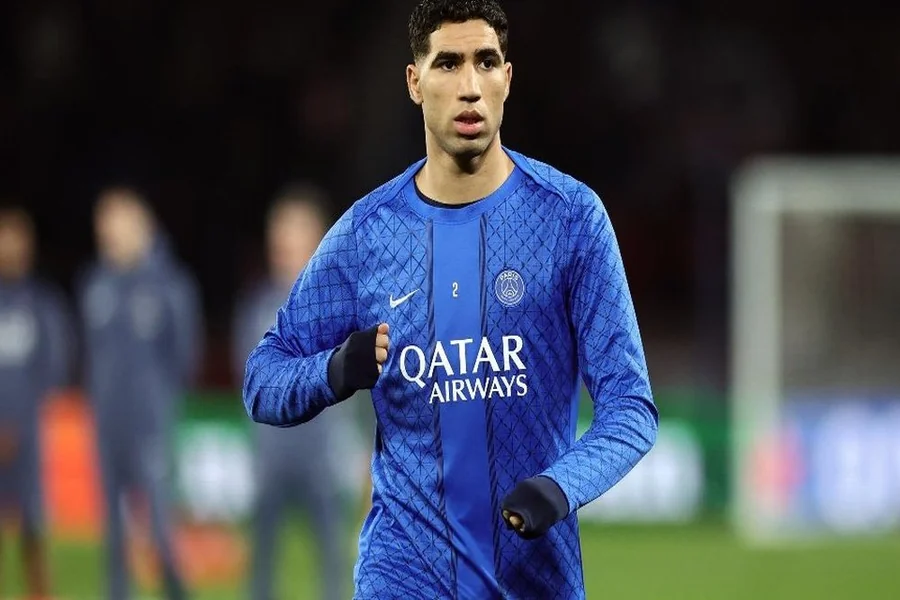
One Career, Many Chapters
There’re few modern football careers that carry the geographic sweep, personal narrative and cross-continental significance that the Achraf Hakimi story does today. Every stage of his career is no longer treated as a standalone transfer or a single season — instead it’s framed as a chapter in a much longer arc, one built around La Fabrica roots, European silverware, and a national-team story that redefined Moroccan football. What a lot of people don’t realize is the reality is, broadcasters, analysts and betting communities like dbbet approach every update in the Hakimi story as a checkpoint worth dissecting long before the next transfer window even opens. The result is a career in which attention isn’t generated by chance, but by structure, continuity and accumulated achievement.
Achraf Hakimi doesn’t need fake noise to matter. On the one hand: a player who moved from Real Madrid’s academy to Ligue 1’s biggest club while captaining his national team to the brink of history will always create meaning, season after season, tournament after tournament.
How a Modern Football Journey Works
This is less a single transfer story and more of an identity exam stretched across multiple clubs and continents. Hakimi’s career is divided into predictable phases — academy formation, loan-based development, and eventual stardom at the highest level — and within that structure, every piece of hakimi news consistently functions as a measuring stick for how far he’s come from his beginnings.
In a sport where so many academy graduates disappear into the noise of squad depth charts. To be honest, hakimi draws his own line that isolates and improves his development at every stage. Born in Madrid and. Raised in the suburb of Getafe to Moroccan parents, Hakimi signed as a youth player for Club Deportivo Colonia Ofigevi at the age of 8, then moved to Real Madrid ‘s famed academy a year later. That initial path guaranteed that his path would always be closely watched by scouts and supporters.
This speed turns the season into a statement, not background noise. Essentially, the reality is actually, hakimi made his senior Real Madrid debut in a friendly against PSG at the Ohio Stadium in July 2016. And after a spell with Real Madrid Castilla (which is quite common), made nine appearances for Los Blancos, scoring two goals and picking up his first Champions League winners ‘ medal when Real Madrid beat Liverpool in the 2017–18 final. The thing is, that moment alone changed the way scouts across Europe talked about its limitations for years afterward.
Two Faces of a Career on the Rise
In football, (in most cases) talent alone usually doesn’t build a career of this magnitude – time will tell. If you think about it, we’ll explore the side-by-side between Hakimi’s early promise in Madrid’s academy system and the loan route that in the end proved decisive in his development. From there, Hakimi was loaned to Borussia Dortmund for the 2018-19 and 2019-20 seasons, scoring 7 goals in 54 appearances, before joining Inter Milan, where he scored 7 goals in 37 appearances. Once you realize Hakimi, you can no longer ignore it: a path built on patience and gradual proof-of-concept, not an instant breakthrough — and that pattern has made each subsequent Hakimi story a real case study in how modern right-backs are actually developed.
You know what? Looking at it closely, this is why his arrival in Paris resonates with more than just a simple transfer fee. Achraf Hakimi signed for Paris Saint-Germain in a deal reported to be around 60 million euros plus bonuses, moving from Inter Milan after passing a medical. Fans and analysts have continually recast the move – not just as a transfer. But as a signal of PSG ‘s wider ambitions to build a squad capable of dominating Ligue 1 and Europe (which is quite common).
Even a routine PSG match became an opportunity for evaluation. After a sole season in Milan, he signed a five-year deal with PSG, quickly establishing himself as a vital part of the club’s five straight Ligue 1 titles and back-to-back Champions League titles, the first in club history. Coaches relied on him to anchor the right flank, opposing wingers used matches against him as a benchmark against elite pace and recovery speed, and PSG’s front office pointed to his consistency as proof their long-term project was working.
The Broader Stakes of Club and Country
No storyline amplifies an individual career quite like the collision of club success and national pride. For Hakimi, positioning matters as much as any single trophy — every tournament recalibrates the conversation around his legacy in real time. This dynamic operates beyond a simple club-versus-country dichotomy — it’s treated as a proxy battle for which achievement, continental dominance with PSG or historic breakthroughs with Morocco, defines him most.
Seriously, platforms including win win and broader football media ecosystems treat every major Hakimi headline as a preview of what the next chapter of his career could look like. Each update carries narrative weight that extends well past the final whistle, feeding discussion cycles that last until the next international break or transfer rumor.
And oh yeah, this story doesn’t just matter to PSG and Morocco. It means something different to a generation of young Moroccan players who now see a realistic path to Europe’s biggest clubs, to executives studying how loan spells shape modern full-backs, and to casual fans just enjoying one of the sport’s most dynamic wing-backs collide with elite competition on a random Tuesday night in the Champions League.
The National Team Chapter as an Evolving Storyline
Hakimi can’t just focus on his club’s achievements. He made his senior Morocco debut on 11 October 2016 against Canada as a substitute, and has since made 101 appearances for the Atlas Lions, scoring 12 goals and appearing at the 2018, 2022 and 2026 World Cups, helping lead them to the controversial 2025 Africa Cup of Nations. Actually, which, when you think about it, makes perfect sense. For Morocco, its success is built on sustained performance, leadership as captain and maintaining composure under pressure representing a country with growing football ambitions.
Hakimi finished sixth in the previous year’s Ballon d’Or voting and was expected to be a key piece for Morocco heading into the 2026 World Cup, a reflection of how central he had become to both club and country. He capped that campaign with one goal, two assists, two clean sheets and 21 corners taken before Morocco’s tournament ended in a 2-0 loss to France in the quarterfinals.
Guess what? The captain’s armband itself carries symbolic weight in this story — a Madrid-born player choosing to represent his parents’ homeland created a visual shorthand for a new generation of dual-heritage stars reshaping international football, tournament after tournament.
Broadcast Production and the Second Screen
Modern football consumption extends far beyond stadium attendance. Social media clips, live commentary threads, and instant tactical breakdowns transform every Hakimi appearance into a multi-platform experience. Key moments — an overlapping run down the flank, a driving cross into the box, a crucial defensive recovery — are repackaged within minutes, ensuring relevance even for those not watching live.
The discussion around hakimi news takes place simultaneously across various media channels, while highlights are shared even before a match ends on television. Such fragmentation only serves to enhance the eventness of his performances by increasing the means through which fans consume his career, from full match broadcasts to fifteen-second clips for mobile phones.
His story exists everywhere at once, and that omnipresence is part of what keeps it feeling significant even outside major tournament windows.
Why Every Update Feels Significant
Not every match Hakimi plays determines a title race or a legacy shift. Yet the structure around his career ensures that few updates feel disposable. Historical comparisons to past Madrid academy graduates, transfer-market speculation, and emerging leadership narratives frame every appearance as a meaningful step within a longer journey.
Even something as routine as an extended post-World Cup break, granted by PSG after Morocco’s quarterfinal exit, becomes newsworthy, framed as recovery after another demanding stretch with barely any time away from football over recent seasons. This interpretive layer prevents any chapter of his career from being dismissed as irrelevant.
Meaning is manufactured through context, not just consequence — and that’s precisely why fans of Real Madrid, PSG and Morocco alike keep following the hakimi story over almost any other full-back narrative in the sport today.
Conclusion: The Journey Is the Story
The story of Achraf Hakimi draws its strength from more than pure talent alone. It’s structural. By combining academy development, loan-based growth, and sustained excellence at both club and international level, his career has turned every season into a chapter with its own tension and lasting significance.
In this system, updates on Achraf Hakimi are never isolated headlines — they’re threads within one player’s ongoing pursuit of both continental and international glory. And oh yeah, his current deal with Paris Saint-Germain running through June 2029 ensures this story still has plenty of chapters left to write.
The success of this journey lies in understanding that attention isn’t captured by talent alone. It’s built through structure, contrast, and the relentless manufacture of stakes — one that will keep fans following every piece of hakimi news for as long as he keeps wearing the armband for club and country alike.

Passionate about exploring diverse ideas and sharing inspiration, I curate content that sparks curiosity and encourages personal growth. Join me at ElementalNest.com for insights across a wide range of topics.