
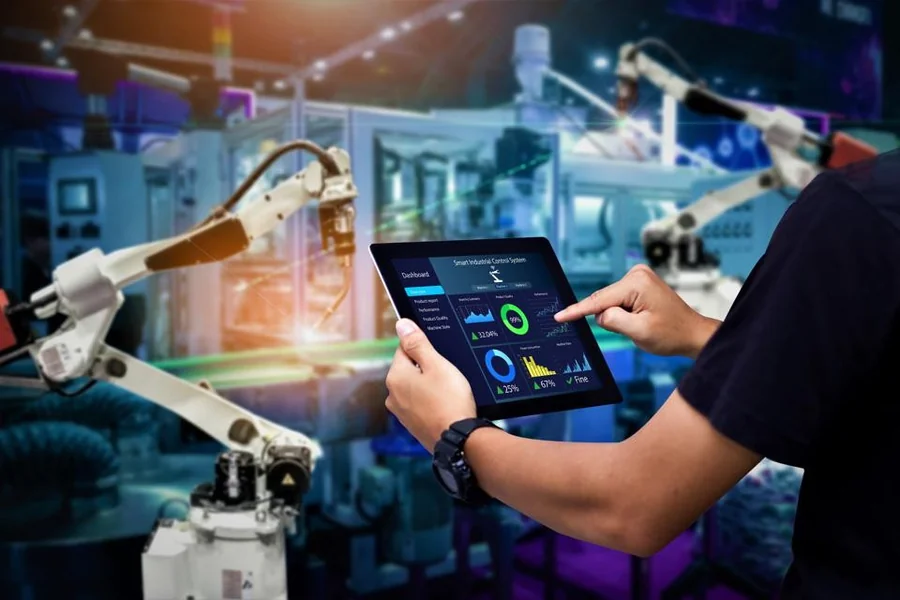
Many manufacturers invest heavily in automation, yet production delays, equipment downtime, and inconsistent quality continue to affect operational performance. As manufacturing environments become more complex, transforming production data into meaningful insights is often a significant challenge.
Many people wonder how a smart factory improves production intelligence and whether it can truly deliver measurable operational benefits. The answer lies in connected equipment, electrical instruments, and intelligent software that provide real-time visibility across production processes. These insights help manufacturers reduce inefficiencies, strengthen quality control, optimize resource utilization, and make faster, data-driven decisions.
Let’s learn the ways smart factory systems help improve production intelligence and support smarter manufacturing operations.
7 Key Capabilities That Strengthen Production Intelligence in Manufacturing
The following are the key ways in which a smart factory strengthens production intelligence and helps manufacturers build more efficient, connected, and data-driven operations.
1. Real-time Equipment Monitoring
A smart factory continuously monitors production equipment through connected sensors and electrical instruments, allowing manufacturers to identify abnormalities early, reduce downtime, and improve machine utilization.
This proactive approach helps maintain uninterrupted production while supporting more effective maintenance planning. It also provides operators with real-time alerts, enabling quicker responses to potential equipment issues before they escalate.
2. Data-driven Production Planning
Production data collected across manufacturing systems helps manufacturers forecast demand, optimize production schedules, balance workloads, and improve overall operational efficiency.
Better planning also enables faster responses to changing production requirements and customer demand. As a result, manufacturers can reduce production delays and improve on-time order fulfillment.
3. Enhanced Quality Control
A smart factory can deploy automated inspection systems that detect defects during production, helping maintain product consistency while reducing waste and rework.
Continuous quality monitoring also supports compliance with manufacturing standards and improves customer satisfaction. Accurate inspection data further helps identify recurring quality issues and supports continuous process refinement.
4. Predictive Maintenance
By analyzing equipment performance data, manufacturers can employ predictive maintenance strategies that reduce unexpected failures, extend equipment life, and improve maintenance planning.
This minimizes costly production interruptions and ensures critical equipment operates reliably. Scheduled maintenance activities also become more efficient, reducing unnecessary servicing and maintenance expenses.
5. Greater Operational Visibility
A smart factory connects equipment, electrical instruments, and production systems into a centralized platform, giving manufacturers a comprehensive view of production performance and process efficiency.
With unified operational data, managers can quickly identify bottlenecks and implement corrective actions. This level of visibility also improves coordination between production, maintenance, and operations teams.
6. Optimized Resource Utilization
Real-time production insights help manufacturers deploy labor, equipment, and materials more efficiently, reducing idle time and improving production capacity.
This leads to better resource allocation while maximizing overall manufacturing productivity. Improved utilization also supports cost control by minimizing unnecessary operational inefficiencies.
7. Quicker Operational Decision-making
A smart factory integrates operational and business systems, enabling decision-makers to access real-time insights that support quicker responses, improved forecasting, and continuous process improvement.
Faster access to reliable data helps manufacturers make informed decisions with greater confidence. This creates a more agile production environment that can adapt quickly to operational and market changes.
Drive Smarter Manufacturing with Trusted Industrial Solutions
Building a successful smart factory requires more than implementing new technologies. It demands reliable automation platforms, high-performance electrical instruments, connected equipment, and scalable control systems that work together seamlessly.
Choosing solutions that integrate easily with existing manufacturing infrastructure helps organizations improve production intelligence while maintaining operational continuity. Collaborating with a reputed electrical brand also provides access to industry expertise, dependable technologies, and ongoing technical support throughout the deployment process.
Thus, with the right industrial solutions in place, manufacturers can strengthen operational visibility, improve production efficiency, enhance equipment reliability, and make faster, data-driven decisions. This supports long-term business growth in an increasingly competitive manufacturing landscape.

Passionate about exploring diverse ideas and sharing inspiration, I curate content that sparks curiosity and encourages personal growth. Join me at ElementalNest.com for insights across a wide range of topics.