
A dead battery on a freezing January morning, a blown tire on the Kennedy, or a sudden stall in Loop traffic can turn an ordinary day into a stressful one in seconds. Most drivers never plan for a breakdown until it happens. This guide explains how to stay safe, what to tell a dispatcher, and how to choose a dependable Chicago towing service before you need one.
Why Breakdowns Hit Harder in Chicago
Chicago is tough on vehicles. Lake-effect winters drain batteries faster, freeze-and-thaw cycles carve potholes that can bend a rim in a single hit, and dense expressway traffic leaves little room for error. A stalled car on a busy corridor such as the Dan Ryan or Lake Shore Drive is also a hazard to everyone around it. Understanding these local risks lets you prepare calmly instead of reacting in panic.
First Steps in the Moments After a Breakdown
Safety comes before diagnosis. Your first job is to protect yourself and other drivers, not to work out what went wrong under the hood.
Immediate Safety Checklist
- Switch on your hazard lights as soon as the vehicle starts to slow.
- Steer toward the right shoulder or the nearest safe, level spot.
- On an expressway, stay inside with your seatbelt on unless there is smoke or fire. If you must exit, move well away from traffic.
- Call 911 first if anyone is hurt, the vehicle is on fire, or a travel lane is blocked.
- Place reflective triangles only when it is clearly safe to leave the vehicle.
Illinois’ Move Over law asks drivers to slow down and change lanes for stopped vehicles with flashing lights, but not every driver follows it. Visibility is your best protection.
What To Tell the Dispatcher
Breakdowns ignore business hours, so look for a company that offers Chicago 24 hour towing with a live dispatcher rather than a voicemail box. When you call, clear information gets a truck to you faster.
Details That Speed Up Dispatch
- Your exact location, including cross streets, mile marker, or nearest exit.
- Vehicle make, model, color, and drivetrain, such as front-wheel, rear-wheel, or all-wheel drive.
- What happened: flat tire, dead battery, stall, lockout, or collision.
- Access problems, such as a low-clearance garage, a steep driveway, or a ditch.
- Any modifications, like a lowered suspension or oversized wheels.
Choosing the Right Tow Truck for Your Vehicle
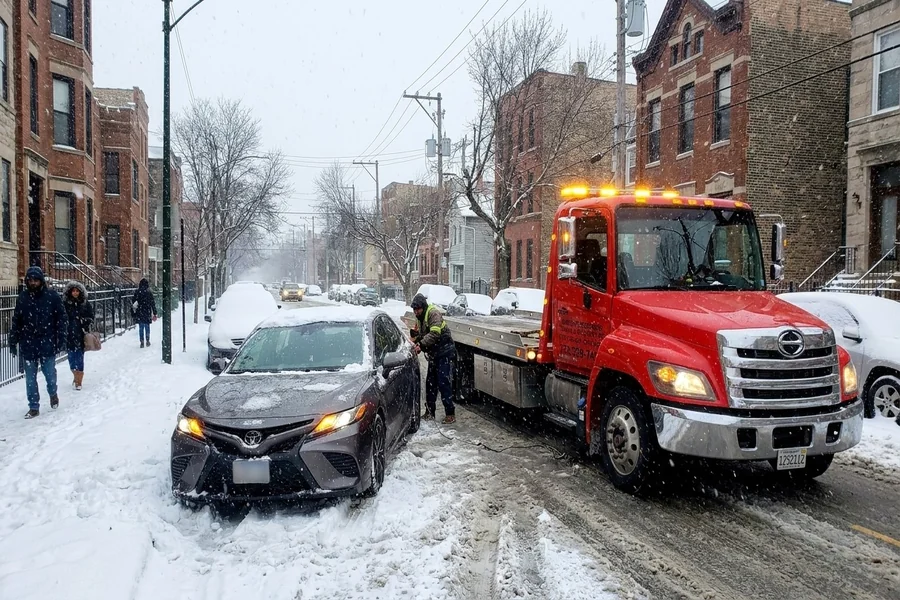
Alt Text: Tow truck with flashing lights helping a stalled car on a snowy Chicago street
Not every tow is the same, and the wrong equipment can cause expensive damage. A good dispatcher will ask questions about your vehicle for exactly this reason.
Common Truck Types and Best Uses
- Flatbed: Carries the entire vehicle off the ground, which suits luxury cars, low-clearance models, all-wheel-drive vehicles, electric cars, and motorcycles.
- Wheel-lift: Works for short, simple tows of standard front- or rear-wheel-drive cars.
- Heavy-duty wrecker: Handles semis, buses, box trucks, and other oversized loads.
Businesses face higher stakes. A stalled delivery van or box truck means missed deliveries and idle drivers, so fleet managers should line up a provider for every commercial tow before the emergency happens. A good partner can handle light-, medium-, and heavy-duty vehicles and keep your schedule moving.
How To Compare Towing Prices Without Getting Burned
Price matters, but the lowest advertised number is not always the lowest final bill. Towing invoices can include a hookup fee, per-mile charges, after-hours rates, and extras for winching or difficult recovery. Ask for the total before you agree to anything.
Questions Worth Asking Before You Agree
- What is the total estimated cost, including mileage and any fees?
- How long until the truck arrives?
- Is the company licensed and insured?
- Where will my vehicle be taken, and are there storage charges?
Warning signs include refusing to quote a price, demanding cash only, or showing up in an unmarked truck. Companies that promote upfront pricing and no hidden fees make comparison simple, and that transparency is worth more than a few saved dollars.
After the Truck Arrives: Protect Yourself
The stress is not over when the tow truck pulls up. A few quick steps protect you if a dispute or insurance claim follows.
- Take photos of your vehicle’s condition before it is loaded.
- Confirm the destination and get the quote in writing or by text.
- Keep your receipt and the driver’s name or truck number.
- Check whether your insurance policy or auto club membership already covers towing, so you do not pay out of pocket unnecessarily.
Build a Winter-Ready Emergency Kit
Winter is close, which makes now the right time to prepare. A well-stocked kit turns a long wait into a manageable one.
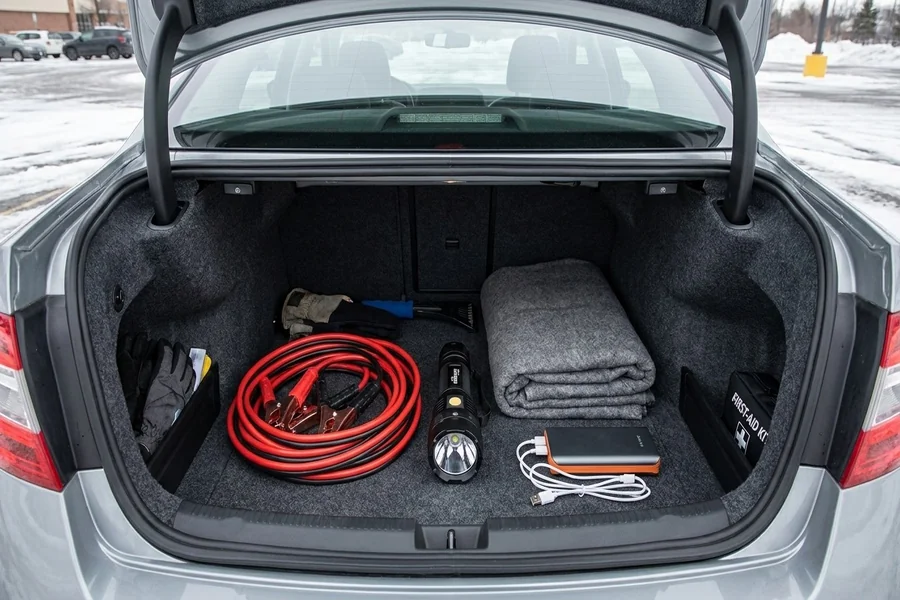
What To Keep in Your Trunk
- Jumper cables or a portable jump starter
- Flashlight with spare batteries
- Warm blanket, gloves, and boots
- Phone charger or power bank
- Water and non-perishable snacks
- Small shovel and sand or cat litter for traction
Add a pre-winter check of your battery, tire pressure, and wiper blades, and save a towing number in your phone today.
Remember That Not Every Problem Needs a Tow
Many roadside problems can be solved on the spot. A jump start, fuel delivery, flat tire change, or lockout service can get you moving again in minutes. Providers such as Immediate Response Towing, which serves Chicago, Evanston, Skokie, Cicero, and Oak Lawn, bundle these services with towing, so one call covers most situations. Their stated average response time of 15 to 30 minutes shows what a well-positioned local fleet can offer.
A breakdown will never be convenient, but it does not have to become a crisis. Stay visible, call for help with clear details, ask about pricing before you agree, and match the truck to your vehicle. Take five minutes today to build your emergency kit and save a trusted tow number in your phone.

Passionate about exploring diverse ideas and sharing inspiration, I curate content that sparks curiosity and encourages personal growth. Join me at ElementalNest.com for insights across a wide range of topics.