
Jewelry design begins with details.
A ring may have a simple band but an unusual setting. A pendant may combine a small symbol with an intricate shape. A pair of earrings may depend on a particular curve or repeated pattern to create its visual identity.
Because jewelry is small, these details can have a surprisingly large impact.
A slight change in proportion can make a piece feel completely different. A gemstone can alter the balance of a design. A surface pattern may look attractive from one angle but disappear from another.
For designers, exploring these ideas often means moving back and forth between sketches, reference images, 3D software, and physical prototypes.
AI 3D tools are introducing another possibility: using visual references to create early three-dimensional concepts more quickly.
Rather than replacing traditional jewelry design, this approach can make the experimental stage more flexible. Designers can explore shapes, compare variations, and decide which ideas are worth developing further.
Jewelry Is a Three-Dimensional Design Problem
A jewelry sketch usually shows only part of the final object.
A ring might be drawn from the top.
A pendant might be presented from the front.
An earring might be shown from a single carefully selected angle.
But the finished piece will be seen from many directions.
The thickness of the band becomes visible. The back of a pendant can affect how it sits against the wearer. The side profile of a setting can change the appearance of a gemstone.
These details are easy to overlook in a flat drawing.
A 3d model maker online can turn a concept into a 3D model, changing the way designers can examine the concept. T
The object can be rotated and viewed from different directions. Proportions can be inspected more easily. Designers can begin to see how individual elements relate to one another as a complete object.
This is especially useful when the design contains curves, layered elements, or unusual silhouettes.
Starting With a Photograph or Reference Image
Not every jewelry idea begins with a blank page.
Designers often collect visual references.
An old ornament may inspire a new pendant. A natural object may suggest the shape of a ring. A piece of architecture may provide a geometric pattern. Even a photograph of an unrelated object can trigger an idea for a new design.
The challenge is turning that inspiration into a three-dimensional concept.
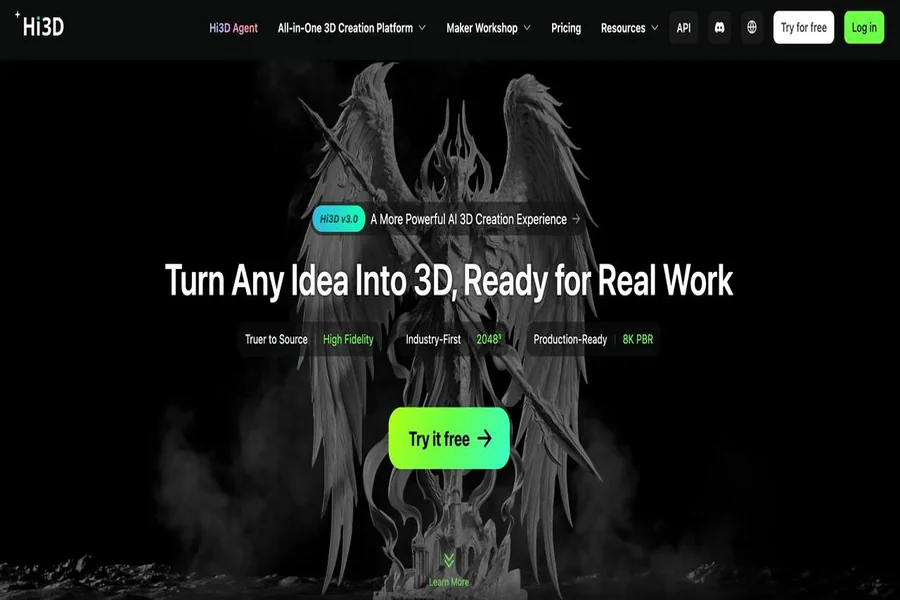
Hi3D’s image to 3D workflow provides one way to begin. Users can upload an image and generate a 3D model based on the visual reference.
A single image can provide a starting point when only one reference is available. Multiple views can provide additional information about the subject’s form.
The generated result should be treated as a concept rather than automatically as a production-ready jewelry model.
Still, it can give designers something concrete to examine.
Instead of asking what the idea might look like in 3D, they can start with a model and ask what should be changed.
Small Objects Need Careful Proportions
Size can make jewelry design particularly sensitive to proportion.
A decorative element that looks subtle in a large digital model may become visually dominant when reduced to the size of a ring.
A thin connection between two components may look fine on screen but may not be suitable for physical production.
A gemstone setting may need to be adjusted depending on its intended size.
This means that AI-generated jewelry concepts need human review.
The model can help explore the overall form, but designers still need to consider practical factors such as dimensions, structural strength, manufacturing methods, and wearability.
This is one reason AI 3D generation is most useful as an early-stage design tool.
It can accelerate exploration without pretending to eliminate the technical stages that come later.
Exploring Ring Shapes From Every Angle
Rings are a good example of why three-dimensional exploration matters.
A top view can show the main decorative element.
A side view reveals the height of the setting.
An angled view shows how the band connects to the central design.
These perspectives can create very different impressions.
Imagine a designer developing a ring inspired by a flower.
The first concept might use a large central form with curved petals.
A second version could make the petals smaller and create a more open structure.
A third could turn the flower into a geometric interpretation.
As 3D models, these concepts become easier to compare.
The designer can rotate them and consider how the form changes visually from different directions.
The process is less about finding a single answer and more about understanding which characteristics make the concept distinctive.
Patterns Become More Interesting in 3D
Patterns are another area where three-dimensional modeling can add value.
A designer might begin with a flat decorative pattern.
It could be based on leaves, waves, geometric shapes, stars, or abstract lines.
On paper, the pattern may look complete.
But once it is placed on a curved surface, the visual effect changes.
Lines can appear closer together. Some parts may become more prominent. The pattern may look different depending on the viewing angle.
A 3D model allows these effects to be explored.
Designers can experiment with how a pattern interacts with the shape rather than treating the decoration as a separate graphic.
This can be particularly useful for concept development involving sculptural jewelry.
Texture and Surface Character
Jewelry is also highly sensitive to surface appearance.
Polished metal, brushed metal, engraved surfaces, gemstones, and decorative patterns each create different visual impressions.
AI-generated textures can help designers experiment with these possibilities during the concept stage.
Hi3D includes tools for generating realistic and stylized textures, allowing creators to explore different surface treatments on generated models.
A single jewelry concept could therefore be visualized in several ways.
One version might emphasize a clean polished appearance.
Another could explore a darker, more textured surface.
A third could use a stylized treatment to communicate a more artistic direction.
These visualizations do not replace decisions about actual materials and manufacturing processes, but they can help communicate the intended appearance of a concept.
Exploring Gemstone Arrangements
The central stone often becomes the visual focus of a jewelry piece.
Changing its size, position, or surrounding elements can significantly alter the design.
A pendant with one central stone creates a different visual balance from one surrounded by several smaller elements.
Similarly, a ring can use one prominent stone or distribute several smaller stones around the band.
Three-dimensional visualization can help designers examine these arrangements as complete objects.
The goal is not necessarily to simulate the final gemstone perfectly.
Instead, designers can use the model to investigate relationships between the central element and the surrounding structure.
Does the setting feel too large?
Does the decorative frame compete with the stone?
Does the piece still look balanced when viewed from the side?
These questions become easier to discuss when everyone can see the concept as a 3D object.
Creating Variations Without Starting Over
One of the advantages of digital design is that a basic concept can become the foundation for many variations.
This is especially useful in jewelry, where small changes can produce noticeably different results.
A designer might keep the same central shape while changing:
- The thickness of the band
- The size of the decorative elements
- The arrangement of stones
- The surface treatment
- The overall proportions
- The level of ornamentation
AI 3D generation can support this exploratory mindset by making it easier to create initial concepts from visual references.
Some versions will immediately feel unsuitable.
Others may reveal an unexpected combination that the designer had not considered before.
The ability to explore these alternatives can be more valuable than trying to make the first concept perfect.
From Inspiration to a Design Collection
Jewelry designers rarely work with only one idea.
A single theme can produce an entire collection.
For example, a designer might develop a collection inspired by ocean waves.
One piece could use a curved pendant.
Another could interpret the same movement through a ring.
A third could translate the wave pattern into earrings.
The individual pieces need to feel related without being identical.
3D concept generation can help explore how one visual idea can be translated into different forms.
The same reference language can be used as a starting point for several models.
Designers can then decide which shapes belong together as a collection.
This makes AI 3D useful not only for individual objects but also for exploring relationships between multiple designs.
Communicating Ideas With Clients
Jewelry concepts often need to be discussed before a final piece is manufactured.
A designer may need to explain a shape to a client who does not use 3D software.
A flat sketch can communicate the basic idea, but a three-dimensional model can make the explanation more immediate.
The client can see the piece from different angles.
The designer can point out particular details.
Alternative versions can be compared.
Changes can be discussed before time and material are invested in production.
This can make 3D models useful communication assets even when the eventual jewelry will be created through a completely different manufacturing process.
Preparing Concepts for Further Development
Once a jewelry concept has been selected, it may move into more specialized software and production workflows.
Professional jewelry production can involve precise dimensions, CAD modeling, stone settings, casting requirements, tolerances, and other technical considerations.
An AI-generated model is not automatically suitable for these stages.
It may need substantial modification before it can be used for manufacturing.
However, the ability to export a model in common 3D formats can make it easier to use the concept as a reference elsewhere.
Hi3D supports formats including OBJ, GLB, STL, FBX, USDZ, and 3MF.
The specific format needed depends on the next stage of the workflow.
For jewelry designers, the important point is that the generated model can serve as a portable design reference rather than remaining only as an image on a screen.
When the First Concept Is Not the Final Concept
Creative work often becomes better through revision.
A jewelry designer may initially imagine a very detailed piece and later realize that a simpler silhouette works better.
A complicated pattern may be reduced.
A large decorative element may become smaller.
Two separate ideas may be combined into one.
AI 3D generation can support this process because it lowers the effort required to create an initial concept.
Instead of spending most of the early process constructing geometry manually, designers can focus more attention on evaluating ideas.
That does not mean less design work.
It can mean moving design decisions earlier in the process.
The designer has more opportunities to ask:
What happens if this shape becomes thinner?
What if the central element moves higher?
What would this concept look like with a completely different surface treatment?
Each question can lead to another version.
3D as a Creative Sketchbook
Traditionally, a sketchbook is where designers record unfinished ideas.
The sketches do not have to be perfect.
Their purpose is to capture possibilities.
AI 3D tools can provide something similar in three dimensions.
A generated model can be rough, experimental, or incomplete. It can still be useful if it helps the designer understand an idea.
One model may inspire another.
A failed concept may reveal an interesting curve.
A strange proportion may suggest a completely different design direction.
This is perhaps one of the most useful ways to think about AI 3D in jewelry design: not as an automatic jewelry-making system, but as a kind of three-dimensional sketchbook.
The Future of Jewelry Design May Begin With More Experiments
Jewelry has always combined creativity with precision.
The final piece may need to meet demanding practical requirements, but the original idea can come from almost anywhere.
A photograph.
A pattern.
A building.
A natural form.
A memory.
A simple sketch.
AI 3D tools make it easier to take some of these references and turn them into three-dimensional concepts.
Hi3D provides image-to-3D generation, texture tools, multi-view workflows, and flexible model export, giving designers different ways to explore an idea before committing to a final direction.
The technology does not replace jewelry designers or specialized manufacturing processes.
Instead, it changes what can happen before those stages.
More ideas can be visualized.
More variations can be compared.
More unusual shapes can be explored.
And concepts that once existed only as rough sketches can become something designers can actually rotate, inspect, and rethink.
For a field where a tiny detail can define an entire piece, having more ways to experiment in three dimensions could make the journey from inspiration to jewelry concept much more creative.

Passionate about exploring diverse ideas and sharing inspiration, I curate content that sparks curiosity and encourages personal growth. Join me at ElementalNest.com for insights across a wide range of topics.