
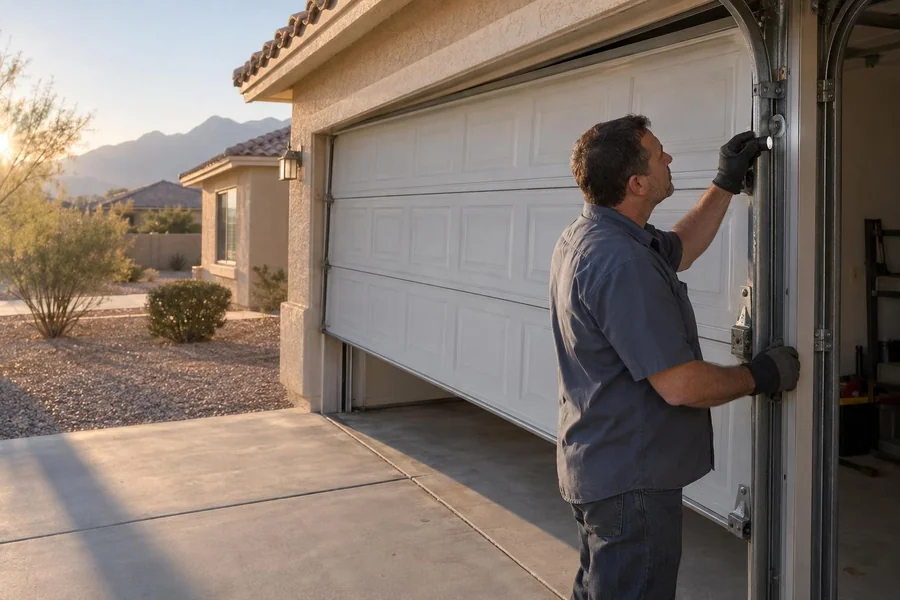
The sound is unmistakable. A flat metallic bang, then a grinding scrape, then a door hanging at an angle with one side several inches higher than the other. Most people do the same thing next: they press the button again, or they grab the bottom panel and pull.
Both instincts make the repair longer and more expensive. A door that has come off its track is a system that has lost its balance, and the fastest route back to a working door starts with leaving it exactly where it is.
Before it jumps: the warning signs of the weeks before
Doors almost never leave the track without notice. The warnings show up first as small changes in sound and movement, and they are easy to dismiss.
Watch for a door that shudders at one specific point in its travel, a gap opening along one side as it closes, a rattling roller, or black dust collecting on the track. Any of those means a roller, a hinge or the track alignment is already out of specification.
The other early sign is a door that will not stay put when you lift it halfway by hand with the opener disconnected. That is a spring balance issue, and unbalanced doors put uneven load on both tracks until one side wins. Booking garage door repair in Las Vegas at the shudder stage rather than the bang stage is the difference between a service call and a panel replacement.
The moment it jumps: why forcing it makes things worse
When a roller leaves its track, the door’s weight stops being shared evenly. One cable often goes slack while the other carries more load than it was designed for, and the sections twist against each other at the hinges.
Running the opener at that point pulls a twisted door against a fixed rail. The usual results are bent track, torn hinges, a cracked top section where the opener arm attaches, and in bad cases a cable that comes off its drum entirely. A twenty minute repair becomes a parts order.
Do these three things instead:
- Stop pressing any button, including the wall control and the keypad
- Unplug the opener at the ceiling outlet so nobody tries it later
- Keep cars, children and pets out from under the door
- Leave the red release cord alone if the door is stuck at an angle
- Photograph the door from a safe distance for the technician
The repair: what a technician does and in what order
The first move is securing the door, usually with clamps or locking pliers on the track below the bottom roller so the door cannot drop while it is being worked on. Nothing else happens until the weight is controlled.
Next comes finding the cause rather than just the symptom. A technician checks cable tension on both sides, inspects the rollers and their stems, looks for a bent section of track or a loosened track bracket, and tests the spring balance.
Only then does the door go back on. Rollers are re-seated, damaged track is straightened or replaced, hinges are checked, and the door is cycled by hand before power is restored. A proper job ends with a balance test and a reversal test on the safety sensors, not with the door simply being back in its slot.
After the fix: keeping it there in desert conditions
Las Vegas is hard on the moving parts of a garage door. Fine grit blows into the tracks during spring and monsoon season winds, and it turns into an abrasive paste when mixed with heavy grease. The local best practice is to keep tracks clean and dry and to lubricate rollers, hinges and springs with a light lubricant rather than packing grease into the track itself.
Heat is the second factor. Attached garages here run extremely hot in summer, nylon roller wheels harden and go brittle over time, and steel sections expand enough that alignment set in January can be slightly off in July. A yearly tune up in spring, before the worst heat, catches most of it.
If you want to see how a company performs before you book, the reviews and the mapped service area do the work for you: the listing for Non Stop Garage Door shows both, which is a faster read than any sales page.
Two questions people ask while the door is stuck
Can I drive my car out? Not until the door is secured, because a door hanging on one track can drop without warning, and no vehicle is worth standing under it.
Is this covered by a home warranty? Sometimes, though many policies exclude damage caused by operating the door after the failure, which is one more reason to unplug the opener first.

Passionate about exploring diverse ideas and sharing inspiration, I curate content that sparks curiosity and encourages personal growth. Join me at ElementalNest.com for insights across a wide range of topics.