
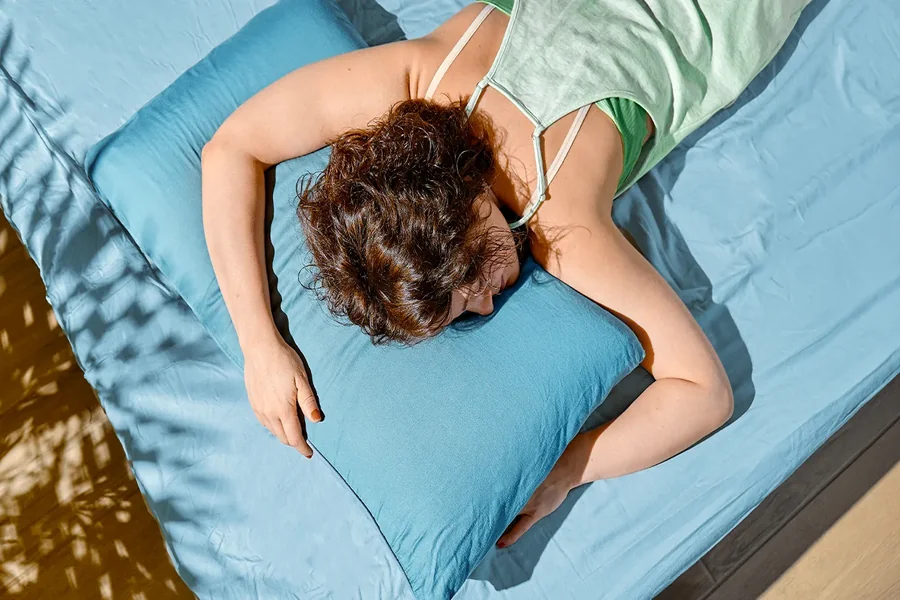
Most people spend more on a phone case than on the thing their head rests on for eight hours. I did the same for years. I bought pillows the way I bought cereal, by whatever looked soft at the store, and then I wondered why I woke up with a headache and a dry throat more mornings than not.
Here is the part that took me too long to connect: the pillow you sleep on can make snoring and breathing interruptions worse, or it can take pressure off your airway. It depends on angle, height, and where your jaw ends up when you finally stop moving. A properly shaped Pillow for Sleep Apnea is not a cure, and I want to be clear about that up front, but the difference between lying flat and lying at an incline is real, and it shows up in how you feel at 7 a.m.
So let’s talk about what the pillow is actually doing, why the flat one on your bed right now might be working against you, and how to figure out what your own body needs.
What Sleep Position Does to an Airway
Sleep on your back with a thin pillow and gravity has a clear job: it pulls the soft tissue at the back of your throat downward and back, which narrows the space air travels through. That narrowing is the mechanical story behind a lot of snoring. When the airway closes further, breathing pauses happen.
Roll onto your side and the picture changes. The tissue shifts to the side, the airway opens, and many people breathe noticeably easier. It’s why side sleeping is the most commonly recommended position for mild snoring and for people who want to reduce the number of times their breathing slows or stops during the night.
But side sleeping only works if the pillow lets it work. A pillow that’s too tall tilts your chin down toward your chest and pinches the airway from the front. Too flat and your neck bends, your shoulder takes the weight, and you’ll roll back onto your back within the hour. The sweet spot keeps your head, neck, and spine roughly level while leaving your chin slightly up, not tucked.
A Thumb Test You Can Run Tonight
Before you buy anything, measure. Lie on your side on your current pillow and have someone look at you, or film yourself with your phone propped on a shelf. Then check three things.
- The gap between your mattress and the side of your head. If your nose points down at the mattress, the pillow is too tall. If your ear sits below your shoulder line, it’s too flat.
- Your jaw. A chin pressing toward your chest is a pinched airway. You want it neutral or tilted a touch up.
- Your bottom arm. Numbness or tingling means the pillow is biting into your shoulder and you’ll move off it before morning.
That test costs nothing and tells you more than a product description will. I’ve run it on hotel pillows for years, and I can now predict within about ten minutes whether I’ll sleep through the night. Most hotel pillows fail. That’s not a knock on hotels, it’s just geometry.
Why Elevation Helps More Than Most People Expect
There’s a second lever beyond side versus back, and it’s the incline. Raising your upper body rather than just your head changes how gravity loads the tissue in your throat, and for a lot of people it reduces snoring and makes breathing feel easier.
A wedge or adjustable base tilts your whole torso, from roughly the waist up. Stacking three pillows behind your head does not do the same thing, because it bends your neck forward and gives you a sore morning instead. The distinction matters: you want your torso angled, not your chin dropped.
People using CPAP machines often find the incline helps too, partly because mask seal quality changes when you’re not lying completely flat. A mask that leaks when you’re horizontal frequently seals better at an angle. Anyone who has woken up to the sound of their own mask hissing knows how much that matters for actually sticking with treatment. The National Heart, Lung, and Blood Institute is a solid place to start if you want the clinical background on how sleep apnea is diagnosed and managed.
The Pillow Shapes, Ranked by What They’re Good At
Not every shape suits every sleeper. Here’s how I’d sort them if you handed me a catalog and asked me to be honest.
| Shape | Best for | Watch out for |
| Wedge | Back sleepers who need torso elevation; acid reflux alongside snoring | Too steep an angle and your lower back complains |
| Contoured cervical | Side sleepers who need neck support without chin tucking | Firmness is unforgiving if you chose the wrong size |
| Adjustable modular systems | People whose needs change, or couples sharing concerns | Setup time and cost; you have to actually tune it |
| Standard pillow | Light snorers with no diagnosed condition | Almost no control over angle, the whole problem |
If you forced me to pick one for a side sleeper who snores, I’d go contoured cervical first and wedge second. Back sleepers with reflux get the wedge. Combination sleepers, meaning most of us, get the adjustable setup, because you’ll change position two or three times a night whether you plan to or not.
Setting It Up Right the First Time
Buying the pillow is the easy part. Here’s the sequence I’d follow, in order.
- Track your sleep position for three nights. A phone on a nightstand or a partner’s observation is enough. Most people guess wrong about which position they spend the most time in.
- Decide your primary goal. Fewer breathing disruptions, less neck pain, or better CPAP comfort. Those three don’t always point to the same pillow.
- Match the height to your shoulder width. Broad shoulders need a taller pillow. Narrow shoulders need less. This is the single biggest sizing mistake people make.
- Give it two weeks before you judge. Neck muscles that have been stretched the wrong way for years need time to adjust, and the first night is often the worst one.
- Recheck your setup after a month. Pillow loft compresses over time, and what worked in week one may sit too low by week six.
One more thing worth knowing about the bigger picture: sleep problems rarely travel alone. According to the Centers for Disease Control and Prevention, a large share of American adults routinely fall short on sleep, and insufficient rest is tied to a long list of chronic health issues.
Fixing your pillow won’t fix all of that, but it’s one of the few variables you control completely, and it costs far less than most interventions.
Where the Pillow Stops and a Doctor Starts
I want to be straight with you, because this is where a lot of product pages get vague. A pillow manages position. It does not treat a diagnosed breathing disorder, and it won’t replace a CPAP machine, an oral appliance, or a clinical evaluation.
If a partner has told you that you stop breathing, if you wake gasping, or if you’re falling asleep at your desk, that’s a conversation with a physician, full stop. Positional support can absolutely be part of the plan, and many clinicians are glad when patients ask about it. But the pillow is a supporting actor, not the lead.
For milder cases, meaning snoring without diagnosed apnea, the research and clinical guidance generally point toward positional changes as a reasonable first move. The evidence on positional therapy is well established in the sleep medicine literature, and you can read primary work through DOI records if you want to go deeper than a summary.
Start With the Angle, Not the Price Tag
The flat pillow on your bed was designed for comfort in a showroom, not for keeping your airway open at 3 a.m. That’s the whole problem in one sentence. Side position plus a neutral chin plus a slight torso incline covers most of what a pillow can realistically do for your breathing, and you can test all three tonight with what you already own before you spend a dollar.
If your current setup fails the thumb test, change it. Your throat has been putting up with the wrong angle for years. What would one better night actually be worth to you?

Passionate about exploring diverse ideas and sharing inspiration, I curate content that sparks curiosity and encourages personal growth. Join me at ElementalNest.com for insights across a wide range of topics.