Most first trips to Japan follow the same well-worn line: Tokyo, Kyoto, Osaka, with a day trip or two squeezed in between. It is a great trip, and there is a reason it is so popular. But if what you love is mountains, quiet gardens, old wooden streets, fresh seafood and the kind of hot spring that makes you forget what day it is, there is another way to cross the country.
It runs along the Sea of Japan side of Honshu, through a region called Hokuriku. Snow-capped Alps rise behind fishing towns. Kanazawa keeps its tea houses and samurai lanes. The bay at Toyama is famous for seafood, and the trains are as punctual as anywhere in Japan. This guide sketches a slow week through the region, organized loosely around the natural elements that shape it: earth, water, fire and air.
Why Hokuriku deserves a place on your itinerary
Hokuriku sits between Tokyo and the Kansai region, which makes it easy to use as a scenic alternative to the usual route. The landscape changes with the seasons more dramatically than almost anywhere else in the country. Spring brings cherry blossoms and swollen rivers, summer is green and humid, autumn turns the mountains copper, and winter buries the coast in some of the heaviest snowfall in Japan.
It is also less crowded than the headline cities. You will still meet other travelers, particularly in Kanazawa, but you are far more likely to find a quiet temple path or a counter seat at a neighborhood sushi bar.
How the route works
The simplest way to see it is by train. The Hokuriku Shinkansen runs from Tokyo through Nagano, Toyama and Kanazawa as far as Tsuruga. From there, a limited express service carries you on to Kyoto and Osaka, so you can travel from one end of the country to the other without ever taking the main Tokyo to Osaka bullet train.
For visitors from overseas, there is a rail ticket built around exactly this route. The Hokuriku Arch Pass is a regional pass that gives unlimited rides on JR trains in the Hokuriku area for seven consecutive days. It covers the Hokuriku Shinkansen between Tokyo and Tsuruga, reserved seats on the limited express to Osaka and Kyoto, and a number of local lines and airport services. It is sold only to foreign passport holders who enter Japan as temporary visitors. According to JR West’s official listing, the adult price was ¥35,000 and the child price ¥17,500 as of early 2026, but prices and terms change, so check the current figures before you buy.
A few details are worth knowing:
- The pass does not cover the Tokaido Shinkansen between Tokyo and Shin-Osaka, which is why the route runs along the coast instead
- Green Car and GranClass seats, and sleeper trains, cost extra
- Seat reservations are required on reserved-seat services, so plan stops before you travel
- You can buy it through overseas agents, who issue a voucher to exchange in Japan, or directly from JR West online
JRailPass is an authorized seller of the pass and is not part of the JR Group. Whether the pass saves you money depends on your itinerary, so add up the individual ticket prices for the legs you intend to take and compare.
Earth: Nagano and the Japanese Alps
Start where the land rises. Nagano is about an hour and a half from Tokyo by Shinkansen, and it feels like a different country. Zenko-ji, the city’s great temple, has stood for centuries, and the old approach street is lined with small shops and noodle stands. Nearby mountain villages and ski areas make this a good base for walking in the warmer months and snow sports in winter.
If you want to go deeper, the surrounding mountains offer onsen towns, forest trails and the famous snow monkeys that bathe in hot springs. Some of these require buses or other non-JR transport, so check how you will reach them and whether an extra ticket is needed.
Water: Toyama Bay and the coast
Next comes the sea. Toyama sits on a bay known for its seafood, particularly white shrimp and firefly squid in season, and the city has a compact, walkable center with a modern glass art museum and a canal-side park. It is a relaxed place to spend a night, and a good one for food lovers.
Along the coast and in the nearby hills, hot spring towns offer the other kind of water: steaming, mineral-rich and ideal after a day of travel. Look for a ryokan that serves local seafood and has its own bath, and give yourself an evening with no plans.
Fire: Kanazawa and the crafts of the kiln
Kanazawa is the heart of the region, and the craft traditions that make it special are tied to fire and heat. The city is known for gold leaf, which is made here in remarkable quantity, and for Kutani ware, a vividly painted porcelain fired in local kilns. Many workshops let visitors try a hands-on class, which makes for a memorable souvenir.
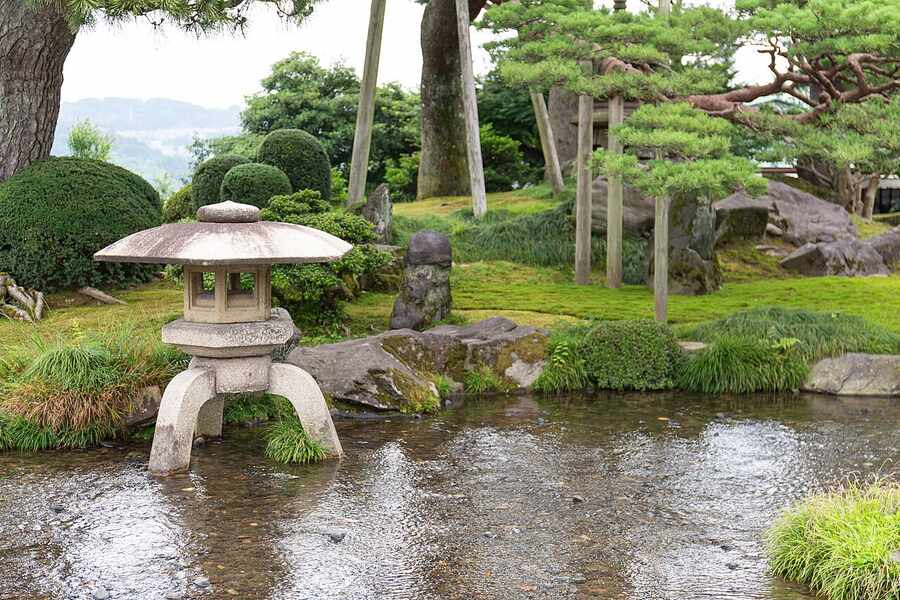
Walk through the old tea house districts in the early morning, when the lanes are quiet. Kenroku-en, widely counted among Japan’s most celebrated gardens, changes completely with each season, and the nearby castle grounds and contemporary art museum round out a full day. Give Kanazawa at least two nights if you can.
Air: Fukui, mountain temples and sea cliffs
The last stretch runs down toward Fukui, where the sea air is sharp and the pace is slower. Eiheiji, a Zen monastery set among tall cedar trees, is one of the most atmospheric places in the region and rewards a quiet, unhurried visit. Along the coast, dramatic cliffs and rocky shores offer wide-open views, especially on a clear day.
Reaching some of these places requires buses or local services outside the pass, so look up connections in advance. Once you reach Tsuruga, you transfer to the limited express and continue on to Kyoto or Osaka, with the sea and then the mountains sliding past the window.
A sample seven-day outline
This is only a starting point. Adjust it to the season and your own pace.
- Day 1: Arrive in Tokyo and settle in
- Day 2: Shinkansen to Nagano, temple visit and local food
- Day 3: Explore the mountains or onsen towns near Nagano
- Day 4: Travel to Toyama, with an evening by the bay
- Day 5: Continue to Kanazawa for gardens, crafts and tea houses
- Day 6: Second day in Kanazawa, or a side trip toward Fukui
- Day 7: Limited express from Tsuruga to Kyoto or Osaka
If your pass starts on day two, you can spend the first day in Tokyo without using up a day of validity, which is worth planning for.
Practical tips for the journey
- Book seats early, especially during Golden Week, summer holidays and peak foliage season
- Pack light. Large suitcases are easier to send ahead between hotels using Japan’s luggage forwarding services
- Carry your passport, which you will need as proof of eligibility
- Check the weather. Winter snow can delay trains and close mountain roads
- Leave buffer time around any tight connection
- Keep cash handy. Many small restaurants and shops still prefer it
- Look into seasonal closures if you plan to visit mountain attractions
Final thoughts
Japan rewards travelers who are willing to leave the usual route. The Hokuriku coast offers mountains and sea, gardens and kilns, steam rising from outdoor baths and a pace that lets you notice small things. Plan the rail connections, reserve your seats, and leave a little room in the schedule for the unplanned stop that ends up being the best part of the trip. If you are still shaping your travel wish list, this quiet coast is a strong candidate for the top of it.

Passionate about exploring diverse ideas and sharing inspiration, I curate content that sparks curiosity and encourages personal growth. Join me at ElementalNest.com for insights across a wide range of topics.