
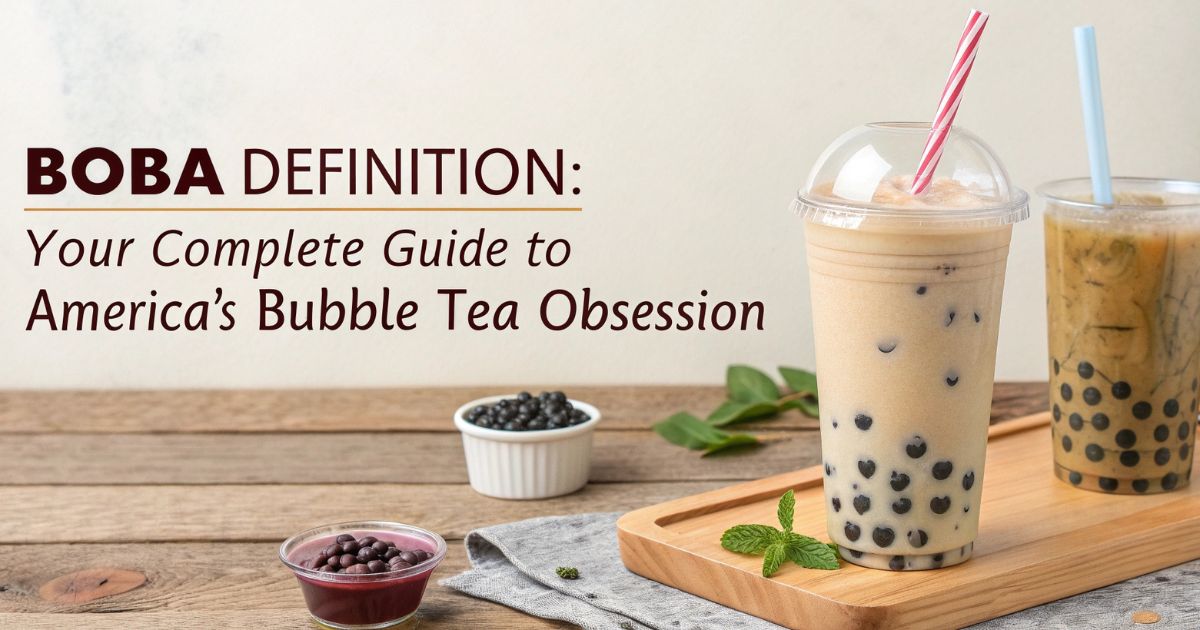
You’ve seen those Instagram-worthy drinks with mysterious black pearls dancing at the bottom, but what exactly is boba?
This chewy sensation has transformed from a Taiwanese street drink into America’s fastest-growing beverage trend.
Let’s dive deep into everything you need to know about these delightful tapioca pearls that have captured millions of taste buds nationwide.
What Exactly is Boba?
Boba refers to the chewy, marble-sized spheres made from tapioca starch that sit at the bottom of your favorite bubble tea. These translucent gems originated in Taiwan during the 1980s and get their distinctive bounce from cassava root processing.
The magic happens when tapioca starch transforms under heat and pressure. Manufacturers roll the starch into perfect spheres, then boil them until they achieve that signature chewy texture Americans have grown to love.
Traditional black boba gets its dark color from brown sugar or molasses. However, modern variations include clear pearls, fruit-flavored options, and even popping boba filled with juice that bursts in your mouth.
Each pearl contains roughly 7 calories and provides that satisfying chew factor that makes drinking boba tea feel like a snack and beverage combined.
How Boba Conquered American Taste Buds
The bubble tea revolution began in Taichung, Taiwan, when tea shop owner Lin Hsiu Hui dropped tapioca balls into her iced tea during a staff meeting in 1988. This accidental innovation sparked a cultural phenomenon that would eventually cross oceans.
Boba first landed on American shores through Asian immigrant communities in California during the 1990s. Cities like Los Angeles, San Francisco, and New York became early adopters, with dedicated boba shops sprouting in Asian neighborhoods.
The turning point came around 2010 when social media transformed boba drinks into photogenic status symbols. Instagram users couldn’t resist posting pictures of those colorful drinks with their distinctive wide straws and floating pearls.
Today, the American bubble tea market generates over $2.4 billion annually, with mainstream chains like Starbucks and Dunkin’ introducing their own boba-inspired beverages to capitalize on this growing trend.
Understanding Every Component That Makes It Special
A proper boba drink consists of five essential components working in perfect harmony. The base typically features black, green, or oolong tea, though fruit and milk alternatives have gained popularity among American consumers.
The tapioca pearls themselves require precise preparation. Quality shops cook them fresh daily, achieving the perfect balance between chewy exterior and slightly softer center that boba enthusiasts call “QQ texture.”
Sweeteners range from classic simple syrup to brown sugar, honey, or flavored syrups. Many American boba shops offer customizable sweetness levels, typically ranging from 0% to 100% to accommodate different preferences.
Milk or creamer transforms regular tea into the creamy bubble tea most Americans recognize. Options include dairy milk, condensed milk, non-dairy alternatives like oat or almond milk, and specialized creamers designed specifically for boba preparation.
Ice and the signature wide straw complete the experience. That oversized straw isn’t just aesthetic—it’s engineered to accommodate the tapioca pearls while preventing clogs during your drinking adventure.
Boba vs Bubble Tea vs Tapioca Pearls

The terminology surrounding boba can confuse newcomers to this delicious world. “Boba” specifically refers to the chewy pearls themselves, derived from the Taiwanese slang for “big breasts” due to their round, plump appearance.
“Bubble tea” encompasses the entire beverage, including tea, milk, sweeteners, and boba pearls. The “bubble” originally described the foam created when tea is shaken, not the pearls floating inside.
Americans often use “boba” and “bubble tea” interchangeably, though purists maintain distinctions. West Coast Americans typically say “boba,” while East Coast consumers favor “bubble tea.”
“Tapioca pearls” represents the most technical term, describing the actual ingredient composition. However, this clinical terminology rarely appears in casual conversation or marketing materials targeting American consumers.
Regional variations exist nationwide. Some areas call it “pearl milk tea,” while others use “boba tea” to describe the complete beverage experience.
What Are Those Black Pearls Actually Made From?
Tapioca starch extracted from cassava root forms the foundation of every boba pearl. This tropical plant, native to South America, produces a naturally gluten-free starch perfect for creating those beloved chewy spheres.
The manufacturing process involves mixing tapioca starch with water and sweeteners, then forming the mixture into small balls. Heat treatment gelatinizes the starch, creating that distinctive bouncy texture that defines quality boba.
Black boba derives its color from caramelized brown sugar or molasses added during production. This not only creates the iconic appearance but also contributes subtle sweetness that complements tea flavors perfectly.
Quality tapioca pearls should maintain their chewiness for 2-4 hours after cooking. Professional boba shops replace their pearls multiple times daily to ensure optimal texture and food safety standards.
Some manufacturers add preservatives or artificial colors, but premium boba relies solely on natural tapioca starch and traditional sweetening methods for authentic flavor and texture.
Exploring the Rainbow World of Boba Varieties and Flavors
Modern boba culture extends far beyond traditional black pearls. Popping boba contains fruit juices that burst when bitten, creating an entirely different sensory experience that appeals to adventurous American palates.
Crystal boba offers a translucent alternative made from agar or other gelling agents. These clear spheres absorb surrounding flavors while maintaining a softer, more delicate chew than traditional tapioca pearls.
Flavored boba varieties include taro, matcha, strawberry, and mango options. Each provides unique colors and tastes that complement specific tea bases or seasonal menu offerings at American bubble tea shops.
Mini boba caters to consumers who prefer smaller pearls that require less aggressive chewing. These bite-sized versions work particularly well in slushies or lighter fruit-based beverages.
Innovative shops now offer cheese foam boba, jelly cubes, and even edible glitter pearls that transform ordinary bubble tea into Instagram-worthy masterpieces designed for social media sharing.
How to Drink It Like a Pro (Yes, There’s a Technique)
Mastering boba consumption requires understanding the proper technique that maximizes both flavor and texture enjoyment. Start by stirring your drink thoroughly to distribute pearls evenly throughout the liquid.
Insert the wide straw completely through the drink to reach the tapioca pearls settled at the bottom. The oversized opening allows pearls to travel upward without creating blockages that frustrate inexperienced drinkers.
Chew each boba pearl thoroughly to release its sweetness and achieve the optimal texture experience. Quality pearls should require 8-10 chews before breaking down completely in your mouth.
Alternate between sipping liquid and capturing pearls to maintain balance throughout your drinking session. This prevents overwhelming yourself with too many boba at once while ensuring consistent flavor distribution.
Never use regular straws or attempt to drink bubble tea without proper equipment. The experience depends entirely on that signature wide straw designed specifically for pearl navigation.
What You’re Really Sipping On
A typical 16-ounce boba drink contains 250-400 calories, with tapioca pearls contributing approximately 100-150 calories per serving. The remaining calories come from tea base, milk, and sweeteners added during preparation.
Boba pearls themselves provide primarily carbohydrates from tapioca starch, with minimal protein or fat content. They offer quick energy but limited nutritional benefits beyond caloric content.
Sugar content varies dramatically based on customization levels. Standard sweetness bubble tea contains 25-40 grams of sugar, equivalent to 6-10 teaspoons, though most American shops allow customers to reduce sweetness significantly.
Caffeine levels depend on tea base selection. Black tea boba drinks provide 40-60mg of caffeine per serving, while green tea versions contain 25-40mg. Herbal or fruit-based options typically contain no caffeine.
Bubble tea lacks significant vitamins or minerals, though milk-based versions provide some calcium and protein. Consider it an occasional treat rather than a nutritious beverage option.
Can You Actually Make Those Perfect Pearls at Home?
Creating authentic tapioca pearls at home requires patience, practice, and quality tapioca starch. Purchase food-grade starch from Asian grocery stores or online retailers for best results.
The basic recipe involves mixing tapioca starch with boiling water and brown sugar, then kneading until smooth. Roll the dough into small balls, dust with starch, and boil for 15-20 minutes until they achieve proper chewiness.
Homemade boba doesn’t last as long as commercial versions. Consume within 2-3 hours for optimal texture, as they become hard when refrigerated and mushy when left too long at room temperature.
Pre-made frozen boba offers convenience for home enthusiasts. These require simple boiling and provide consistent results without the time investment of making pearls from scratch.
Equipment needs include a large pot, fine-mesh strainer, and wooden spoon for stirring. The process takes approximately 45 minutes from start to finish, including cooking and cooling time.
Finding the Best Spots Across America
California leads America’s boba scene, with Los Angeles County hosting over 200 dedicated bubble tea shops. Areas like San Gabriel Valley offer authentic Taiwanese-style preparation alongside innovative American fusion flavors.
New York City’s boba landscape spans from traditional Chinatown establishments to trendy Manhattan locations serving $8 artisanal bubble tea with organic ingredients and locally sourced milk alternatives.
Texas surprisingly ranks third nationally for boba consumption, with Houston and Dallas supporting thriving Asian-American communities that demand authentic tapioca pearl preparation and traditional tea ceremonies.
Chain expansion brings bubble tea to smaller American cities. Brands like Kung Fu Tea, Gong Cha, and Tiger Sugar establish locations in suburban markets previously underserved by boba culture.
College towns represent emerging bubble tea markets, with students driving demand for affordable, Instagram-friendly beverages that provide both caffeine and novelty factor during study sessions.
Why Boba Became Instagram’s Favorite Drink
Boba’s visual appeal perfectly aligns with social media culture. Those colorful layers, floating pearls, and aesthetic wide straws create naturally photogenic beverages that generate engagement and shares.
Instagram users post over 2 million #boba tagged photos annually, with bubble tea content consistently performing well in terms of likes and comments. The drink’s inherent “boomerang potential” makes it ideal for video content.
Boba shops capitalize on this trend by designing Instagram-worthy interiors with neon signs, colorful murals, and designated photo spots. Some locations offer special “social media” cups designed specifically for posting.
TikTok challenges involving boba consumption techniques, flavor combinations, and DIY recipes have generated billions of views. Young Americans discover new bubble tea trends primarily through social media recommendations.
Marketing strategies now focus heavily on visual presentation rather than traditional advertising. Boba brands invest in packaging design, color coordination, and “unboxing experiences” that encourage social sharing.
Navigating Alternatives for Every Dietary Need
Health-conscious consumers can enjoy boba through various modifications and alternatives. Sugar-free syrups reduce caloric content while maintaining sweetness levels acceptable to most American palates.
Almond milk, oat milk, and coconut milk provide dairy-free options without sacrificing the creamy texture essential to quality bubble tea. These alternatives often add subtle flavors that complement certain tea bases beautifully.
Konjac pearls offer a low-calorie alternative to traditional tapioca boba. Made from konjac root, these pearls provide similar texture with significantly fewer calories and carbohydrates.
Fresh fruit popping boba contains natural fruit juices and vitamins while eliminating artificial colors and flavors. Options like lychee, passion fruit, and strawberry provide antioxidants alongside that satisfying pop sensation.
Unsweetened tea bases allow consumers to control sugar content completely. Green tea and oolong provide antioxidants and natural caffeine without added calories from sweeteners or artificial flavorings.
The Economics Behind America’s $2.4 Billion Bubble Tea Market
The American bubble tea market grows at 8.9% annually, driven by increasing consumer interest in Asian cuisine and Instagram-worthy beverages. Industry analysts project continued expansion through 2028.
Franchise opportunities attract entrepreneurs seeking entry into the lucrative boba business. Initial investments range from $150,000-$300,000, with successful locations generating $200,000-$500,000 in annual revenue.
Tapioca pearl suppliers have established American distribution networks to meet growing demand. Companies like WuFuYuan and TachunGhO now maintain warehouses nationwide, reducing shipping costs for bubble tea operators.
Labor costs represent significant challenges for boba shops, as pearl preparation requires skilled techniques and consistent timing. Many locations struggle with staff training and retention in competitive service markets.
Supply chain disruptions during 2020-2021 highlighted American bubble tea’s dependence on Asian ingredient imports. This prompted domestic tapioca starch production and alternative supplier development for market stability.
What’s Next for Boba Innovation in American Culture
Alcoholic boba represents the fastest-growing segment in adult beverage markets. Bars and restaurants incorporate tapioca pearls into cocktails, creating unique drinking experiences that combine familiar comfort with sophisticated flavors.
Protein-enhanced boba caters to fitness-conscious consumers seeking functional beverages. These enhanced pearls contain collagen, plant proteins, or supplements while maintaining traditional chewy textures.
Sustainable boba addresses environmental concerns through biodegradable straws, compostable cups, and locally sourced ingredients. Gen Z consumers increasingly prioritize eco-friendly options when choosing bubble tea locations.
Technology integration includes mobile ordering, customization apps, and automated pearl cooking systems that ensure consistency while reducing labor costs. Some shops experiment with robot preparation systems.
Seasonal flavors reflect American preferences for limited-time offerings. Pumpkin spice boba during fall, peppermint varieties for winter holidays, and summer fruit combinations keep menus fresh and encourage repeat visits.
FAQ’s
What does boba mean?
Boba refers to the chewy tapioca pearls found in bubble tea, derived from Taiwanese slang meaning “big pearls.” These marble-sized spheres are made from cassava root starch and provide the signature chewy texture that defines the drink.
What is boba called in English?
In English, boba is commonly called “bubble tea,” “pearl milk tea,” or “tapioca ball drink.” The pearls themselves are referred to as “tapioca pearls,” “tapioca balls,” or simply “bubbles.” Different regions in America use varying terminology, with West Coast preferring “boba” and East Coast favoring “bubble tea.”
Why do Americans call it boba?
Americans adopted the term “boba” from Taiwanese immigrants who brought the drink to California in the 1990s. The word stuck in Asian-American communities and spread through social media as the drink gained mainstream popularity.
What the heck is boba?
Boba is essentially chewy tapioca pearls swimming in sweetened tea with milk, creating a unique drink-meets-snack experience. Think of it as tea that you can chew—those black pearls provide a satisfying bounce between your teeth while the liquid delivers flavor and caffeine.
Conclusion
Boba has evolved from a simple Taiwanese street drink into a complex cultural phenomenon that defines modern American beverage trends. Whether you’re a curious newcomer or seasoned bubble tea enthusiast, understanding these chewy pearls enhances every sip of your next boba adventure. The next time you see those distinctive wide straws and floating spheres, you’ll know exactly what makes this drink so irresistibly American.

Passionate about exploring diverse ideas and sharing inspiration, I curate content that sparks curiosity and encourages personal growth. Join me at ElementalNest.com for insights across a wide range of topics.