
Getting a new product off the ground is one of the most energizing things you’ll do as a founder or product leader. But here’s the hard truth: one poorly-timed decision early in the process can quietly drain months of effort, and tens of thousands of dollars before you even realize it.
The manufacturing method you select shapes nearly everything downstream: unit economics, quality consistency, time to launch, and your ability to scale without constant firefighting. Most teams still underestimate how deeply this single choice ripples through the development cycle. Getting it right early isn’t just a smart strategy; it’s genuinely the difference between a product that thrives and one that stalls.
Manufacturing Methods: Matching the Right Technique to Your Product Goals
Honestly, the sheer number of available manufacturing methods is both liberating and a little overwhelming. Every approach comes with distinct trade-offs, and those trade-offs shift dramatically depending on your product’s geometry, production volume, and material requirements.
Techniques Worth Having on Your Radar
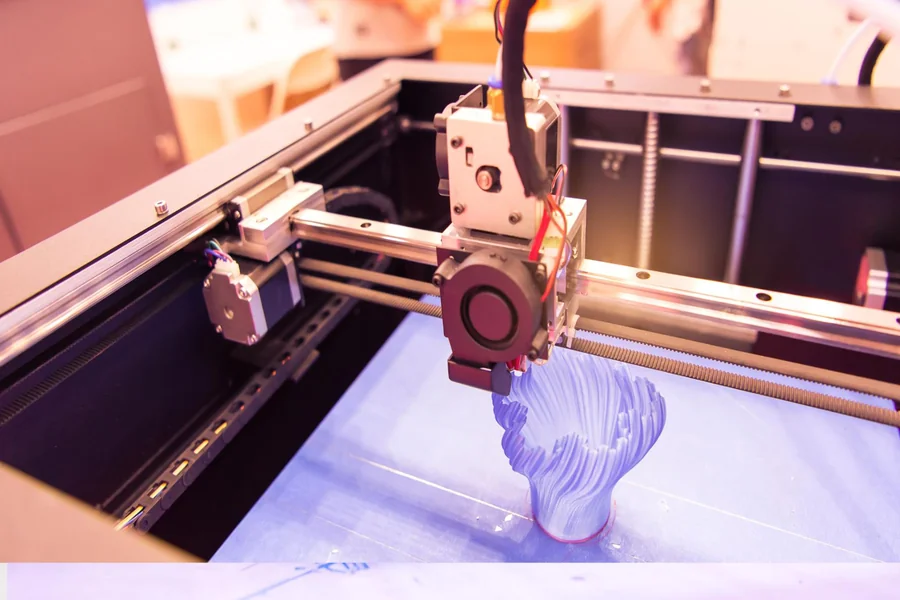
During early development, working with providers like RapidMade for custom 3D printed components gives your team fast turnaround without the burden of expensive tooling. That matters enormously when rapid iteration is a priority, because time lost to tooling cycles is time your competitors are using.
What Actually Shifts the Decision
Material compatibility, part complexity, and anticipated production volumes all play a role. What performs flawlessly in aerospace manufacturing can be completely impractical for a consumer product at scale. Context is everything here.
Before you can choose wisely, you need a complete picture of what’s available, because you genuinely can’t pick the right path without first understanding the full landscape.
Essential Factors to Evaluate Before Committing to a Process
Knowing your options is only half the equation. The harder challenge is systematically evaluating which method actually aligns with your product goals, your constraints, and where you want to be in 18 months.
Design Complexity and Material Demands
Highly complex geometries almost always push teams toward additive or hybrid approaches. Material performance requirements: thermal resistance, tensile strength, biocompatibility, narrow your viable options quickly. Don’t learn this lesson late in the process.
Volume, Scalability, and Compliance
Low-volume runs rarely justify heavy tooling investment. Regulatory requirements: FDA, ISO, ITAR, can disqualify certain processes entirely. Planning your product manufacturing process means thinking well past the prototype stage. You need to anticipate where your production actually needs to be in a year.
Once you’ve mapped your requirements clearly, the conversation almost always turns to money. So let’s talk about exactly where your costs come from.
Cost Analysis: Where Your Manufacturing Budget Actually Goes
Upfront tooling, recurring cycle costs, hidden expenses, scrap rates, logistics, and rework all feed into the true cost of any product manufacturing process. Most teams only see the first layer.
Tooling vs. Per-Unit Economics
Injection molding can require tooling investments of $10,000 to $100,000 or more. Per-unit costs drop sharply at scale, but that break-even point is far out. Additive manufacturing flips this model entirely: lower upfront investment, higher per-unit cost, which is why it’s ideal for early-stage and low-volume production.
The Hidden Costs Teams Consistently Miss
Prototyping iterations, mid-cycle design revisions, shipping delays, and waste accumulation quietly devour budgets. Digital manufacturing workflows reduce this drag. Choosing the right process from day one remains the single most powerful cost-control lever available to you.
Speed to Market: Why Timeline Is a Competitive Weapon
According to Deloitte’s 2025 smart manufacturing survey, 92% of manufacturers believe smart manufacturing will be the primary driver of competitiveness over the next three years, up six percentage points from 2019. Speed is no longer optional.
Rapid Prototyping Compresses Development Cycles
Traditional methods can consume weeks per iteration. Additive approaches compress that down to days. For new product development, faster iteration means catching problems earlier, before they become expensive launch-day surprises.
The Quantifiable Time Advantage
Teams using 3D printing for early-stage validation routinely cut development timelines by 40–60%. That’s not a marginal efficiency gain. That’s a strategic edge that compounds over an entire development cycle.
Customization and Design Flexibility: Building in Room to Evolve
Rigid manufacturing processes produce rigid outcomes. If your product needs to respond to real customer feedback after launch, your chosen process needs to accommodate that from the beginning, not as an afterthought.
Digital and Modular Manufacturing
Digital workflows allow rapid design changes without retooling delays. Modular manufacturing cells reconfigure faster than fixed-line traditional setups, giving your team room to pivot without significant cost penalties.
Design for Manufacturability
Applying DFM principles early prevents expensive redesigns downstream. The objective is to create parts that are both high-performing and efficient to produce at volume; those two goals aren’t mutually exclusive when you plan for it.
Quality Control and Risk Management
Inspection Technologies That Catch Problems Early
Automated optical inspection and in-line metrology flag defects before they compound into larger issues. These aren’t optional investments at scale; they’re foundational to consistent, market-ready output.
AI-Driven Defect Prediction
Predictive analytics tools increasingly identify process deviations before they manifest as defects. This shifts quality management from reactive damage control to genuinely proactive risk mitigation.
Scaling From Prototype to Full Production
Most teams are surprised by how quickly a process that works cleanly at 100 units breaks down at 10,000. Scaling isn’t just doing more of the same thing; it requires deliberate planning.
Batch Production and Flexible Cells
Pilot runs using batch production help stress-test your process before full commitment. Flexible manufacturing cells support hybrid workflows that bridge prototype-grade quality with production-grade throughput, giving you a runway to scale intelligently.
A Practical Action Plan for Selecting the Right Method
Map Requirements to Techniques
Start with a precise product spec. Match each requirement: tolerance, material, volume, lead time to compatible processes using a structured decision matrix. Don’t rely on gut instinct alone here.
Build Cross-Functional Alignment
Engineering, design, sourcing, and production teams rarely align naturally on manufacturing decisions. Making the process of selecting manufacturing techniques a shared team exercise, not just an engineering task, consistently produces better outcomes.
Final Thoughts: Make This Decision Deliberately
Choosing a manufacturing method isn’t a one-time checkbox you tick and forget. It’s a strategic commitment that shapes your product’s cost structure, quality floor, speed to market, and scalability ceiling.
Whether you’re comparing injection molding against CNC machining or exploring additive options for an initial production run, having the right decision framework changes everything. Involve your cross-functional teams early, map your real requirements honestly, and don’t underestimate how much the right process partner matters. The best products aren’t simply well-designed; they’re well-manufactured from the very first unit.
Common Questions About Product Manufacturing
1. Which methods are most cost-effective for small batch production?
Additive manufacturing and urethane casting typically win for smaller runs. Both avoid tooling costs entirely, making them practical for under 500 units without sacrificing part quality.
2. What should startups anticipate when scaling from prototypes?
Process consistency, supplier reliability, and quality repeatability are the biggest surprises. Manual workflows that function at prototype scale often require meaningful automation investment to sustain at production volumes.
3. How quickly can you iterate using custom 3D printed components
When you leverage custom 3D printed components for prototyping, design iterations are achievable within 24–72 hours. That pace makes additive manufacturing exceptionally well-suited for rapid validation, condensing weeks of traditional back-and-forth into just a few highly productive days.

Passionate about exploring diverse ideas and sharing inspiration, I curate content that sparks curiosity and encourages personal growth. Join me at ElementalNest.com for insights across a wide range of topics.