
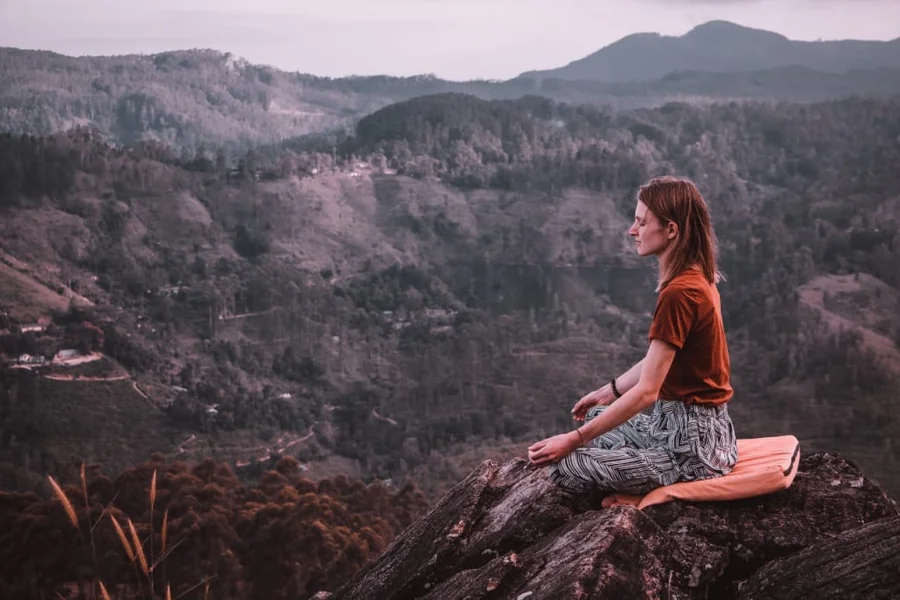
More than 35 million people identified as digital nomads in 2023, according to MBO Partners. Yet despite the freedom this lifestyle promises, over 60% report feeling disconnected or spiritually adrift after their first year on the road. The paradox is real: you can be in Bali, Oaxaca, or Lisbon, and still feel nowhere. The challenge is not finding the right place. It is learning to be present in all of them.
What Digital Nomad Spirituality Really Means
Digital nomad spirituality is not a religion, a yoga style, or a retreat program. It is the intentional practice of maintaining inner grounding while living in constant transition. It covers mindfulness, meditation, ritual, and any form of contemplative practice adapted to a life without a fixed home base.
The key word is adapted. Most traditional spiritual frameworks assume stability: the same meditation cushion, the same temple, the same community. Nomads have to rebuild that anchor every few weeks.
The 3 Core Tensions Every Nomad Faces
1. Connectivity vs. presence
Being always online is the default state of nomadic work. But constant pinging kills the inner silence that spiritual practice needs to breathe. Nomads often confuse being reachable with being alive.
2. Novelty vs. depth
New places are exhilarating. They are also shallow. Deep spiritual work requires repetition and commitment. Chasing sunsets and switching countries every two weeks is the opposite of contemplative deepening.
3. Community vs. solitude
Traditional spiritual paths rely on sangha (community) or group practice. Nomads are structurally alone. Building virtual or temporary community takes deliberate effort.
How to Maintain a Spiritual Practice on the Road
Anchor to time, not place. Instead of having a dedicated meditation room, have a dedicated time. Every day at 7 AM, regardless of the city, is more powerful than any cushion or altar.
Create a portable ritual kit. A small bag with a few objects that carry meaning for you (a stone, a card, a journal, a strand of beads) transforms any Airbnb into a familiar space.
Use transitions as practice. Airports, overnight buses, and long train rides are not dead time. They are ideal for breathwork, journaling, or silent observation. Nomads who treat travel as practice never lose the thread.
Find temporary sangha. Most mid-sized cities now have drop-in meditation centers, yoga studios, or conscious community meetups. Sites like Meetup, Insight Timer’s local events, and Couchsurfing’s spiritual groups can connect you within hours of arrival.
Reduce background noise deliberately. Social media scrolling and constant news consumption are incompatible with presence. Set hard limits: no phone before your morning practice, airplane mode during meditation, one hour of offline time per day minimum.
International Retreats: Spiritual Immersion Without Logistical Chaos
One of the most powerful tools for nomad spirituality is the silent or immersive retreat. A 7 to 10-day Vipassana in Thailand, a week of Sufi practice in Morocco, or an Ayurvedic detox in Kerala can reset the nervous system and restore depth to a shallow routine.
The logistical obstacle is staying connected before and after, without disrupting the experience itself. This is where having a reliable connectivity solution matters. Many nomads use the best travel eSIM to ensure they can handle last-minute logistics (transportation changes, emergency contacts, post-retreat work deadlines) without the stress of hunting for local SIM cards or paying roaming fees that eat into a tight travel budget. Holafly’s eSIM specifically allows unlimited data in over 190 destinations, which means you can activate coverage in Chiang Mai, Marrakech, or Kerala before landing, and go straight to your retreat without a detour to a phone shop.
The Technology Paradox: Using Connectivity to Cultivate Disconnection
There is nothing contradictory about using technology intentionally. The problem is unconscious use.
Nomads who navigate their spirituality well treat connectivity as a tool, not a lifestyle. They use apps like Insight Timer, Waking Up, or Plum Village during structured sessions, and then put the phone down. They use their data plan to coordinate logistics, and then activate airplane mode for the retreat itself.
The spiritual nomad does not reject technology. She domesticates it.
A Practical Weekly Framework for Nomadic Spiritual Life
| Day | Practice |
| Monday | 20-min morning meditation + journaling |
| Wednesday | Drop-in yoga or meditation class (local studio) |
| Friday | Offline afternoon: walk, breathwork, no screens |
| Sunday | Weekly review: what am I grateful for? Where did I lose presence? |
This is not rigid. It is a skeleton. What matters is that it is consistent enough to provide structure without becoming another thing to optimize.
The Places That Support Nomadic Spiritual Life
Some cities have developed ecosystems that genuinely support conscious nomadic living:
- Chiang Mai, Thailand: Dense network of meditation centers, vegan food, and long-stay visa options.
- Ubud, Bali: The global cliché, but still functional. Community is genuine if you go beyond the tourist layer.
- Playa del Carmen, Mexico: Growing conscious community with regular retreats and holistic practitioners.
- Lisbon, Portugal: Underrated. Strong yoga scene, slower pace, affordable for Western nomads.
- Rishikesh, India: For those serious about practice. Not a lifestyle backdrop. An actual spiritual infrastructure.
The Only Rule That Matters
Spiritual practice is not what you do in a beautiful place. It is what you do when you are tired, disoriented, and in a city you do not like. That is when the practice becomes real.
Digital nomad spirituality is not about finding the perfect destination. It is about showing up to wherever you are.

Passionate about exploring diverse ideas and sharing inspiration, I curate content that sparks curiosity and encourages personal growth. Join me at ElementalNest.com for insights across a wide range of topics.