
Living with persistent depression can feel like an exhausting, uphill battle. When you have tried multiple antidepressant medications, switched dosages, and attended countless talk therapy sessions without experiencing true relief, it is easy to feel hopeless. This frustrating reality is incredibly common. Millions of people experience what clinicians call treatment-resistant depression, a form of major depressive disorder that simply does not respond well to standard pharmaceutical interventions. If you find yourself stuck in this cycle, you should know that your brain is not broken. It may simply require a different style of intervention that moves beyond the chemistry of a pill. This Weston TMS therapy guide for hard-to-treat depression explains how an advanced, non-invasive technology can help you reclaim your life and restore balance to your mind right here in your local area.
How Transcranial Magnetic Stimulation Targets the Underactive Areas of Your Brain
Traditional treatments for major depressive disorder rely heavily on medications that travel through your entire digestive system and bloodstream. Because these chemicals affect your whole body, they frequently bring a long list of uncomfortable side effects, such as sudden weight gain, constant fatigue, emotional numbness, and nausea. Transcranial Magnetic Stimulation, commonly known as TMS, takes a completely different path. Instead of flooding your body with chemicals, it uses focused magnetic pulses to target the exact area of the brain responsible for mood regulation.
Neurological research reveals that individuals suffering from chronic depression often have underactive nerve cells in a specific region called the prefrontal cortex. When these nerve cells slow down, your brain struggles to produce and transfer important neurotransmitters like serotonin, norepinephrine, and dopamine. TMS therapy uses an electromagnetic coil placed gently against your scalp to deliver precise, repetitive pulses. These magnetic fields pass safely through your hair and skull, creating tiny electrical currents that stimulate the dormant nerve cells. By waking up these underactive regions, the therapy encourages your brain to build healthier neural connections and restore natural emotional processing. It is a highly localized approach, meaning you can explore effective treatment-resistant depression options without dealing with systemic side effects.
Because the magnetic pulses are similar in strength to those used in a standard MRI machine, the process is entirely safe and cleared by the FDA. Clinical data shows that about half of the individuals who undergo this treatment experience a significant reduction in their depressive symptoms, and approximately one third achieve complete remission. This means that even if medications have failed you for years, your brain still retains the capacity to heal when stimulated correctly.
What Your Treatment Schedule and Daily Sessions Actually Look Like
One of the greatest advantages of choosing this advanced care is how easily it fits into a busy daily schedule. Unlike older psychiatric interventions that required hospital stays or general anesthesia, this procedure is performed entirely on an outpatient basis right inside a comfortable office setting. You remain fully awake, alert, and conscious throughout the entire experience, allowing you to maintain full control over your day.
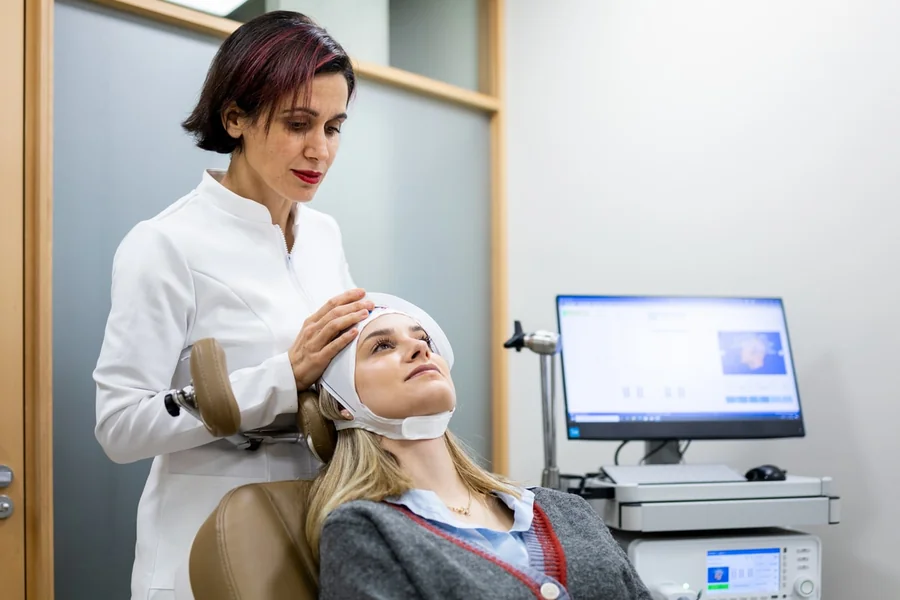
When you arrive for a session, you will sit in a comfortable, relaxed chair. During your very first appointment, the clinical team will perform a mapping session to determine the exact placement of the coil and the correct amount of magnetic energy needed for your specific brain structure. Once everything is calibrated, the actual daily treatments can begin. As the electromagnetic coil operates, you will hear a distinct clicking sound and feel a localized tapping sensation on your scalp. Many people compare this feeling to the gentle tapping of a plastic pen or a woodpecker against a bicycle helmet. While you might feel mild discomfort on your scalp during the first few days, your body quickly adjusts, and the sensation becomes easy to tolerate.
A standard treatment protocol requires a meaningful commitment to consistency. To get the best possible results, you will typically attend sessions five days a week for a period of four to six weeks, usually totaling thirty-six sessions. Fortunately, each daily visit is brief, often lasting between ten and twenty minutes. Because there is no sedation or recovery time involved, you can stand up from the chair the moment the session ends, grab your keys, and drive yourself home, back to work, or out to run errands in the local area. Learning how advanced therapy works on a daily basis helps remove the mystery and anxiety often associated with trying a new medical procedure.
Determining if This Non-Invasive Approach is Your Next Right Step
If you are wondering whether you are a good candidate for this technology, the general criteria are straightforward. This approach is specifically designed for adults who have not achieved satisfactory improvement from standard antidepressant medications or who cannot tolerate the side effects that those prescriptions cause. It is also FDA-cleared to help individuals struggling with anxious depression and obsessive-compulsive disorder, providing a versatile option for complex, overlapping mental health challenges.
Your safety is always the highest priority during the screening process. Because the treatment relies on powerful magnetic fields, you cannot undergo the procedure if you have any non-removable metal objects or medical devices implanted in or near your head. This includes items like aneurysm clips, stents, deep brain stimulators, or metallic fragments from an injury. Standard dental fillings and braces are perfectly fine and will not interfere with the machine. Additionally, individuals with a personal history of seizures or epilepsy are generally advised to look at alternative options, as the stimulation carries a very small risk of triggering a seizure event, though this occurs in less than one-tenth of one percent of patients.
Navigating the financial side of care is often easier than people realize. Because this technology is well-established and backed by extensive clinical research, almost all major commercial health insurance providers cover the cost of care for major depressive disorder once you meet certain criteria, such as having tried a specific number of medications without success. The administrative staff at your local clinic can handle the paperwork, verify your benefits, and secure the necessary pre-authorizations so you can focus entirely on your mental well-being. Investing your time in a structured, local care program can finally break the cycle of chronic mood struggles and give you the fresh start you deserve.

Passionate about exploring diverse ideas and sharing inspiration, I curate content that sparks curiosity and encourages personal growth. Join me at ElementalNest.com for insights across a wide range of topics.