
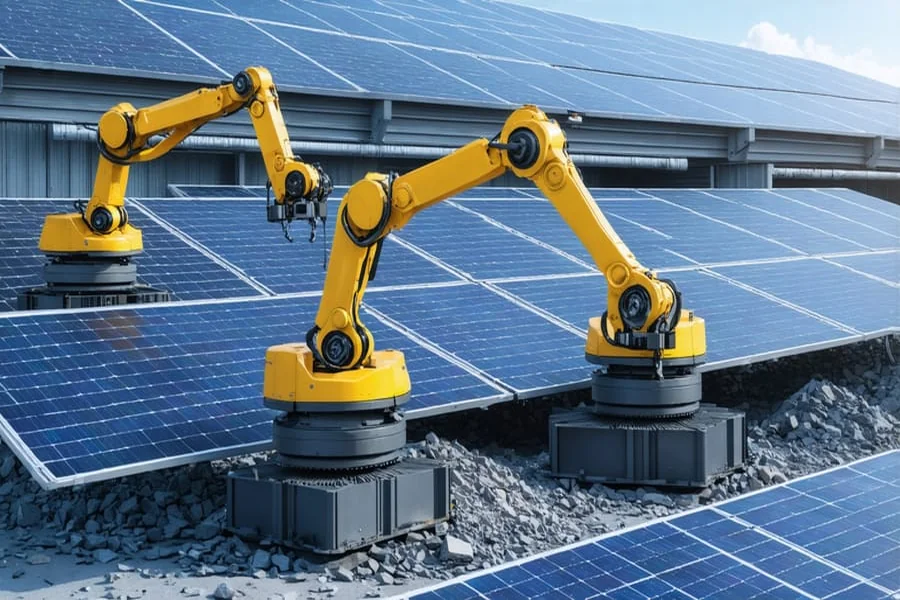
Solar panel recycling is becoming an important part of energy equipment lifecycle management. As photovoltaic systems age, owners need responsible ways to handle panels that are damaged, underperforming, surplus, or ready for replacement.
Recycling helps recover useful materials such as glass, aluminum, copper, silicon, and silver while reducing the need for landfill disposal. It also supports a more circular solar supply chain by returning usable resources to manufacturing and other industrial markets.
This article explains the materials found in retired solar panels, how recycling facilities manage them, and why better recovery systems matter for long-term sustainability.
Key Materials Extracted from Retired Solar Panels
Retired solar panels contain several materials that can be recovered and reused. The economic case for recycling depends on the type of panel, the condition of the module, the processing technology used, transportation costs, and the market value of recovered materials.
Crystalline silicon panels make up much of the installed solar market. These panels typically include glass, aluminum framing, polymers, silicon cells, copper wiring, and small amounts of silver.
Thin-film panels have different material profiles and may require specialized handling because some contain cadmium telluride or other semiconductor materials.
The International Renewable Energy Agency and IEA-PVPS estimate that end-of-life solar panels could represent 78 million tonnes of raw materials and other valuable components globally by 2050. If those materials are fully returned to the economy, their recovered value could exceed USD 15 billion.
High-Value Components
Silicon, silver, copper, and aluminum are among the most important recoverable materials in retired solar panels. Silicon cells are central to crystalline solar modules, while silver is used in conductive pastes that help move electricity through the cell. Although silver represents a small share of total panel weight, it carries a high material value.
Effective equipment lifecycle planning should also consider whether panels still have resale value before they are sent for processing. Owners with excess, used, old, or decommissioned modules can work with Solar Recycling to evaluate resale and recovery options for large commercial, contractor, EPC, real estate, and utility-scale solar projects.
Copper is found in wiring, conductors, and junction box components. Aluminum is commonly used in panel frames and can be routed into established metal recycling markets. These materials already have mature secondary markets, which makes them easier to recover than tightly bonded cell and laminate materials.
Material recovery can also reduce pressure on virgin mining. Recovered metals and silicon may help support future solar manufacturing as end-of-life volumes grow and recycling technology improves.
Recyclable Bulk Materials
Glass is the largest material by weight in most crystalline silicon panels. It usually accounts for most of the panel mass, which makes it a major target for recycling.
However, the value of recovered glass depends on how cleanly it can be separated from polymers, metals, and semiconductor materials.
The U.S. Department of Energy notes that recycling processes exist for silicon and cadmium telluride PV modules, but the cost of recycling in the United States is still generally higher than the cost of landfill disposal.
The same DOE resource also explains that recovery methods can vary, with some companies using more advanced processes to recover higher-purity materials.
This is why process efficiency matters. Facilities that recover cleaner material streams can create better downstream reuse options and improve the environmental value of recycling.
Hazardous Material Management
Solar panels are not automatically hazardous waste, but some can contain regulated materials. The U.S. Environmental Protection Agency explains that panels may be classified as hazardous waste if they exceed toxicity characteristic regulatory limits for lead or cadmium under the Toxicity Characteristic Leaching Procedure.
Lead may appear in solder and other components. Cadmium is associated with certain thin-film technologies, especially cadmium telluride panels. Panel chemistry, design, age, and condition all affect how the module should be handled.
Proper management reduces the risk of contamination. Broken panels can create added handling concerns because cracked glass and damaged laminates may expose internal materials. Recycling facilities need clear intake procedures, safe storage, trained staff, and appropriate documentation to manage these risks.
Regulatory requirements can also vary by state or region. Some jurisdictions treat certain end-of-life panels under hazardous waste rules, while others provide recycling exclusions or different handling pathways.
Asset owners should confirm the applicable rules before moving large quantities of panels.
Evaluating Solar Panel Recycling Facilities
The quality of a recycling facility affects material recovery, compliance, reporting, and environmental outcomes. Not every recycler uses the same technology or meets the same standards, so evaluation should go beyond price alone.
Technology and Recovery Rates
Basic mechanical recycling usually focuses on removing aluminum frames and recovering mixed glass and metals through crushing, shredding, screening, and separation. This approach can handle volume, but it may produce lower-value material streams if glass, polymers, and cell materials are heavily mixed.
More advanced processes may use thermal treatment, chemical separation, or combined mechanical and refining steps. These methods can improve recovery of higher-value materials such as silicon, silver, and copper, but they require stronger environmental controls and more technical expertise.
The U.S. Department of Energy describes PV end-of-life processing as including steps such as frame removal, junction box removal, shredding, grinding, eddy currents, and sifting to separate glass, polymers, interconnect ribbons, and cells. Some approaches may also use heat or chemicals to separate polymers and recover metals.
Environmental and Safety Standards
Certifications and documented procedures help distinguish professional recyclers from low-quality handlers. Useful indicators may include environmental management systems, worker safety programs, material tracking, and clear downstream vendor controls.
For solar equipment, documentation is especially important because panels can vary in composition. A responsible recycler should be able to explain how panels are received, tested, stored, processed, and routed after separation.
For panels that may qualify as hazardous waste, records and regulatory compliance become even more important.
Mass balance reporting can also help confirm whether claimed recovery rates are realistic. Asset owners should ask how much material is recovered, where it goes, and whether any portion is landfilled.
Customer Service and Support
Good recycling support starts before panels leave the site. Large projects may need help with inventory counts, packaging, palletizing, shipping documents, and project scheduling. Smaller commercial or residential projects may need clear guidance on accepted panel types and pickup options.
Testing services can also add value. Some panels may still have enough output for resale or second-life use. Separating reusable panels from damaged or non-functional modules can preserve more value than sending every panel directly into material recycling.
Reporting is another useful service. Companies with environmental, social, and governance goals may need documentation showing how many panels were processed, which materials were recovered, and how landfill disposal was reduced.
Economic and Environmental Advantages
Solar panel recycling provides both economic and environmental benefits. The strongest value comes from recovering materials that can re-enter supply chains, reducing landfill use, and lowering demand for virgin resources.
Revenue from Material Recovery
Recovered materials can generate value through aluminum, copper, glass, silicon, and silver streams. The total value depends on commodity prices, panel type, recovery rates, purity, and processing costs.
IRENA and IEA-PVPS project that recovered materials from end-of-life panels could exceed USD 15 billion in value by 2050 if fully returned to the economy. That long-term opportunity supports investment in better recovery technologies and larger recycling infrastructure.
Still, recycling is not automatically profitable for every project. Transportation costs, low-value mixed glass, and complex laminate separation can reduce margins. This is why reuse, resale, and careful sorting should be part of the lifecycle strategy.
Reduced Manufacturing Pressure
Recycled inputs can reduce dependence on newly mined or newly refined materials. Aluminum, copper, and glass have established recycling systems, while silver and silicon recovery can support higher-value circular supply chains as technology improves.
Using recycled materials can also reduce exposure to raw material price volatility. For manufacturers, a more reliable secondary material stream may support long-term planning as solar deployment continues to expand.
Carbon Footprint Reduction
Recycling can reduce environmental impact by keeping panels out of landfills and lowering the need to extract and process virgin materials.
The benefit depends on the recycling method, transportation distance, electricity source, and quality of recovered output.
The strongest environmental outcomes occur when recyclers recover clean material streams that can replace virgin materials in meaningful applications. Poor separation, long-distance hauling, or low-value downcycling can reduce the overall benefit.
Job Creation in the Green Economy
A larger solar recycling sector can create work in collection, transportation, testing, disassembly, material processing, compliance, engineering, and research. As more panels reach the end of life, facilities will need trained workers who understand both solar equipment and safe recycling practices.
The industry also supports adjacent services, including logistics planning, data reporting, resale evaluation, environmental consulting, and downstream material brokerage.
Support for Circular Economy Goals
Solar recycling supports circular economy goals by keeping useful materials in circulation for as long as possible.
Reuse and resale should come first when panels still perform adequately. Recycling becomes the next best option when panels are damaged, obsolete, or no longer suitable for continued use.
This approach extends the value of renewable energy assets beyond their first installation. It also helps solar growth depend less on the continuous extraction of new raw materials.
Conclusion
Solar panel recycling helps turn retired photovoltaic equipment into a source of recoverable materials rather than unmanaged waste. Glass, aluminum, copper, silicon, and silver all have potential value, while regulated materials such as lead and cadmium require careful handling.
The economics remain challenging because recycling can cost more than landfill disposal, but growing end-of-life volumes and better recovery technology are strengthening the case for responsible management.
A complete lifecycle strategy should prioritize reuse where possible, recycling where necessary, and clear documentation throughout the process. These practices support cleaner energy growth and a more circular material system.

Passionate about exploring diverse ideas and sharing inspiration, I curate content that sparks curiosity and encourages personal growth. Join me at ElementalNest.com for insights across a wide range of topics.