
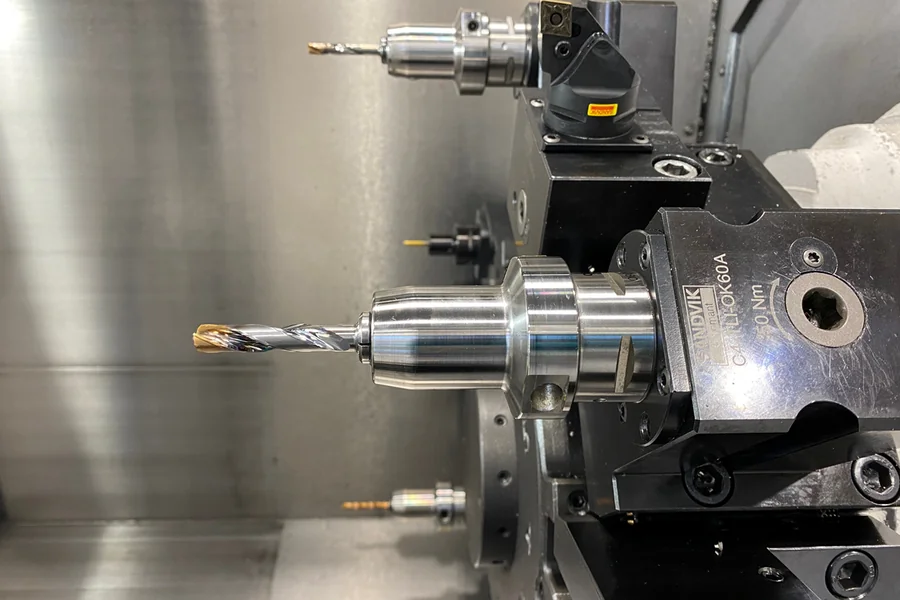
CNC Machining is on an onward march in its evolution to faster, cleaner, and more efficient means of manufacturing. Tapping operations are especially closely monitored, as they directly impact assembly quality and productivity. While traditional cutting is still widely used in many applications, form tapping is gaining popularity in modern machining operations. The transition is occurring for efficiency, reliability, and long-term production stability considerations.
How Form Tapping Differs From Traditional Tapping
Normal taps cut out the material to form an internal thread in the hole. As the process is repeated, chips are continually being generated and need to be evacuated correctly to prevent issues.
This isn’t the case for form tapping. The tool does not cut material away, but presses the material under pressure and forms it into the thread shape. There are no chips produced during play.
This one disparity alters several aspects of the machining process. Many of the common threading problems become easier to control without the formation of chips.
Why Chip Elimination Matters in CNC Machining
Tapping operations are always challenging to control the chip. Long chips may entangle in tools, get into blind holes, or block coolant flow.
When the machine is automated, the cost of machine downtime due to chips is increased. A single jam may stop an entire production cycle.
Since there are no chips, the process is more predictable with form tapping. Operators have less downtime associated with chip evacuation problems, and machines can operate longer without disruption.
Improved Tool Life in High-Volume Production
The cost and efficiency of the machining are directly related to tool life. Downtime due to every tool change is critical, particularly for automated machines operating around-the-clock.
The wear of cutting taps is due to friction, heat, and the movement of chips. The cutting edges of the cutters wear out, and the quality of the cut decreases with time.
The wear on a form tap is different from the wear on a conventional cutting tool because material displacement does not cause as much edge wear as conventional cutting action. Manufacturers report vastly improved tool life in many applications.
Stronger Threads and Better Surface Finish
In industries where reliability and consistency in assembly are paramount, thread strength is a critical factor. The weak or rough threads result in fitting difficulties and rejection rates.
Form tapping is a technique that does not cut through the material, so there is less disruption of the grain structure around the profile of the thread. This frequently yields better threads and smoother finishes.
The surface finish is also enhanced, which minimizes friction during assembly tasks. Small gains in assembly efficiency can have a significant impact in high-volume manufacturing.
Better Performance in Ductile Materials
Tapping is a good method for forming material, such as ductile material that can be controlled. Aluminium, mild steel, and many stainless steels respond well to the process.
These materials will not crack or break apart under any pressure. The displaced material creates clean and consistent thread geometry.
When a factory is highly involved in these alloys, they may change over to a different process as they experience better thread quality and tool life.
Reduced Downtime and Maintenance
Downtime impacts all aspects of production efficiency. All of these downtime events impact machine utilization, including tool replacement, broken tap removal, and chip-related interruptions.
Form tapping helps reduce many of these issues because:
- No chips interfere with operations
- Tool wear occurs more gradually
- Thread consistency remains stable longer
As a result, machines spend more time producing parts and less time stopping for maintenance or troubleshooting.
Improved Process Stability in Automation
Nowadays, CNC production relies on automation and unattended machining to a greater extent. As there is less human supervision, the stability becomes more important.
The unpredictable failures in traditional tapping are caused by the variability of chips between cycles. The packaging for chips can be suddenly changed without notice.
Predictability is as important to manufacturers as speed is in these systems.
Why Manufacturers Accept Higher Initial Tool Costs
The initial cost of form taps may be higher than that of conventional cutting taps. This greater initial expense can appear redundant for smaller stores initially.
But the manufacturers who produce in bulk generally take into account the total operating cost rather than the cost of the tools.
When they calculate:
- Reduced downtime
- Longer tool life
- Lower scrap rates
- Better automation stability
The process becomes more cost-effective as a whole.
Conclusion
Form tapping is becoming more popular because it solves several long-standing machining challenges at once. Eliminating chips improves process stability, while stronger threads and longer tool life support better production efficiency.
Manufacturers focused on high-volume CNC machining value, consistency, and reliability above everything else. As production demands continue rising, form tapping will likely remain an increasingly important part of modern machining strategies.

Passionate about exploring diverse ideas and sharing inspiration, I curate content that sparks curiosity and encourages personal growth. Join me at ElementalNest.com for insights across a wide range of topics.