
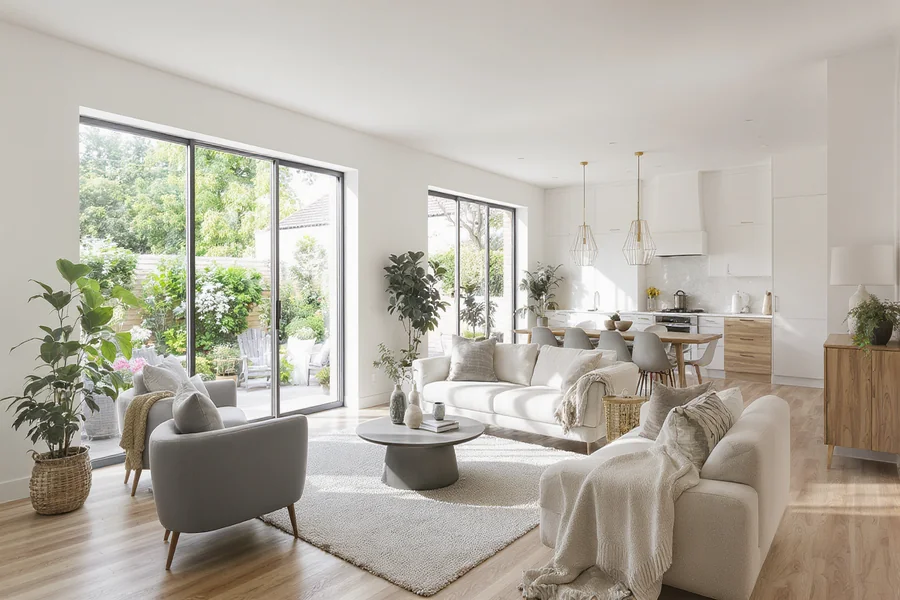
In a quiet but significant shift across the home improvement industry, artificial intelligence is beginning to redefine how people approach renovation. What was once a process driven by sketches, mood boards, and costly trial-and-error decisions is now becoming faster, more visual, and increasingly accessible.
At the centre of this transformation is a new generation of AI remodel tools—platforms that allow users to upload a simple photo of their space and instantly generate design possibilities. Among these emerging solutions, Hanodecor is positioning itself as part of a broader movement that is reshaping how homeowners, designers, and even contractors think about planning and execution.
The implications go beyond convenience. They signal a deeper change in how decisions are made before any physical work begins.
A Shift Away from Guesswork
For decades, renovation planning has relied heavily on imagination. Homeowners would gather inspiration from magazines or online galleries and attempt to translate those ideas into their own homes. Even with professional guidance, the final result often remained uncertain until construction was complete.
That uncertainty has long been one of the most expensive aspects of renovation.
Incorrect assumptions about colour, layout, or materials can lead to costly revisions. A tile that looked elegant in a showroom might feel overwhelming in a smaller space. A kitchen layout that worked on paper might disrupt movement in real life.
AI remodel tools are addressing this problem directly by replacing imagination with visualisation.
Instead of asking homeowners to picture the outcome, these platforms allow them to see it—instantly and within the context of their actual space.
How AI Remodel Tools Work
The process behind these tools is relatively straightforward, though powered by increasingly sophisticated technology.
A user begins by uploading a photo of a room. This could be a kitchen, bathroom, or any interior space. The AI system then analyses the image, identifying structural elements such as walls, floors, fixtures, and layout patterns.
Once the space is understood, users can apply different design styles. These may include modern, minimalist, traditional, or luxury-inspired aesthetics. Within seconds, the platform generates realistic visual representations of how the room would look under each design.
Hanodecor, for example, focuses on delivering quick and accessible transformations. The platform enables users to explore multiple variations without requiring design experience or technical knowledge. This simplicity is part of what is driving wider adoption.
The result is a shift from static inspiration to dynamic experimentation.
Speed as a Defining Factor
One of the most immediate advantages of AI-driven design is speed.
Traditional design processes often involve multiple stages—consultations, concept development, revisions, and approvals. Each step can take days or even weeks.
AI tools compress this timeline dramatically.
What once required extended collaboration can now be explored in minutes. Users can test multiple ideas in a single session, comparing styles and refining preferences without delay.
This acceleration does not necessarily replace traditional workflows, but it changes expectations. Homeowners are becoming accustomed to immediate feedback, and this is influencing how design services are delivered.
Democratising Design Access
Another notable impact is accessibility.
Interior design has historically been seen as a premium service, often associated with higher budgets. While professional expertise remains valuable, AI tools are lowering the barrier to entry for everyday users.
With platforms like Hanodecor, individuals can experiment with design ideas independently. They can explore styles, test layouts, and develop a clearer vision before deciding whether to engage a professional.
This does not eliminate the role of designers, but it shifts when and how they are involved. Instead of starting from a blank slate, many clients now arrive with defined preferences and visual references generated through AI.
In this sense, the technology is not replacing expertise—it is reshaping the starting point.
Reducing Risk in Renovation
Renovation has always carried a level of financial risk. Decisions made early in the process can have lasting consequences, and reversing those decisions is often expensive.
AI remodel tools introduce a layer of risk reduction.
By visualising outcomes before construction begins, homeowners can identify potential issues early. They can see how materials interact, how colours affect perception, and how layouts influence space.
This proactive approach reduces the likelihood of dissatisfaction after completion. It also allows for more informed discussions with contractors and suppliers.
In an industry where mistakes can be costly, this level of clarity is becoming increasingly valuable.
Changing the Role of Professionals
The rise of AI in home design is also prompting a shift in professional roles.
Interior designers and contractors are not being replaced, but their functions are evolving. Rather than spending significant time on initial concept development, they can focus more on refinement, execution, and problem-solving.
Clients who use AI tools often arrive with a clearer sense of direction. This can streamline collaboration and reduce the number of revisions required.
At the same time, professionals bring elements that AI cannot fully replicate—contextual understanding, practical experience, and the ability to manage complex projects.
The relationship between technology and expertise is becoming more collaborative than competitive.
Limitations and Real-World Considerations
Despite its advantages, AI-driven design is not without limitations.
The technology operates based on visual data and learned patterns. While it can generate realistic representations, it does not fully account for structural constraints, material availability, or installation challenges.
A design that appears ideal in a rendered image may still require adjustments during implementation.
This is where human oversight remains essential. Contractors and designers play a critical role in translating visual concepts into functional, buildable solutions.
AI tools provide direction, but they do not replace the need for execution expertise.
A New Standard in Consumer Expectations
As adoption increases, AI remodel tools are influencing consumer expectations.
Homeowners are beginning to expect:
- Faster design turnaround
- Clear visual previews
- Greater control over decision-making
This shift is pushing the industry toward more transparent and efficient processes.
Companies that integrate AI into their workflows may find themselves better aligned with these expectations. Those that rely solely on traditional methods may face pressure to adapt.
The change is not abrupt, but it is steady.
Looking Ahead
The future of home renovation is likely to involve a hybrid approach.
AI tools will continue to handle early-stage exploration, allowing users to test ideas quickly and refine their preferences. Professionals will remain essential for execution, ensuring that designs are practical, safe, and aligned with real-world conditions.
Platforms like Hanodecor illustrate how this balance can work. By simplifying the visualisation process, they enable users to engage more actively in their own projects while still leaving room for professional input where it matters most.
As the technology evolves, it may expand into areas such as real-time collaboration, material recommendations, and cost estimation. Each advancement will further integrate AI into the renovation workflow.
Conclusion
The emergence of AI remodel tools marks a turning point in home renovation.
What was once a process defined by uncertainty is becoming more visual, more immediate, and more user-driven. Homeowners no longer need to rely solely on imagination or static references. They can explore possibilities in real time, using their own spaces as the foundation.
Hanodecor and similar platforms are part of this broader shift, offering a glimpse into how technology is reshaping the way design decisions are made.
The result is not a replacement of traditional methods, but an evolution. A process that once depended on guesswork is becoming one that starts with clarity.
And in an industry where clarity has always been in short supply, that change is significant.

Passionate about exploring diverse ideas and sharing inspiration, I curate content that sparks curiosity and encourages personal growth. Join me at ElementalNest.com for insights across a wide range of topics.