
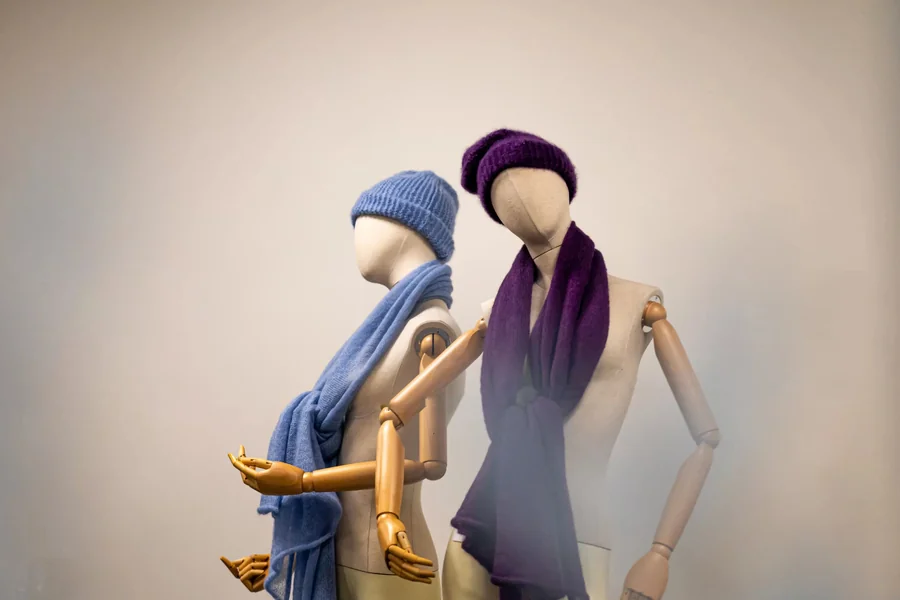
Every online clothing seller eventually hits the same crossroads. You have a beautiful garment, a product page waiting to be filled, and a decision to make: do you photograph the piece on an invisible mannequin, or do you put it on a living, breathing model? Both approaches dominate ecommerce, and both have loyal defenders. But when the real question is which one moves more units, the answer is more nuanced than most guides admit.
After years spent building product pages, running split tests on listing imagery, and watching conversion dashboards react to a single swapped photo, the honest truth is this: neither format wins in every situation. What wins is the seller who understands exactly what each style communicates to a shopper, and who can produce both consistently and affordably. This article breaks down the real trade-offs, looks at what the data suggests, and shows why the fastest-growing brands are quietly rewriting the rules.
What Ghost Mannequin Photography Actually Does
Ghost mannequin photography, sometimes called the invisible mannequin or hollow-man effect, shows a garment as if worn by an unseen body. The clothing holds a natural, three-dimensional shape while the mannequin itself is edited out, leaving only the product floating cleanly against the background.
The appeal is obvious. Shoppers see the true cut, drape, and fit of an item without any distraction. There is no model’s face pulling attention, no styling choices to quibble with, and no question about how the fabric actually hangs on a body. For categories where fit and construction do the selling, such as tailored shirts, structured outerwear, and knitwear, this clarity is powerful.
Traditional ghost mannequin photography is also labour-intensive. It usually means a physical mannequin, careful lighting, separate shots of the front and interior, and hours of retouching to composite everything into one seamless image. For a catalogue of hundreds of items, that cost and time add up fast, which is exactly why so many small brands avoid it.
What On-Model Photos Bring to the Table
On-model photography puts the garment on a real person. Suddenly the shopper sees scale, movement, and context. A dress stops being an abstract shape and becomes something a human being wears to a specific kind of occasion. This emotional layer is hard to overstate; people imagine themselves in the clothing, and that projection is often what tips a browser into a buyer.
On-model imagery also answers questions a flat or hollow shot cannot. How long is the hem in reality? How does the neckline sit against the collarbone? Does the fabric move or stay stiff? For fashion-forward and lifestyle brands, this storytelling is the entire pitch, and it builds the aspiration that premium pricing depends on.
The drawback is complexity and cost. Booking models, photographers, stylists, and studios is expensive, and every reshoot multiplies the bill. Worse, models introduce inconsistency. Skin tone, body shape, and posing vary from shoot to shoot, so a catalogue can end up looking stitched together from a dozen different days rather than one coherent brand.
When Each Format Genuinely Wins
It helps to be specific rather than tribal. Ghost mannequin photography tends to win for fit-critical and detail-heavy products, for marketplaces that reward clean white-background imagery, and for buyers who have already decided they want the item and simply need reassurance about construction. It is the format of confidence and clarity.
On-model shots tend to win earlier in the journey, when a shopper is still being persuaded. They win for occasion wear, for lifestyle positioning, and for social and advertising creative where a lifeless product shot would scroll straight past. They are the format of desire and context.
Notice that these strengths are not in opposition. They map to different moments in the same purchase decision. That observation is the key to the whole debate, and it points toward an answer that most either-or comparisons miss entirely.
The Conversion Question: What the Data Suggests
Here is where opinion should give way to evidence. Studies of ecommerce behaviour consistently show that shoppers want to see products from multiple angles and in multiple contexts before buying. Listings with several images almost always outperform single-image listings, and pages that combine product-only shots with contextual shots tend to convert best of all.
That last point is the one most sellers miss. It is rarely ghost mannequin versus on-model as a winner-take-all contest. The highest-converting product pages usually feature both: a clean hollow-body shot that shows the garment honestly, followed by on-model frames that show it living in the world. The product-only image builds trust in construction; the model image builds the desire to own it.
It is worth being candid about the evidence here. Public conversion studies vary by category, price point, and audience, so no single number applies universally. What holds steady across them is the direction of travel: more relevant images, showing the product both honestly and in context, correlate with higher conversion and lower hesitation. Treat any specific figure you read with healthy skepticism, then test it against your own analytics. Your storefront is the only dataset that describes your exact customer, and it should always overrule a statistic from someone else’s catalogue.
So if the two formats perform best together, the practical question becomes cost. How does a small or mid-sized brand produce both, at scale, without a runaway photography budget? For most of the last decade, the honest answer was that they simply could not. That is the constraint that has now changed.
The Returns Factor Everyone Forgets
Conversions are only half the equation. The other half is returns, and imagery drives both. When a shopper receives a garment that looks or fits differently from the photos, it comes back, and quietly erodes the margin a sale was supposed to earn. Clothing already carries some of the highest return rates in retail, much of it tied to mismatched fit and expectation.
This is where combining formats pays off twice. A precise ghost mannequin photography frame sets an honest expectation of cut and structure, while an on-model shot shows realistic drape and proportion on a body. Together they narrow the gap between what a shopper imagines and what actually arrives at the door. Fewer surprises mean fewer returns, and a lower return rate can matter more to profitability than a marginal lift in add-to-cart rate. Accurate imagery is not just a selling tool; it is a retention and margin tool that compounds over every order.
Why the Old Trade-Off No Longer Applies
The tension between the two styles has always been a resource problem, not a creative one. Sellers wanted both but could only afford one. AI-generated fashion photography has collapsed that trade-off, and this is where tools built specifically for the job come in.
The AI Fashion Studio from ImagineArt was designed around exactly this workflow. Instead of choosing between a hollow-man shot and a full model shoot, you can produce both from the same source garment, in minutes, without booking a studio. You upload the piece, and the platform can dress a fully realised AI model in it or present it in a clean, product-focused frame, ready for the listing.
The genuinely useful part for online sellers is what happens to ghost mannequin photography inside this system. Rather than building a physical rig and compositing shots by hand, you upload a flat layer of your garment and let the AI Fashion Studio dress a complete model in it. You get the fit-focused clarity that shoppers trust, without the retouching hours, and you can flip the same garment onto a styled editorial model for the desire-driven shots on the very same product page.
The Consistency Advantage That Quietly Drives Sales
There is a second, less obvious reason this approach sells better online, and it comes down to consistency. A catalogue that looks coherent feels more professional, and professionalism converts. When every listing shares the same lighting, framing, and model, shoppers subconsciously trust the store more, and trust is the currency of online retail.
Physical shoots fight against this. Book a model in March and again in September and the results will differ, sometimes dramatically. With ImagineArt, a model you build is saved and reused, so your spring drop and autumn drop feature the identical face, body, and skin tone. Your ghost mannequin photography and your on-model frames come out of one consistent visual system rather than a patchwork of shoot days.
For a store running hundreds of SKUs, that coherence is not a nicety. It is the difference between a catalogue that looks like an established national brand and one that looks improvised. The AI Fashion Studio treats consistency as the default rather than a lucky outcome you fight for in the edit.
Cost, Speed, and the Freedom to Experiment
The economics reshape strategy in a way worth spelling out. In a traditional shoot, testing five backgrounds or ten poses means paying for all of them upfront, so sellers play it safe and settle. When iteration is effectively free, you can experiment until you find the exact frame that actually converts your audience.
That freedom matters more than it sounds. The best-performing product image is often not the one you expected, and only testing reveals it. The AI Fashion Studio lets you generate variations of both your ghost mannequin photography and your on-model shots, compare them on the live page, and keep the winners. Speed compounds the benefit: an entire seasonal range can be shot in an afternoon rather than waiting weeks on a photographer’s calendar.
There is also a right consideration that trustworthy sellers care about. With ImagineArt, the imagery you generate is yours to use commercially across your store, ads, and social channels, with no licensing fees tied to a model or a shoot. That removes a legal grey area that trips up brands who scrape stock or quietly reuse agency work they never fully licensed.
A Practical Way to Set Up Both
If you want to apply this, start simple. Photograph or source a clean flat lay of each garment against a plain background. Bring it into the AI Fashion Studio, generate a fit-honest ghost mannequin photography frame first, then dress the same piece on a saved model for one or two lifestyle shots. Publish the clean image as your lead, with the model frames following it in the gallery.
Then the test. Swap the lead image on a handful of listings, watch the conversion rate over a week or two, and let real behaviour decide. Because generating alternatives costs almost nothing, you can afford to be rigorous in a way that physical shoots are never allowed.
One more habit separates brands that grow from brands that stall: they revisit their winners. A frame that converted beautifully last season may fade as tastes and competitors shift, so re-test your lead images periodically rather than setting them once and forgetting them. The workflow makes that cheap enough to treat as routine maintenance instead of a reshoot.
So, Which Sells Better Online?
If forced to crown a single format, the evidence leans toward product pages anchored by clean, fit-honest imagery, and ghost mannequin photography delivers that better than almost anything else. It removes doubt about construction, and doubt is precisely what kills online sales. But the smartest answer is to stop treating the two styles as rivals.
The brands winning online right now pair a trustworthy hollow-body shot with an aspirational on-model frame, and they produce both from one efficient workflow. That is exactly the gap the AI Fashion Studio from ImagineArt fills. It lets a solo designer or a large ecommerce team generate ghost mannequin photography and on-model imagery side by side, consistently, affordably, and fast enough to test what genuinely converts.
The old question was which style to choose. The better question, and the one that actually grows revenue, is how to produce both without compromise. Answer that, and you stop debating formats and start shipping product pages that sell.

Passionate about exploring diverse ideas and sharing inspiration, I curate content that sparks curiosity and encourages personal growth. Join me at ElementalNest.com for insights across a wide range of topics.