
A satisfying movie room does not always require construction, custom seating, or weeks of disruption. With a clear order of work, an ordinary lounge can become far more cinema-friendly over a weekend. The key is to solve the room before fine-tuning the equipment: decide where the picture belongs, protect comfortable sightlines, control obvious light, and make the system easy to operate.
This plan is intentionally reversible. Tape marks, movable furniture, temporary cable routes, and trial settings let you learn what works before making permanent changes. Keep a measuring tape, painter’s tape, notepad, and a few familiar films close by.
Saturday morning: map the room
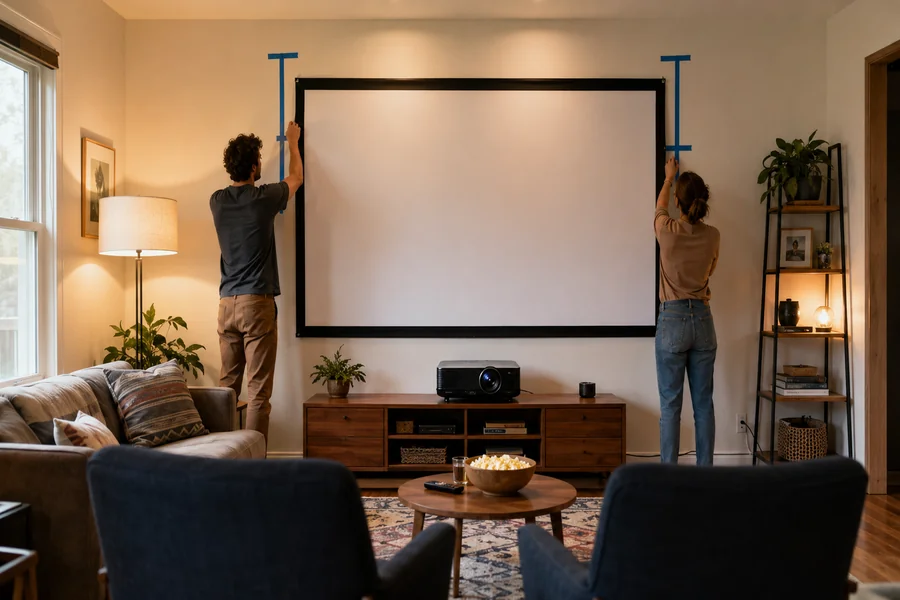
Clear the display wall and mark several possible image sizes with painter’s tape. Sit in the usual seats and look at each outline. The largest option may be exciting, but it should not force viewers to scan constantly from side to side or crane their necks upward. Check the view from the edge seats too, because a layout that works only from the center will frustrate guests.
Next, trace walking paths between doors, seating, and storage. A practical living room theater setup should not place valuable equipment where it can be bumped whenever someone crosses the room. Open every cabinet door and drawer, and make sure the proposed screen does not block controls, vents, or frequently used shelves.
Measure twice and record the numbers. Include wall width, proposed image width, cabinet height and depth, seating distance, outlet locations, and the direction of window light. These notes will guide the rest of the weekend and remain useful when the room changes later.
Saturday afternoon: position the picture
Set the projector on a stable, level surface and begin with physical alignment. Centering and leveling the unit before using digital correction generally preserves more of the image. If the wall has visible texture or waviness, test with moving scenes and subtitles; a dedicated screen may provide a more uniform surface.
When comparing a 4k projector for home theater with other options, focus on the room-facing questions: Can it produce the desired image from the available position? Are connections accessible? Is the optical path clear? Can the unit breathe without heat building inside furniture? These practical details affect every viewing session.
Route power and signal cables temporarily along the wall, securing them so nobody trips. Do not finalize hidden wiring until the picture position has survived a full evening of use. Leave enough slack for service, but avoid loops where children or pets can reach them.
Saturday evening: test real viewing
Darken the room to the level you would normally accept, not to an artificial standard. Watch a bright program, a dark film, subtitles, and a scene with natural faces. Move through the principal seats. Note glare, washed-out areas, uneven focus, fan distraction, and any moment when operating the system interrupts the experience.
Resist the urge to adjust every setting at once. First confirm size, height, and focus. Then compare picture modes. Finally, make small changes to brightness, contrast, or color only if needed. Saving a daytime preset and a nighttime preset can be more useful than trying to make one configuration handle every condition.
Sunday morning: improve light and sound
Address the most obvious light source first. A blind, lined curtain, or repositioned lamp may improve perceived contrast more than a long menu session. Keep some low-level light behind or beside the seating so people can move safely without shining a lamp toward the screen.
For sound, begin with placement and room furnishings. Keep speakers clear of closed doors and deep cabinet recesses. A rug between screen and sofa, curtains over glass, and upholstered furniture can reduce harsh reflections. Play familiar dialogue at a moderate volume; words should be clear without forcing everyone else in the house to listen.
Sunday afternoon: simplify and finish
Once the layout is proven, tidy the cables with removable channels or a suitable permanent route. Label both ends before they disappear behind furniture. Place remotes in one location, rename confusing inputs, and write a three-step startup note. Ask another household member to start a movie without coaching; their hesitation will reveal what still needs simplification.
Finish by restoring the room’s everyday identity. Return a few objects to the display wall only if they do not distract from the picture, arrange movable chairs for conversation, and provide a basket or drawer for accessories. Photograph the final cable layout and record preferred settings.
By Sunday evening, the greatest improvement should be ease, not complexity. The screen fits the wall, viewers sit comfortably, dialogue is clear, and the room can shift from ordinary life to movie night without rearranging everything. That is what turns a collection of equipment into a space people genuinely want to use.
The One-Week Follow-Up
Do not treat Sunday evening as the final deadline. Put a reminder on the calendar for the following weekend and collect brief comments from everyone who used the room. Ask what felt easy, what interrupted viewing, and which seat or lighting condition worked least well. Specific observations are more useful than a general verdict.
During the follow-up, check whether temporary tape marks have shifted, cables remain secure, and equipment still has clear airflow. Revisit the saved daytime and nighttime settings with rested eyes. If a change is needed, make only one at a time and record it. Then finalize any permanent cable channels or furniture positions. This pause prevents installation-day enthusiasm from locking in avoidable annoyances and gives the finished room a genuinely lived-in level of polish.
Give the room that extra week, and final choices will reflect routine rather than installation-day novelty.
Do one final safety walk with the lights low. Confirm that pathways remain visible, warm equipment has open airflow, and no cable can be pulled by a passing foot. Then schedule a quick review for the following weekend. Small annoyances are easier to notice after several normal viewing sessions than during the excitement of installation.

Passionate about exploring diverse ideas and sharing inspiration, I curate content that sparks curiosity and encourages personal growth. Join me at ElementalNest.com for insights across a wide range of topics.