
Choosing the right display solution is essential for businesses that rely on servers, industrial systems, network infrastructure, or mission-critical operations. While standard desktop monitors work well in office environments, they are not always the best option for server rooms, data centers, or industrial facilities. In these settings, rack mount LCD panels provide a more practical and space-efficient solution.
Understanding the differences between rack mount LCD panels and standard monitors can help businesses make an informed investment. Each option has its strengths, but the right choice depends on your workspace, operational requirements, and long-term goals.
This guide compares rack mount LCD panels and standard monitors across key factors, including design, performance, durability, installation, and cost, so you can determine which solution best fits your business.
What Is a Rack Mount LCD Panel?
A rack mount LCD panel is a display specifically designed to be installed inside a standard 19-inch server rack. Unlike traditional desktop monitors, these displays are built for professional environments where equipment must be organized within limited rack space.
Rack mount LCD panels are commonly found in:
- Data centers
- Enterprise server rooms
- Network operations centers
- Industrial automation facilities
- Broadcasting studios
- Government agencies
- Military communication systems
Many models feature a slim 1U or 2U design, allowing them to fit neatly into equipment racks while maximizing available space.
What Is a Standard Monitor?
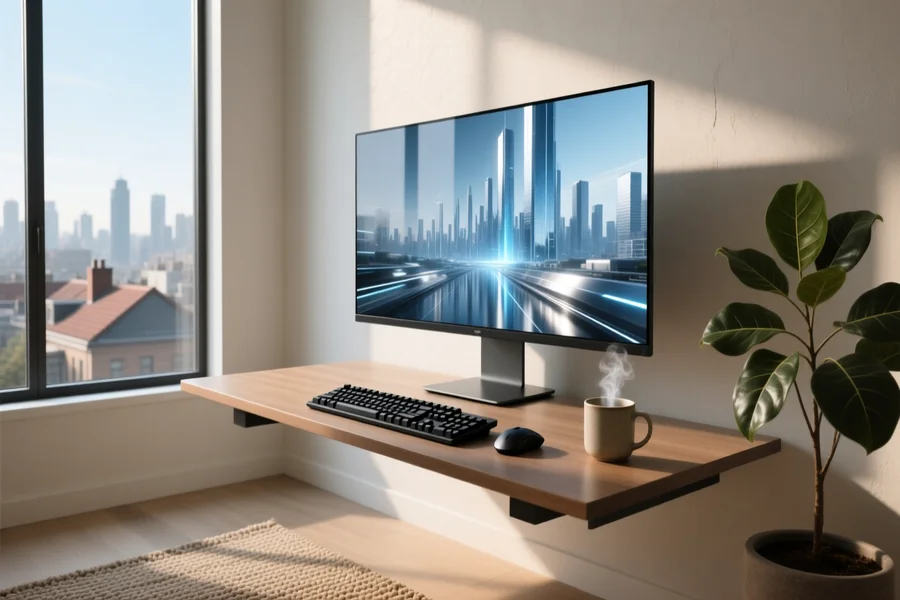
A standard monitor is the typical desktop display used in offices, homes, and workstations. These monitors are designed to sit on a desk or attach to a wall using VESA mounts.
They are ideal for everyday tasks such as:
- Office productivity
- Graphic design
- Video editing
- Software development
- Web browsing
- General business applications
Although they provide excellent display quality, they are not specifically designed for rack-mounted environments.
Space Efficiency
One of the biggest differences between the two solutions is how they utilize available space.
Rack Mount LCD Panels
Rack mount displays are engineered to fit directly inside server racks.
Benefits include:
- Efficient use of rack space
- Reduced equipment clutter
- Organized cable routing
- Professional server room appearance
Because the display remains inside the rack, administrators can easily access servers without needing additional desk space.
Standard Monitors
Standard monitors require a separate desk, shelf, or mounting arm.
In crowded server rooms, this often creates:
- Additional furniture requirements
- Cable clutter
- Limited working space
- Reduced mobility
For businesses with limited floor space, rack-mounted displays provide a much cleaner solution.
Installation and Integration
Rack mount LCD panels are specifically designed to integrate with professional IT infrastructure.
Most models include:
- Rack mounting brackets
- Sliding rails
- Locking mechanisms
- Cable management systems
Installation is straightforward for standard server cabinets.
Standard monitors, on the other hand, require separate stands or wall mounts and may not integrate neatly into server racks.
Durability
Professional environments often expose equipment to continuous operation.
Rack mount LCD panels are built with durability in mind.
Features commonly include:
- Steel chassis
- Industrial-grade components
- Heavy-duty rails
- Long-life LED displays
- Reliable cooling design
These displays are intended to operate in demanding environments where reliability is essential.
Standard monitors are generally designed for office use and may not withstand the same level of continuous operation.
Accessibility
Easy access is critical when managing servers.
Rackmount LCD panels often include slide-out drawers that allow administrators to pull the monitor forward when needed and store it safely when not in use.
This design keeps equipment protected while maintaining easy access.
Standard monitors remain exposed on desks and can occupy valuable workspace.
Display Quality
Modern rack mount LCD panels provide excellent image quality.
Many models offer:
- Full HD resolution
- LED backlighting
- Wide viewing angles
- Anti-glare coatings
- High brightness
Standard monitors also deliver outstanding display performance, particularly high-end office and professional models.
For general server management, both options typically provide sufficient visual clarity.
The deciding factor is usually installation requirements rather than image quality.
Connectivity Options
Both display types support a variety of modern interfaces.
Common connections include:
- HDMI
- DisplayPort
- DVI
- VGA
- USB
Rack mount LCD panels often include additional enterprise connectivity designed specifically for server environments.
Some models also integrate:
- USB hubs
- KVM switches
- Touchpads
- Keyboard drawers
These built-in features eliminate the need for additional peripherals.
Cable Management
Server rooms require organized cabling for airflow, maintenance, and troubleshooting.
Rack mount LCD panels help simplify cable management through:
- Rear cable routing
- Shorter cable runs
- Integrated cable guides
- Cleaner rack layouts
Standard monitors often require longer external cables that can create unnecessary clutter.
KVM Integration
One major advantage of rack mount LCD panels is their compatibility with KVM switches.
Many models include integrated KVM functionality, allowing administrators to control multiple servers from a single console.
Benefits include:
- Centralized management
- Reduced hardware requirements
- Faster server switching
- Simplified maintenance
Most standard monitors require separate KVM hardware, increasing both cost and complexity.
Reliability in Mission-Critical Environments
Downtime is expensive.
Rack mount LCD panels are designed for environments where uninterrupted operation is essential.
Industries relying on these displays include:
- Financial institutions
- Healthcare facilities
- Telecommunications
- Manufacturing
- Cloud service providers
- Government organizations
Standard monitors perform well in traditional office settings but are generally not designed for mission-critical infrastructure.
Maintenance
Maintaining organized equipment becomes easier with rack-mounted displays.
Technicians can quickly access servers without moving additional equipment.
Integrated designs also reduce the number of separate components requiring maintenance.
Standard monitors often involve additional stands, cables, adapters, and mounting hardware that increase maintenance complexity.
Long-Term Value
While rack mount LCD panels typically have a higher initial purchase price, they often deliver greater long-term value.
Benefits include:
- Better space utilization
- Reduced equipment clutter
- Improved workflow
- Longer service life
- Lower maintenance costs
Businesses managing multiple servers often recover their investment through improved operational efficiency.
Standard monitors may cost less initially but often require additional accessories that increase total ownership costs.
Which Industries Benefit Most From Rack Mount LCD Panels?
Rack mount LCD panels are ideal for organizations managing professional IT infrastructure.
Common users include:
Data Centers
Efficiently monitor and manage large server deployments.
Enterprise IT Departments
Support centralized server administration while reducing workspace clutter.
Industrial Automation
Monitor production systems and industrial controllers in manufacturing environments.
Healthcare
Maintain medical IT infrastructure while maximizing equipment organization.
Telecommunications
Monitor networking hardware and communication systems from a centralized location.
Broadcasting
Support production equipment, video routing systems, and control rooms.
When Is a Standard Monitor the Better Choice?
Despite their limitations in server environments, standard monitors remain an excellent option for many businesses.
They are well suited for:
- Office employees
- Graphic designers
- Software developers
- Customer service teams
- Accounting departments
- Home offices
If your display will primarily be used at a desk rather than inside a server rack, a standard monitor is often the more practical solution.
How to Choose the Right Display
Before making your decision, consider these questions:
- Will the monitor be installed inside a server rack?
- How much rack space is available?
- Do you need integrated KVM functionality?
- Will multiple servers be managed?
- Is continuous operation required?
- Do you need industrial-grade durability?
- Is cable management a priority?
Answering these questions will help determine which solution best supports your operational needs.
Why Businesses Choose Rackmount Sales
Selecting the right hardware partner is just as important as selecting the right display.
Rackmount Sales provides high-quality rack mount LCD panels designed for demanding enterprise environments. Our solutions support data centers, industrial facilities, government organizations, military applications, healthcare institutions, and corporate IT departments.
Whether you need compact 1U displays, high-resolution LCD panels, or integrated KVM console solutions, Rackmount Sales offers reliable products that maximize rack space while improving operational efficiency.
Final Thoughts
Both rack mount LCD panels and standard monitors have their place in modern business environments. Standard monitors are ideal for desks and everyday office work, while rack mount LCD panels are purpose-built for server racks, network closets, and industrial infrastructure.
For organizations that manage servers, networking equipment, or mission-critical systems, rack mount LCD panels provide superior space efficiency, durability, cable management, and accessibility. Their professional design helps streamline operations while keeping equipment organized and easy to maintain.
If your business depends on reliable IT infrastructure, investing in a rack mount LCD panel is a practical choice that supports long-term performance, scalability, and efficient system management.

Passionate about exploring diverse ideas and sharing inspiration, I curate content that sparks curiosity and encourages personal growth. Join me at ElementalNest.com for insights across a wide range of topics.