
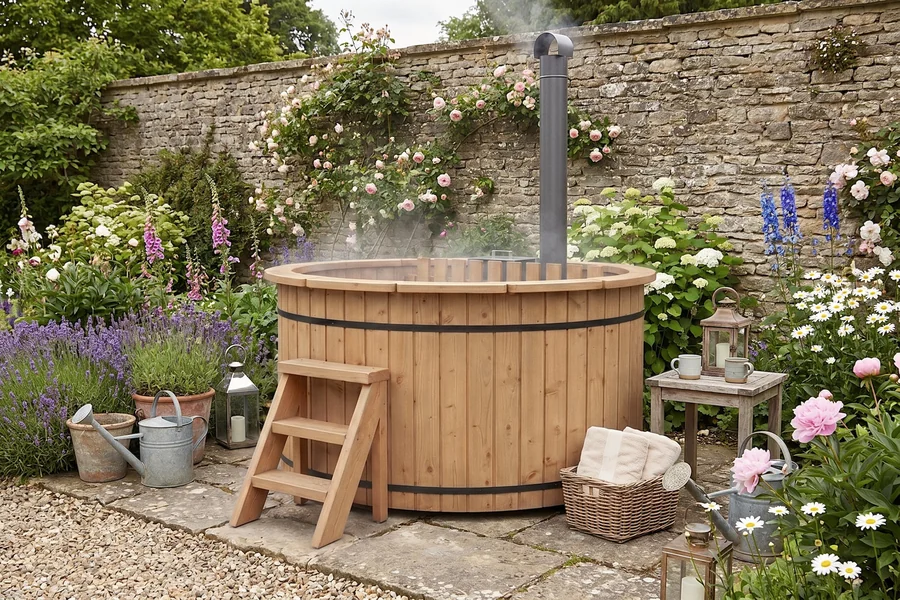
There is a particular kind of appeal to sitting in warm water outside on a cold evening, watching your breath fog in the air while the rest of your body stays perfectly warm. It’s a big part of why wood-fired hot tubs have become such a popular garden addition across the UK in recent years, offering something that an indoor bath or even an electric hot tub simply can’t replicate.
Why Wood-Fired, Specifically
Most people’s first association with a hot tub is the electric, jet-filled version common in hotel gardens and holiday lets. A wood-fired hot tub works differently. Rather than drawing continuous power from the mains to heat and maintain water temperature, it uses an external or integrated wood stove to heat the water directly, often from cold to a comfortable soaking temperature within a couple of hours. This has two practical effects. Running costs are generally lower since the tub isn’t drawing electricity continuously, and there is a genuine ritual involved, building a small fire and watching the water gradually warm, that a lot of owners say becomes part of the enjoyment rather than a chore.
There’s also something to be said for the sensory experience itself. Woodsmoke drifting past while sitting in warm water outdoors is a completely different atmosphere from stepping into a chlorinated, jet-powered tub on a patio. It leans into a more traditional, almost Scandinavian approach to outdoor bathing that a growing number of UK garden owners are actively seeking out.
What to Look for When Choosing One
Not all wood-fired hot tubs are built the same way, and the differences matter once a tub is actually installed and used through a full UK winter. Timber sourcing matters, since the tub’s exterior is exposed to weather year-round, and sustainably sourced, well-treated timber will hold up considerably better than a cheaper alternative. The stove itself matters just as much. A high grade steel stove, properly integrated into the tub’s design, heats water more efficiently and lasts longer than a bolted-on generic burner.
Size and shape are also worth thinking through properly rather than defaulting to whatever looks best in a photo. A compact ofuro-style tub suits a smaller garden and tends to have a lower water volume, meaning faster heating, while a larger square or deluxe design suits bigger gardens and groups but takes longer to heat and uses more firewood per session. A Wood Fired Hot Tub from Royal Tubs covers this full range, built in the UK from sustainably sourced timber with a high grade steel stove, and available across sizes from the compact Ofuro design through to larger Square and Deluxe models, with customisation options covering interior colour, timber exterior, stove type, and finishing details.
Year-Round Use in the UK Climate
A common assumption is that a wood-fired hot tub is really a summer purchase, something for barbecues and long evenings. In practice, many owners get the most enjoyment out of theirs during autumn and winter, when the contrast between the cold air and the hot water is at its most dramatic. Wood-fired tubs are specifically designed to heat from cold even in freezing conditions, and the fire itself provides a bit of warmth and ambience around the tub while it’s being used, which suits colder months particularly well.
A Feature for Homeowners and Hospitality Alike
Beyond private gardens, wood-fired hot tubs have also become a popular addition for holiday lets, glamping sites, and other hospitality venues looking to add a standout feature without a huge ongoing cost. Cheap to run, quick to heat, and relatively low maintenance compared to a permanent swimming pool or a chemical-heavy electric spa, a wood-fired tub can meaningfully lift a venue’s appeal and nightly rate without adding much to the day-to-day workload of running the property.
Maintenance and Practical Realities
Owning a wood-fired hot tub does involve a bit more hands-on upkeep than an electric model, mainly around sourcing and storing dry firewood and occasionally checking the stove and pipework. Most owners find this a small trade-off for the lower running costs and the atmosphere the fire itself provides, but it is worth going in with realistic expectations about the slightly more involved routine compared to simply pressing a button on an electric tub.
Frequently Asked Questions
How long does it take to heat a wood-fired hot tub?
Heating times vary by tub size and stove design, but most wood-fired hot tubs heat from cold to a comfortable soaking temperature within two to four hours, depending on the model and outdoor conditions.
Can a wood-fired hot tub be used in winter?
Yes, wood-fired hot tubs are specifically designed to handle cold weather, and many owners find winter one of the best times to use theirs due to the contrast between the cold air and warm water.
Is a wood-fired hot tub cheaper to run than an electric one?
Generally yes, since it relies on firewood rather than continuous electricity draw to maintain temperature, though this does depend on local firewood costs and how frequently the tub is used.
How much maintenance does a wood-fired hot tub need?
Beyond routine water care similar to any hot tub, owners need to source and store dry firewood and periodically check the stove and pipework, which is a modest extra step compared to an electric model.
What size wood-fired hot tub is right for a small garden?
A compact design, such as an Ofuro-style tub, suits smaller gardens well since it has a smaller footprint and lower water volume, which also means faster heating times.

Passionate about exploring diverse ideas and sharing inspiration, I curate content that sparks curiosity and encourages personal growth. Join me at ElementalNest.com for insights across a wide range of topics.