
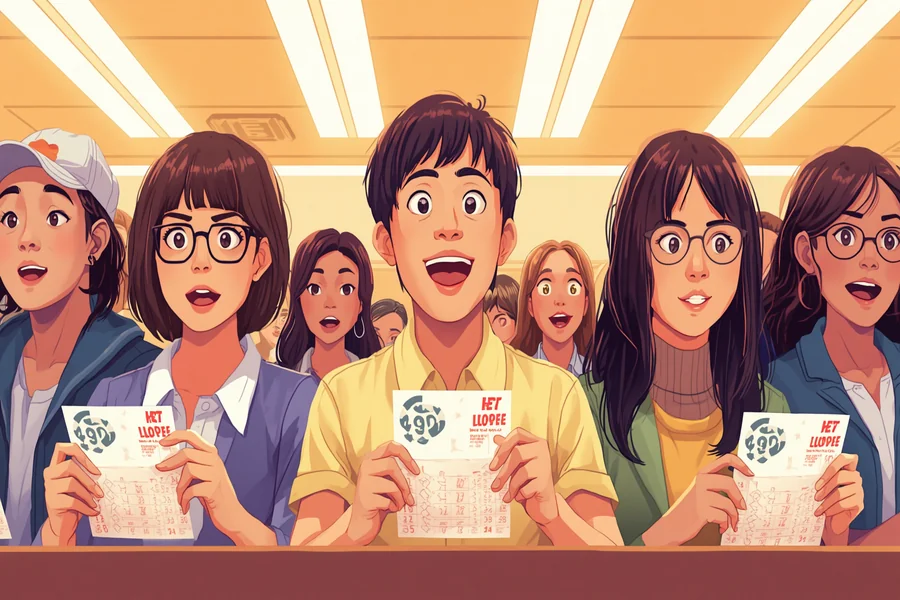
Walk into any 4D outlet or talk to regular lottery players, and you will often hear the same habit: someone has a few favourite numbers and plays them again and again. Even after many draws without a win, they may refuse to change them.
This behaviour is not unusual. There are practical reasons behind it, such as personal meaning, routine, memories, and the belief that a familiar number may eventually appear. Psychology also plays a role. Understanding these reasons can help players separate personal preference from assumptions about how random draws work.
Familiar Numbers Are Easier to Remember
One simple reason people repeat the same 4D numbers is convenience. Once a player has chosen a number they like, there is no need to spend time selecting another combination before every draw.
A regular player may already know the number by heart. It can become part of a weekly or regular routine. The decision becomes automatic: choose the familiar number, check the ticket, and wait for the result.
Personal Meaning Can Make a Number Feel Special
Many lottery numbers are connected to personal experiences. A player might choose a birthday, anniversary, house number, phone-number fragment, or another date that has personal meaning.
Research into lottery number selection has found that players commonly make conscious, non-random choices rather than treating every possible number equally. Meaningful numbers can therefore become favourites even though their personal significance does not change the mathematical chance of being drawn.
Lucky Numbers Can Become Long-Term Choices
Some players also have numbers they consider lucky. This belief may come from a memorable event, family tradition, cultural association, or a previous small win.
Once a number becomes associated with something positive, changing it can feel uncomfortable. A player may think, “What if I stop playing it and it comes out next?” That thought can be powerful enough to keep the same combination in play for a long time.
A Previous Near Miss Can Strengthen the Habit
Near misses can make a number feel more important than it really is. For example, a player may see several digits from a familiar combination appear in recent results and feel that the number is getting close.
The problem is that a near miss does not make the next draw more likely to produce that combination. Research on lottery gambling has identified near-miss experiences and related beliefs as factors that can influence gambling behaviour.
Players May Feel Their Number Is “Due”
Another common explanation is the gambler’s fallacy. This happens when someone believes previous random outcomes affect what should happen next.
A player might think a number has been absent for many draws and is therefore “due.” Another player may believe a number that appeared recently is currently “hot.” Both ideas can make past results seem more predictive than they really are.
For an independent random draw, however, previous results do not create an obligation for a particular number to appear next. Research on lottery psychology specifically identifies beliefs about hot and cold numbers and the gambler’s fallacy as common cognitive errors.
Repetition Creates a Sense of Consistency
People generally like routines. Playing the same number every draw provides a simple and consistent system, even when there is no evidence that the system improves the odds.
This consistency can also reduce regret. If a player keeps using the same number and it eventually wins, they may feel they stayed loyal to the right choice. If they change numbers and the old number wins, the regret can feel much stronger.
That emotional difference helps explain why some players continue with one combination for years.
Random Draws Do Not Remember Previous Results
The most important point is that a draw does not know which numbers a player has been using.
For example, Magnum 4D describes its draw process as random and says its winning numbers are produced through electromechanical drums. The operator also explains that members of the public participate in the draw process.
This means a number does not become more likely simply because someone has played it for a long time. Ten previous unsuccessful attempts do not create a mathematical debt that the next draw must repay.
Checking Results Can Reinforce Number Habits
Regular players often follow results closely. They may compare previous combinations, record numbers, or look for familiar patterns.
There is nothing wrong with checking official results for accuracy. When following 4d malaysia, it is sensible to distinguish verified draw information from predictions, rumours, or unofficial claims. A results page can tell you what was drawn; it cannot establish that a particular number is more likely to win in the future.
That distinction is especially important when players use historical results to justify continuing with one number.
Why “Almost Winning” Can Feel So Persuasive
Suppose a player’s favourite combination has several digits that recently appeared in different positions. It may feel as though the number is getting closer.
This is an example of how people can give meaning to information that has little predictive value. Studies of lottery behaviour have found that players often search for patterns and use specific number-selection strategies even though such methods do not change the underlying odds of a traditional draw-based lottery.
The pattern may be interesting, but interest should not be confused with prediction.
Some Players Prefer Their Own Numbers to Random Picks
Not everyone enjoys choosing numbers randomly. Some players want to feel involved in the decision.
For instance, a person may prefer selecting a combination connected to an important date instead of accepting a randomly generated number. Modern 4D products can also offer random-selection options. Magnum 4D, for example, describes its Lucky Pick feature as a system that randomly generates a four-digit number.
Neither approach creates a guaranteed advantage. The difference is mainly how the player wants to make the selection.
Does Playing the Same Number Improve the Odds?
No. Repeating the same number does not make that number increasingly likely to appear.
The advantage of consistency is psychological rather than mathematical. A player knows exactly what they are following and does not have to worry about changing their selection immediately before a draw.
At the same time, players should avoid thinking that a number becomes “stronger” because it has been played repeatedly. A random draw has no memory of how many times a combination was previously selected.
What About Numbers That Have Appeared Frequently?
Historical frequency can be interesting, but it needs to be interpreted carefully.
A number appearing several times in a collection of past results does not automatically make it a better choice for the next draw. Likewise, a number that has not appeared recently is not automatically waiting for its turn.
Research into lottery ticket preferences has found that players often believe in ideas such as numbers being due or showing a bias, while observed lottery outcomes can still conform closely to random behaviour.
Past frequency is therefore information about the past, not a promise about the future.
How Players Can Use Results More Sensibly
Historical results can still serve a useful purpose when used for record-keeping rather than prediction. A player can use an official results source to confirm a draw, check a ticket, or maintain a personal record.
For example, someone checking a source for a 4d result perdana can focus on whether the displayed result matches the relevant official information rather than trying to turn previous numbers into a guaranteed forecasting system.
This approach keeps the useful part of result tracking while avoiding exaggerated claims about patterns.
The Risk of Chasing a Favourite Number
There is another side to repeating numbers. A player may become emotionally attached to a combination and increase spending because it has not appeared yet.
That is where a harmless preference can become an unhealthy habit. The thought that “I have played this number for so long, so I cannot stop now” can encourage continued spending based on past investment.
The money already spent does not increase the probability of a future win. Previous spending is a sunk cost, not evidence that a number is becoming more likely.
A Better Way to Think About Number Selection
There is no need to treat number selection as a test of intelligence. Some people prefer meaningful numbers, others like random combinations, and some simply enjoy keeping the same selection.
The important thing is understanding what the choice means. A favourite number can be a personal tradition without being described as a mathematically superior number.
Keeping expectations realistic also makes it easier to avoid chasing losses or treating ordinary random events as signs.
The Real Reason Loyalty to a Number Feels Powerful
Sticking with the same 4D numbers is usually less about mathematics and more about human behaviour. Familiarity, memories, superstition, routine, and the fear of missing a winning draw can make one combination feel unusually important.
There is nothing inherently wrong with having a favourite number. The key is to remember that a favourite number remains a preference, not a prediction. Official results can confirm what happened in a draw, but they cannot turn an old combination into a guaranteed future winner. Treating lottery play as entertainment, keeping spending under control, and separating personal beliefs from probability are much more useful habits than waiting for a number to become “due.”
Frequently Asked Questions
Why do people keep playing the same 4D number?
Familiarity, personal meaning, lucky-number beliefs, routine, and fear of missing out can all contribute. Some players also become attached to a number after a near miss or previous win.
Can a number become due after many draws?
No. In a genuinely random draw, previous appearances or absences do not create a requirement for a number to appear next. A number being absent for many draws is not proof that its chance has increased.
Are frequently drawn numbers more likely to win again?
Past frequency alone does not establish that a number has a higher probability in a future independent draw. Historical results describe what happened previously; they do not guarantee what happens next.
Is it better to choose numbers randomly?
Random selection can avoid some common personal biases, such as always choosing birthdays or favourite numbers. However, choosing randomly does not create a guaranteed advantage over another valid combination when the underlying draw is random.
Should I stop playing a number that has never won?
There is no mathematical requirement to change it. The more important question is whether continuing fits your budget and whether you understand that previous unsuccessful draws do not make a future win more likely.

Passionate about exploring diverse ideas and sharing inspiration, I curate content that sparks curiosity and encourages personal growth. Join me at ElementalNest.com for insights across a wide range of topics.