
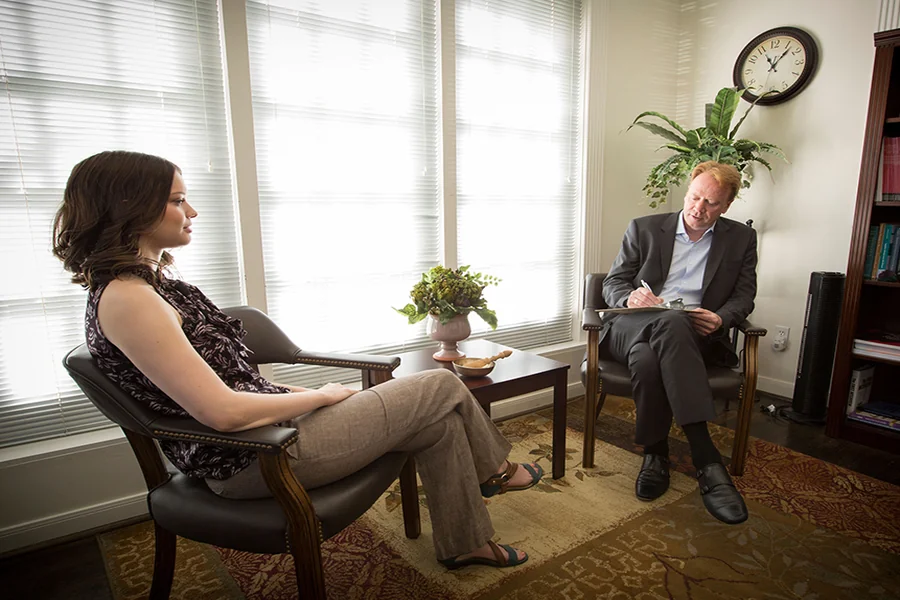
Anxiety rarely announces itself in one clear form. It shows up as a racing pulse before a Monday presentation, a night of broken sleep, or a quiet dread that shadows an ordinary Saturday. Life along the coast carries its own pressures, from long commutes to the pace of creative and tech careers near the beach.
Talk therapy remains among the most studied responses to that experience. Clinics, for instance, Cura Behavioral in Health Santa Monica, treat conversation as clinical work, shaped around defined goals, regular measurement, and steady practice. A closer look at the process reveals how much thought sits behind each fifty-minute hour. Here, you’ll know how clinics approach anxiety with talk therapy.
The Intake Conversation Sets a Baseline
Care starts with a thorough evaluation rather than a quick label. A licensed clinician in Santa Monica asks about sleep, caffeine, medical history, family patterns, work demands, and the situations that trigger the sharpest reactions. That detail matters, since panic symptoms, constant worry, and social fear each respond to different techniques. The result is a written plan with clear goals, a session frequency, and a shared sense of direction.
Evidence-Based Methods Matched To The Person
No single method suits every patient, so clinicians draw from several proven traditions. Selection depends on symptom pattern, personal history, and comfort with each format.
Common Approaches:
- Cognitive behavioral therapy, which targets the thought patterns that inflate a sense of threat.
- Dialectical behavior therapy, useful when fear arrives with intense emotion or relationship conflict.
- Psychodynamic work, which traces present-day worry back to earlier experiences and attachments.
- Mindfulness-based methods, which train attention toward the current moment instead of an imagined outcome.
- Humanistic therapy, which places personal values and self-worth at the center of recovery.
Progress Measured Session By Session
Therapists from renowned clinics, for example, Cura Behavioral in Health in Santa Monica, check symptoms against short standardized scales at set intervals, which turns a vague sense of improvement into something visible. Adjustments follow that record: a technique that stalls gets replaced, and one that works gets more room. Most patients meet weekly at first, then move to biweekly visits as coping skills hold up under pressure. Secure telehealth keeps the rhythm intact through travel, illness, or a packed workweek.
Skills That Travel Beyond The Office
Sessions aim for change that lasts after the door closes, so therapists assign small experiments for the days between visits. Repetition outside the office turns a technique into a habit the nervous system trusts.
Practice Between Appointments
- Paced breathing and grounding exercises rehearsed before high-stress moments rather than during them.
- Thought records that capture a worry, the evidence behind it, and a fairer conclusion.
- Graded exposure steps that shrink avoidance one manageable situation at a time.
- Sleep and caffeine adjustments that lower the physical baseline anxious thoughts feed on.
Coordination With Broader Treatment in Santa Monica
An estimated 19.1 percent of adults nationwide had an anxiety disorder in the past year, a figure that explains why practices keep therapy connected to other services. Therapists communicate with prescribers when medication enters a plan, and referrals extend to psychiatric evaluation or cognitive testing when symptoms overlap with ADHD, trauma, or mood conditions. Family sessions can join the plan when household dynamics feed the cycle. Such coordination spares patients the work of repeating their story to every new provider.
Anxiety responds well to structured conversation with a trained clinician. Local practices pair that structure with measurement, flexible scheduling, and coordinated medical support. Relief starts with one appointment and honest words.

Passionate about exploring diverse ideas and sharing inspiration, I curate content that sparks curiosity and encourages personal growth. Join me at ElementalNest.com for insights across a wide range of topics.