
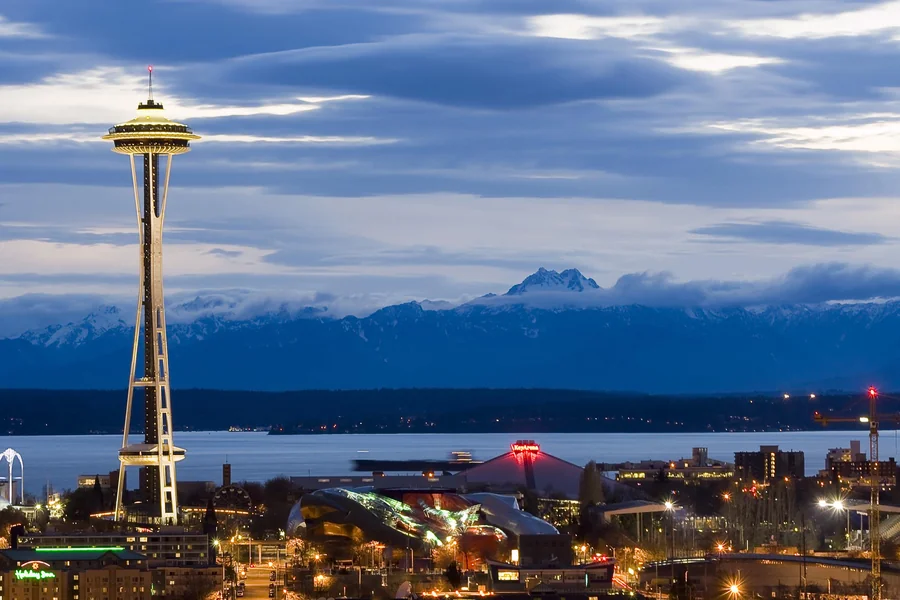
Seattle is one of those cities where daily life is shaped as much by the landscape as the streets themselves. Water surrounds much of the city, mountains appear on clear days, evergreen trees are never far away, and neighborhoods can feel surprisingly distinct despite being only a few miles apart. It is a major technology and business center, but it also has a reputation for coffee shops, independent businesses, outdoor recreation, music, food, and a casual Pacific Northwest culture.
Living in Seattle comes with tradeoffs. Housing can be expensive, traffic can test anyone’s patience, and the long stretch of gray weather takes some adjustment. On the other hand, residents have access to a strong employment market, extensive parks, diverse neighborhoods, cultural attractions, and outdoor destinations that make it possible to leave an office and reach mountains, forests, or water relatively quickly. For someone considering a move, understanding these everyday realities provides a much better picture than Seattle’s famous skyline alone.
Seattle’s Neighborhoods Shape the Experience
Where someone lives can dramatically influence how Seattle feels. Downtown places residents near offices, entertainment, restaurants, Pike Place Market, the waterfront, and public transportation. It offers a distinctly urban experience, although residents should expect the costs and activity that accompany a central location.
Capitol Hill has long been associated with restaurants, nightlife, music, independent shops, and a lively cultural scene. It can appeal to residents who want plenty happening within walking distance. Ballard has its own personality, combining residential streets with breweries, restaurants, shops, maritime history, and easy access to places such as Golden Gardens Park.
Fremont is known for a creative, slightly unconventional atmosphere, while Queen Anne combines residential areas with proximity to Seattle Center. Neighborhoods such as Wallingford, Green Lake, and West Seattle provide still different versions of city living.
That variety matters when apartment hunting. Seattle is not a city where choosing an apartment based solely on distance from downtown necessarily makes sense. Someone who values nightlife, another who wants a quiet residential street, and a third who wants easy access to a particular employer may end up choosing completely different areas.
Spending time in a neighborhood before signing a longer lease can therefore be especially useful.
Weather Becomes Part of the Routine
Seattle’s weather reputation is not entirely undeserved, although newcomers sometimes imagine constant heavy rain. Much of the city’s wet-season precipitation arrives as lighter rain or drizzle, accompanied by extended periods of cloudy skies.
The bigger adjustment for some residents is the seasonal difference in daylight. Winters can feel dark, particularly when short days combine with cloud cover. Summer provides quite a contrast. Days become long, temperatures are generally comfortable compared with many hotter parts of the country, and clear weather reveals why residents tolerate the gray months.
When summer arrives, Seattle seems to move outside.
Parks become busy, patios fill, and people head toward hiking trails, lakes, beaches, and the surrounding mountains. Kayaking, cycling, running, boating, and hiking are all accessible from the metropolitan area.
A waterproof jacket is generally more practical than dramatically changing plans every time rain appears. Residents tend to adapt. Coffee helps too, or at least Seattle’s enormous café culture provides plenty of places to wait out a shower.
Housing and Furnished Apartments Seattle
Housing is one of the largest practical considerations for anyone moving to the city. Seattle offers everything from modern downtown towers and newer apartment communities to smaller buildings, townhomes, studios, and older rentals tucked into established neighborhoods.
People researching furnished apartments Seattle are often looking for flexibility as much as furniture. Furnished apartments Seattle options can be useful for professionals relocating for work, people completing temporary assignments, students, or newcomers who want time to explore neighborhoods before committing to a permanent home.
A furnished rental may include major items such as a bed, sofa, table, and kitchen equipment, but inclusions vary considerably. Some properties bundle utilities, internet, parking, or household items into the rate, while others provide only basic furniture. Renters should compare the complete monthly cost and lease terms rather than focusing only on the advertised rent.
For someone new to Seattle, temporary housing can also provide an opportunity to experience commuting patterns, weather, nearby services, and neighborhood atmosphere firsthand before deciding where to settle.
Getting Around Requires Some Planning
Seattle offers several transportation choices, although convenience depends heavily on where someone lives and works.
Sound Transit’s Link light rail has become an increasingly important part of regional transportation, connecting Seattle with other communities and key destinations. Buses provide extensive service throughout the city, and some neighborhoods are particularly friendly to walking.
Cycling is another option, though Seattle’s hills can make certain routes more demanding than they appear on a map.
A car can still be useful, especially for people commuting to locations with limited transit service or frequently heading into the mountains and surrounding region. The downside is traffic. Congestion can be significant, and parking may be expensive or limited in dense neighborhoods.
For that reason, commute planning deserves attention before choosing a home. An apartment that looks relatively close to work geographically can involve a surprisingly inconvenient commute depending on the route.
Residents who can live near a reliable transit connection may find daily life considerably easier.
Outdoor Recreation Is Surprisingly Close
One of Seattle’s greatest advantages is the relationship between the city and the outdoors.
Within Seattle itself, residents have access to large green spaces such as Discovery Park, Green Lake Park, Washington Park Arboretum, and Seward Park. Lake Washington and Lake Union provide opportunities for water-based recreation, while Puget Sound creates an entirely different coastal environment.
Travel farther outside the city, and the options expand dramatically.
The Cascade and Olympic mountains provide hiking, camping, skiing, and scenic drives. Mount Rainier is an unmistakable presence on clear days and anchors one of the region’s best-known national parks. Ferries can carry passengers across Puget Sound to communities where the pace feels noticeably different from central Seattle.
This accessibility shapes local culture. Weekend conversations can easily revolve around which trail someone hiked, where they skied, or which island they visited.
You do not have to be an enthusiastic outdoors person to enjoy Seattle, but having nature so close certainly adds another dimension to living there.
Food, Coffee, and Local Culture
Seattle’s food culture reflects both its Pacific Northwest location and its diverse population. Seafood is naturally prominent, with salmon, oysters, Dungeness crab, and other regional ingredients appearing across menus and markets.
The city’s Asian food scene is another major strength. Residents can find excellent Vietnamese, Japanese, Chinese, Korean, Filipino, Thai, and other cuisines throughout Seattle and the surrounding region.
Then there is coffee.
Seattle’s connection with coffee is famous, but the experience extends well beyond the major chains associated with the city. Independent cafés and local roasters are scattered through neighborhoods, and coffee shops often function as informal meeting places, workspaces, and community gathering spots.
Arts and entertainment contribute another layer. Seattle has deep musical roots, professional sports teams, museums, theaters, independent venues, festivals, and neighborhood events. Pike Place Market may be a tourist attraction, but it is also part of a broader culture that values local food producers, craftspeople, and independent businesses.
There is usually something to do without the city feeling as relentlessly busy as some larger American metropolitan areas.
Work and the Cost of Living
Seattle’s economy attracts people from across the country and around the world. Technology is particularly visible, with major companies and startups maintaining a substantial presence in the region. Healthcare, aerospace, education, maritime industries, retail, and professional services also contribute to the local economy.
Strong employment opportunities have helped Seattle grow, but that growth has contributed to higher living costs.
Housing is often the biggest expense newcomers notice. Restaurant prices, parking, services, and other everyday costs can also feel high compared with many smaller U.S. cities.
People considering relocation should look beyond salary alone and calculate expected housing, transportation, utilities, taxes, food, and lifestyle expenses. A position offering a significant pay increase may not necessarily produce the same increase in disposable income once Seattle living costs are considered.
Choosing the right neighborhood and transportation arrangement can make a meaningful difference.
Finding Your Version of Seattle
Living in Seattle means accepting a few contradictions. It is an urban technology center surrounded by wilderness. It has a famous reputation for rain yet some remarkably beautiful summers. Neighborhoods can feel quiet and residential even while major employers, stadiums, cultural institutions, and busy commercial districts sit only a short distance away.
The city works particularly well for people who appreciate access to both urban amenities and outdoor recreation. Someone can spend Saturday morning at a neighborhood café, afternoon kayaking or hiking, and evening at a restaurant, concert, or sporting event without traveling particularly far.
It is not necessarily an inexpensive or effortless place to live. Housing costs and traffic deserve serious consideration, and newcomers from sunnier climates may need time to adjust to winter.
Still, Seattle offers a combination that is difficult to duplicate. Water, mountains, strong employment opportunities, distinct neighborhoods, excellent food, and an outdoor-oriented culture all exist within the same metropolitan area.
For people who find that combination appealing, Seattle can become much more than an interesting place to visit. Once the right neighborhood and routine fall into place, it can feel remarkably easy to call the Pacific Northwest home.

Passionate about exploring diverse ideas and sharing inspiration, I curate content that sparks curiosity and encourages personal growth. Join me at ElementalNest.com for insights across a wide range of topics.