
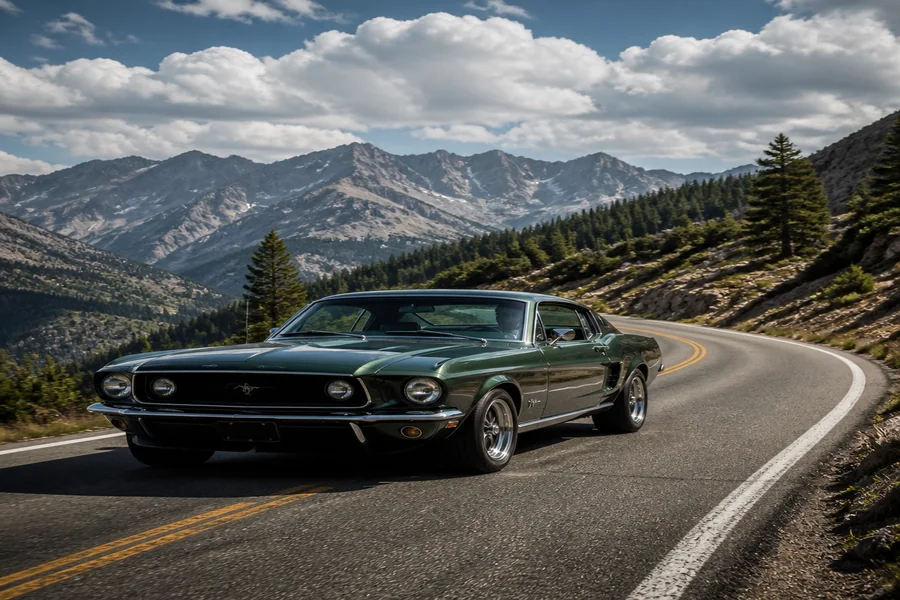
The rumble of a V8 engine echoing through alpine valleys, the bite of rear-wheel drive on twisting tarmac, and the admiring glances at every petrol stop—few automotive experiences rival taking a classic American muscle car through Europe’s most scenic routes. While modern sports cars offer precision and efficiency, the raw character of a 1960s Mustang or Shelby GT connects driver to machine in a way that touchscreens and traction control simply cannot replicate. For enthusiasts planning driving tours through regions like the Austrian Alps, the question isn’t whether to bring a vintage muscle car, but which one—and whether to tackle restoration or seek a turnkey solution.
The Enduring Appeal of First-Generation Mustangs
When Ford introduced the Mustang in 1964, it created an entirely new market segment: the affordable personal performance car. The original “pony car” combined sporty styling with accessible pricing, and within eighteen months, over a million had sold. The first generation, spanning 1964 to 1973, remains the most coveted among collectors, with the 1967-1968 fastback body style representing the peak of the design’s muscular proportions.
What makes these cars particularly suitable for scenic driving routes is their compact dimensions compared to modern vehicles. At just 4.6 metres long, a ’67 Mustang navigates narrow European roads far more easily than today’s bloated sports sedans. The relatively simple mechanical layout—live rear axle, recirculating ball steering, drum or disc brakes—means roadside repairs are possible with basic tools, a reassuring prospect when traversing remote mountain passes.
The Shelby variants elevated the Mustang formula further. Carroll Shelby’s modifications transformed Ford’s mass-market coupe into a legitimate performance machine. The GT350 featured upgraded suspension, a tuned 289 or 302 cubic inch V8, and functional aerodynamic improvements. The GT500 answered the horsepower wars with big-block power, initially a 428 cubic inch engine producing over 355 horsepower. These weren’t just straight-line bruisers—proper Shelbys handled surprisingly well for their era, thanks to stiffer springs, relocated shock towers, and revised geometry.
Restoration Reality: The Challenge of Authenticity
Restoring a classic Mustang to roadworthy condition demands more than enthusiasm and a workshop manual. The decision tree splits immediately: original preservation, modified reliability, or complete restomod transformation. Each path carries distinct costs and compromises.
Authenticity purists chase numbers-matching components, correct date codes, and factory paint formulas. This approach preserves historical value but often means accepting 1960s engineering limitations: points ignition that requires frequent adjustment, carburetors that flood in hot weather, manual steering that turns parking into an upper-body workout, and single-circuit drum brakes with stopping distances that terrify modern drivers. For multi-day touring routes through challenging terrain, these compromises affect not just comfort but safety.
The alternative—sympathetic upgrades—walks a fine line. Electronic ignition improves reliability without visual changes. Radial tires transform handling and stopping power. Disc brake conversions are now bolt-on affairs. Modern shock absorbers with period-correct housings eliminate the wallowing body roll that plagued original suspensions. These modifications create a more usable car while maintaining external authenticity, though purists argue they dilute historical integrity.
Parts availability presents another hurdle. Ford produced over 1.2 million first-generation Mustangs, so mechanical components remain relatively accessible. Shelby-specific pieces—fiberglass hoods, rear quarter panel scoops, Cobra valve covers—command premium prices and require verification to avoid reproductions masquerading as originals. Rust is the silent killer; unibody construction means seemingly solid cars can hide structural corrosion in rockers, floor pans, and shock towers. Professional restorations easily exceed £60,000 for driver-quality cars, with concours builds pushing past £150,000.
The Modern Alternative: New-Build Classic Mustangs
A third option has emerged for enthusiasts who want vintage aesthetics without vintage headaches: newly manufactured reproductions built to original specifications but incorporating modern engineering. Several specialty manufacturers now offer this solution, constructing cars that look identical to 1960s originals while delivering contemporary performance, safety, and reliability. Revology Cars exemplifies this approach, building licensed reproductions that replicate classic Ford Mustang and Shelby GT body styles while integrating fuel injection, five-speed transmissions, power steering, air conditioning, and modern safety structures. Their Mustang 1967 Shelby GT500 variant captures the aggressive stance and big-block character of the original while starting at $325,500 USD—a significant investment, but one that delivers a turnkey solution with full warranty coverage.
These new-build cars address practical concerns that plague restorations. Modern electrical systems eliminate the random failures that strand period cars. Improved chassis rigidity and crumple zones provide crash protection that 1960s engineering never contemplated. Fuel injection ensures consistent running regardless of altitude or temperature, crucial for alpine touring. The trade-off is authenticity: while visually convincing, these cars lack the patina and historical connection of genuine survivors.
Engine Upgrades: Balancing Power and Driveability
The heart of any Mustang project is its powerplant. Original engines ranged from the pedestrian 200 cubic inch inline-six to the thundering 428 Cobra Jet V8. Modern engine swaps have become increasingly popular, with late-model Coyote V8s offering 450+ horsepower in a package that fits the original engine bay while meeting emissions regulations.
For those maintaining period-correct engines, established restoration techniques focus on rebuilding rather than replacing. The small-block Windsor engines (289, 302) respond well to mild performance upgrades: aluminum heads improve breathing, electronic ignition ensures consistent spark, and modern camshaft profiles broaden the power band without sacrificing street manners. Big-block FE engines (390, 428) deliver torque in abundance but suffer from primitive combustion chamber design and weight distribution that pushes the nose down under braking.
Forced induction tempts many builders, but superchargers and turbochargers stress vintage blocks and transmissions designed for naturally aspirated output. The three-speed automatics and four-speed manual transmissions of the era weren’t built for modern power levels. Upgrading to a five-speed or six-speed transmission transforms highway cruising and reduces engine stress, but requires tunnel modifications and custom driveshafts.
Living with a Classic Mustang in the Modern World
Daily driving a vintage Mustang teaches humility and mechanical sympathy. These cars demand attention: oil consumption between changes, valve adjustments, distributor tuning, and carburetor synchronization become routine maintenance rather than crisis intervention. Fuel economy hovers around 15 miles per gallon in mixed driving, worse with big-block engines or aggressive driving styles.
The driving experience rewards engagement. Unassisted steering provides genuine feedback through corners, communicating road surface and tire grip directly to your palms. The manual transmission requires deliberate action—these are not the slick-shifting gearboxes of modern sports cars, but agricultural mechanisms with long throws and vague gates that demand patience. Braking distances stretch considerably compared to modern standards; maintaining following distance becomes essential rather than optional.
Yet these limitations breed connection. Without electronic nannies intervening, every input matters. Throttle modulation, steering angle, and brake pressure combine into a conversation between driver and machine. The sensory richness—engine vibration through the seat, exhaust note changing with load, mechanical sounds from suspension and drivetrain—creates an immersive experience that modern refinement deliberately eliminates.
Choosing Your Path Forward
The decision between restoration, restomod, or new-build reproduction depends on intended use and personal priorities. Concours competitors and investment-focused collectors need numbers-matching authenticity. Weekend drivers and touring enthusiasts benefit from reliability upgrades that maintain visual correctness. Those planning extensive mileage through varying conditions might find modern reproductions offer the best compromise between vintage character and contemporary dependability.
Whatever path you choose, first-generation Mustangs and Shelby GTs remain among the most rewarding classic cars to own and drive. Their combination of iconic styling, accessible mechanicals, and genuine performance capability explains why values continue climbing while interest spans generations. Whether threading through alpine switchbacks or cruising coastal highways, few automotive experiences match the visceral pleasure of piloting a properly sorted 1960s muscle car through stunning scenery. The question isn’t whether these cars belong on modern roads—it’s simply which one you’ll choose.

Passionate about exploring diverse ideas and sharing inspiration, I curate content that sparks curiosity and encourages personal growth. Join me at ElementalNest.com for insights across a wide range of topics.