
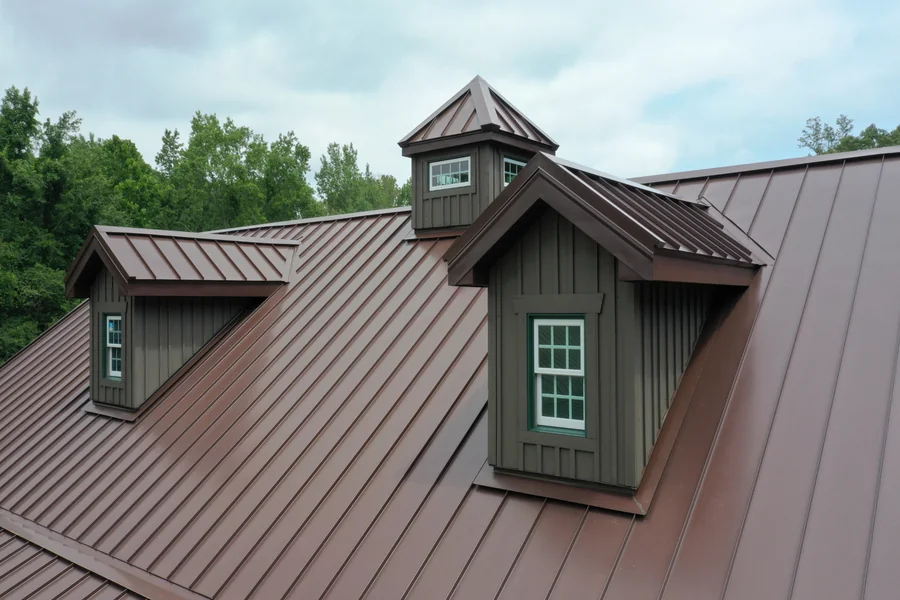
A standing seam metal roof on a Kentucky farmhouse can outlive the mortgage, the second mortgage, and probably the person who signed for it. The short answer to the title question is 40 to 60 years, depending on the metal and the installer. But that range hides a lot of nuance, and the difference between a roof that hits 25 years and one that hits 60 usually comes down to two things: the metal you pick and how the panels get attached. That is what this guide walks through, so you can put money into a roof that actually earns its keep.
What Kentucky Weather Does to a Roof, Month by Month
Kentucky does not have one weather problem. It has four, and they rotate on a schedule that gives your roof no off season.
Start with summer. Louisville and Lexington regularly see heat index values above 100 degrees, and even without humidity, a dark roof surface can hit 160 degrees on a July afternoon. Then winter. Freeze thaw cycles are the real killer here, not the cold itself. Water sneaks into a microscopic gap, freezes, expands, and pries that gap open a little wider. Do that a few hundred times and small issues become big ones.
Spring brings the storms. Kentucky sits in a zone where severe thunderstorms and tornadoes are regular visitors, and hail comes with them. Hail larger than an inch can dent lighter gauge metal and chip protective coatings. And fall brings the leaves, which clog valleys and gutters if you are not paying attention, holding moisture against the metal.
The US Geological Survey notes (2023) that freeze thaw weathering is one of the most powerful natural forces breaking down building materials in temperate climates. That cycle drives more roof damage in central Kentucky than any single storm does.
Which Metal Holds Up Best Here
Not all metal roofs are the same animal. The three common choices in Kentucky are steel, aluminum, and copper, and they age very differently in this climate.
| Metal | Lifespan in KY | Rust Risk | Dent Resistance | Cost Range
|
|---|---|---|---|---|
| Galvalume steel | 40 to 60 years | Low with good coating | High (22 to 26 gauge) | Moderate |
| Aluminum | 50 to 70 years | Very low | Lower, dents easily | Higher |
| Copper | 100+ years | None (patina protects) | Low | Premium |
Steel is the workhorse here, and it is what most local roofers recommend first. The trick is the coating. Galvalume, a blend of aluminum and zinc, gives steel its corrosion resistance. Cheaper galvanized steel with thinner zinc coatings will show rust streaks around fastener holes within 15 years in this humidity. You want at least a 55 percent aluminum zinc coating on a 22 or 24 gauge panel.
Aluminum laughs at rust, which is valuable in a wet state, but it dents. A baseball sized hailstone can leave a visible dimple. Copper is gorgeous and practically immortal, but you pay triple the price and it is a specialty install. For most Kentucky homeowners, a quality steel panel with a good coating is the smart money.
Installation Quality Beats Metal Choice, Every Time
Here is the part most articles skip. The metal is only half the story. The fasteners, flashings, and seam details are where roofs die young.
A poorly installed metal roof fails at the penetrations long before the panels wear out. Pipe boots crack, ridge caps pull loose in the wind, and exposed screw gaskets dry out and leak. The Environmental Protection Agency’s research on cool roofs (2023) found that reflective metal roofing can cut cooling energy use by up to 15 percent, but that benefit only shows up if the roof is installed airtight. A leaky metal roof wastes that efficiency and shortens the building’s life.
The fix is a hidden fastener system. Standing seam panels clip together without exposed screws, so there are no gaskets to fail. That style of roof can genuinely hit the 60 year mark. Exposed fastener “screw down” panels, common on barns and cheap commercial buildings, usually need new screws and seals after 15 to 20 years, and the whole roof at 30.
You also want to verify the gauge. Some budget contractors sell 29 gauge steel, which is flimsy and oil cans (that wavy look) in the sun. Stick to 24 gauge for residential and you will get a panel that stands up to Kentucky’s wind gusts.
Signs Your Current Roof Is Nearing the End
No roof fails overnight. It sends you signals for a year or two first, and homeowners who catch them save thousands.
- Rust spotting near the bottom edge of panels, especially on the south side where dew dries slowest. That means the coating is gone and the base metal is next.
- Worn or cracked rubber gaskets under screw heads. The moment one fails, water enters the deck and rot starts.
- Loose or lifted seam caps after a wind storm. If the ridge cap flapped, it stretched its fasteners.
- Dents with paint chipped down to bare metal. Chips become rust colonies within a year.
- Interior staining near a roof penetration that is not from plumbing.
If you see two or more of those, you are on borrowed time. The best scenario is replacing a metal roof before the rot spreads to the deck below, because wood rot doubles a roofing bill fast.
When to Repair, When to Replace
Some metal roof issues are fixable, and some mean the roof is done. The line between them depends on the panel condition, not the age.
You can usually repair a roof that has isolated seam failures, single loose panels, or a few corroded screw heads. Those are $300 to $800 fixes that buy another decade. But if you have widespread coating failure across the south facing slope, or rust perforating the panels themselves, stop patching. A full replacement costs 2 to 3 times what a repair runs, but you are paying to fix the source instead of the symptom.
One more factor: insulation and ventilation. A metal roof needs an air gap under it to breathe. If a previous contractor laid it directly on solid decking with no venting, trapped moisture from the house will rust it from the inside out. That alone can halve a roof’s lifespan, and it is invisible until the deck swells.
Getting the 60 Year Result, Step by Step
A metal roof is only as good as the person standing on it. Follow this sequence when you hire out the job.
Step one, verify the contractor actually specializes in metal. Roofers who mainly do asphalt sometimes apply metal with asphalt habits, like over tightening screws or skipping expansion joints. You want a certified metal installer, and it is reasonable to ask for metal specific project photos before signing.
Step two, demand a written warranty on both materials and workmanship. The best metal panels carry 30 to 50 year paint warranties, but those become worthless if the contractor goes out of business. A solid workmanship warranty of 10 years plus a transferable panel warranty is the standard you should hold.
Step three, confirm the flashing plan. Valleys, chimneys, and wall intersections are where 80 percent of metal roof leaks begin. The Department of Energy’s roofing guidance (2022) emphasizes that proper flashing and air sealing around penetrations is the single most important detail for roof longevity in any climate. Ask how they flash the valley, and walk if the answer is “siliconized caulk.”
Step four, walk the roof before the crew leaves. Look for uniform seams, no exposed fasteners on a standing seam roof, and no panel warping. When you step back and squint, the lines should be arrow straight.
If you live in central Kentucky and want to skip the guesswork entirely, finding a metal roofing contractor in Nicholasville with a proven track record and local storm experience takes the uncertainty out of the equation, since they already know how this specific weather treats metal.
Your Roof, Your Timeline
The math is simple once you know the variables. A steel standing seam roof, installed right, with good ventilation, lasts 40 to 60 years in Kentucky weather. An aluminum roof stretches that further but costs more up front and dents easier. Copper outlasts everything but demands a budget most families do not want to consider.
The cheapest roof is never the cheapest roof. A $12,000 asphalt replacement every 20 years runs well over $35,000 across six decades, while a $25,000 metal roof installed once handles the same period with nothing but the occasional inspection. That is the case for metal in dollar terms, and it ignores the peace of mind from never watching a storm forecast with dread.
So, what is your roof worth to you over the next 40 years?

Passionate about exploring diverse ideas and sharing inspiration, I curate content that sparks curiosity and encourages personal growth. Join me at ElementalNest.com for insights across a wide range of topics.