
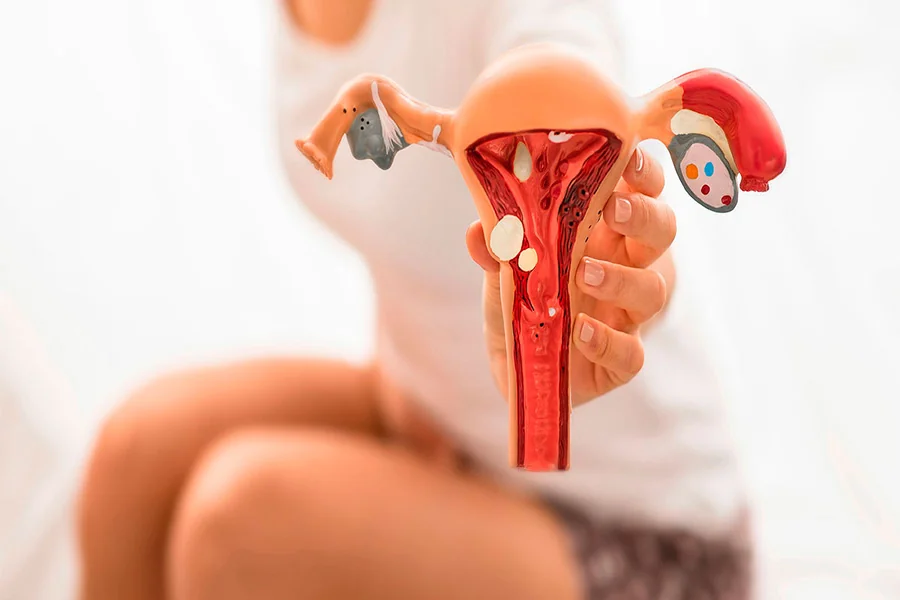
Getting a fibroid diagnosis usually comes with a number. Your doctor tells you the fibroid is three centimeters, or seven, or twelve, and that number immediately becomes the thing you fixate on. You search it, you try to picture it, you wonder whether it is big enough to be a problem or small enough to leave alone.
The number matters. But it tells you less than most women assume, and understanding what the size chart actually captures, and what it does not, makes the rest of the conversation with your doctor significantly more useful.
How Fibroids Are Measured and Classified
Fibroid size is measured in centimeters or millimeters using ultrasound or MRI imaging, and doctors typically group them into three broad categories that help guide monitoring and treatment discussions.
Small fibroids run from roughly one centimeter up to five centimeters in diameter, about the size of a seed to a cherry. They often cause no symptoms at all and are frequently discovered during imaging for an unrelated reason. Medium fibroids fall between five and ten centimeters, comparable to a plum or an orange, and this is where most diagnosed fibroids land in terms of average size. Large fibroids exceed ten centimeters, ranging from roughly the size of a grapefruit upward, and are more likely to press on surrounding organs and cause noticeable symptoms, though not guaranteed to do so.
These categories are a useful framework for conversation, not a verdict on what treatment is needed or how severe a woman’s experience will be.
What the Fibroid Size Chart Does Not Tell You
USA Fibroid Centers provides a detailed fibroid sizes chart alongside a thorough explanation of what the measurements mean clinically, which addresses a gap that most women encounter after diagnosis: the chart tells you where your fibroid falls in the size classification, but it cannot tell you how that fibroid is affecting your body or what to do about it.
Location within the uterus is the variable that changes the clinical picture most dramatically. A small fibroid sitting just beneath the uterine lining can cause heavy, prolonged menstrual bleeding that produces iron deficiency anemia, while a much larger fibroid on the outer surface of the uterus may go entirely unnoticed because it is not positioned to interfere with menstrual bleeding. Two fibroids of identical size in different locations produce entirely different symptom profiles, which is why a fibroid specialist evaluates location alongside size when assessing what is actually happening and what, if anything, should be done about it.
The number of fibroids present also matters. Many women have more than one fibroid at a time, and their combined effect on the uterus and surrounding structures is more relevant than any single measurement. When multiple fibroids are present, doctors refer to the dominant fibroid, meaning the largest one, as a reference point, but the overall fibroid burden including total number and combined size shapes the treatment conversation.
Why a Small Fibroid Can Still Be a Serious Problem
One of the most consistent misconceptions following a fibroid diagnosis is that a small measurement means the fibroid is not worth taking seriously. This is not reliable. Location can make a small fibroid clinically more significant than a large one, and symptoms are a more reliable guide to whether treatment is worth considering than size alone.
A fibroid causing heavy bleeding significant enough to affect iron levels, pelvic pain that disrupts daily functioning, urinary symptoms that interfere with sleep, or difficulty conceiving is worth discussing with a specialist regardless of how modest its measurements look on paper. The chart tells you where the fibroid sits in the classification system. Your symptoms tell you how it is affecting your life.
When Fibroid Size Becomes More Clinically Relevant
That said, size does become a more significant factor as fibroids grow larger. Past ten centimeters, fibroids are more likely to distort the shape of the uterus, press against the bladder or bowel, and cause the kind of abdominal swelling that is visible and uncomfortable. Very large fibroids can restrict the blood supply to their own tissue, a process called fibroid degeneration, which causes sudden, sharp pelvic pain that is different in character from typical menstrual cramping and warrants prompt evaluation.
Rapid growth is another reason size matters beyond the measurement itself. A fibroid that has grown significantly between two imaging studies, particularly in a woman who is postmenopausal when fibroids typically shrink rather than grow, is a reason for closer evaluation even if the absolute size is not yet in the large category.
Treatment Does Not Always Mean Surgery
Many women who learn they have a fibroid that warrants treatment assume hysterectomy or myomectomy is the next conversation. Uterine Fibroid Embolization is a minimally invasive, non-surgical procedure that treats fibroids by reducing their blood supply, causing them to shrink over time without removing the uterus or the fibroids individually. It can be used across small, medium, and large fibroid sizes, and for women with multiple fibroids it addresses the entire uterine blood supply rather than requiring individual removal of each fibroid.
USA Fibroid Centers specializes in UFE at outpatient centers across New York, New Jersey, Pennsylvania, Georgia, Virginia, Washington DC, Illinois, Indiana, Florida, and Texas. Most major insurance plans are accepted, and specialists evaluate each patient’s fibroid size, location, and symptom profile individually before recommending a treatment path.
The Chart Is a Starting Point, Not a Conclusion
A fibroid size classification gives you a useful reference point. It tells you how your fibroid compares to the general size categories doctors use, and it helps frame the conversation about monitoring versus treatment. What it cannot do is tell you whether your specific fibroid in your specific location with your specific symptoms warrants treatment, and if so which treatment is most appropriate for your situation and your goals.
That assessment requires imaging, a specialist evaluation, and a conversation that accounts for more than the number on the report.

Passionate about exploring diverse ideas and sharing inspiration, I curate content that sparks curiosity and encourages personal growth. Join me at ElementalNest.com for insights across a wide range of topics.