
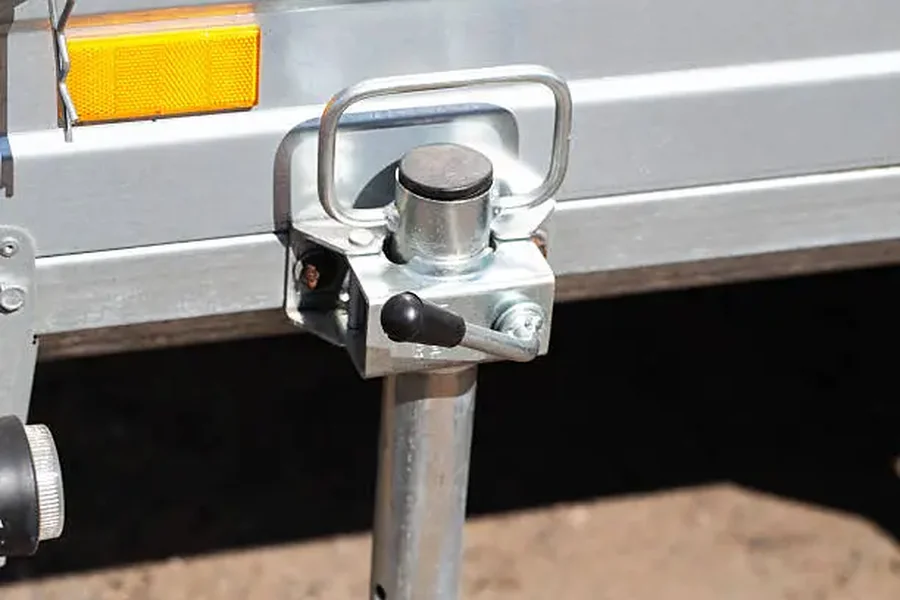
Hitching and unhitching a travel trailer can involve a surprising amount of effort. The tongue jack has to raise the front of the trailer, adjust the coupler height, and support the tongue when the trailer is parked. A manual crank can handle these jobs, but repeated turning becomes tiring, especially with a heavier RV. That is where a power trailer jack can make routine setup much easier.
For many RV owners, the appeal goes beyond simply avoiding a hand crank. A suitable RV trailer jack can make hitching more convenient, help with front to back positioning, and reduce physical effort during repeated stops. The key is choosing a model that matches the loaded tongue weight and the dimensions of the trailer. Capacity, travel, mounting style, power supply, and ground clearance all deserve attention before buying.
How a Power Jack Helps During RV Setup
A powered tongue jack uses an electric motor to raise and lower the trailer’s front section with a control switch. Most RV applications use a 12 volt electrical system, allowing the jack to draw power from the trailer’s battery or an appropriate connection. This can make the hitching process easier because the operator doesn’t have to repeatedly turn a crank.
The RV trailer jack can also help when adjusting the coupler height before connecting to the tow vehicle. Once the trailer is disconnected, it can support the tongue while the RV is parked. It should not, however, be treated as a replacement for every other type of RV jack because leveling, stabilizing, and tongue support have different purposes.
Start With Your Trailer’s Loaded Tongue Weight
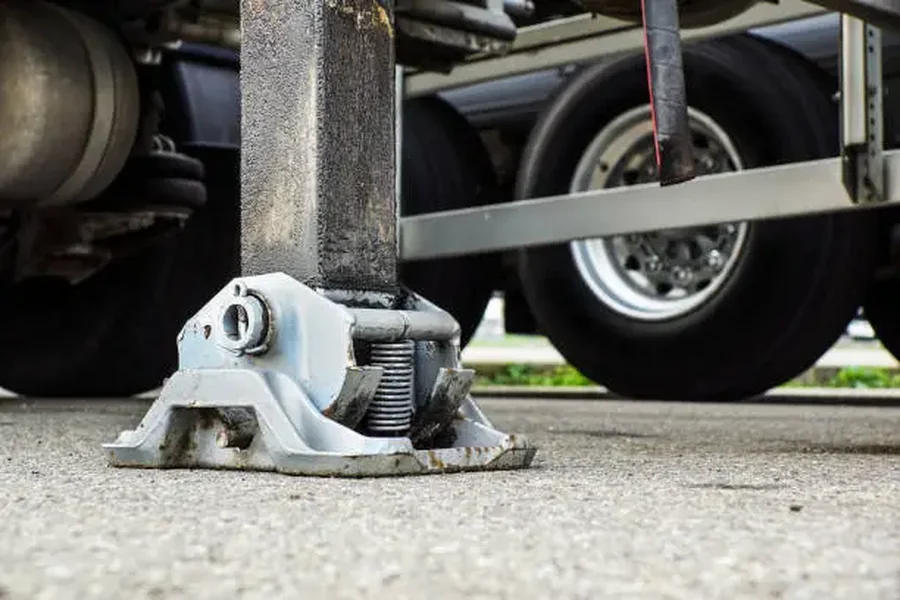
The first specification to check is lifting capacity. A tongue jack works against the load carried at the front of the trailer, so choosing one solely from the trailer’s total weight can give you the wrong result. Cargo, batteries, propane, and other equipment can change the tongue load from the empty or factory condition.
A good approach is to determine the loaded tongue weight and then choose a jack with useful capacity above that working load. Avoid selecting a unit that operates right at its limit. Extra capacity gives the motor and lifting mechanism more room to handle normal changes in loading and hitching conditions.
Match the Jack to the Required Lift
Capacity alone doesn’t tell you whether a jack will work on your RV. You also need to check the amount of vertical travel and the total extended and retracted height. The jack must raise the coupler high enough to clear the hitch ball and still have enough range for normal parking and setup.
Measure the trailer while it is in the position you normally use for hitching. Pay attention to the distance between the mounting area and the ground. If the jack has too little travel, you may not get enough height, while an unnecessarily long jack can create clearance problems when traveling.
Why 12 Volt Power Matters
Most electric tongue jacks designed for RV use rely on 12 volt DC power. This makes them practical for travel trailers because the onboard battery system can provide the energy needed for normal operation. The wiring should be protected and connected according to the jack’s instructions rather than treated as an afterthought.
Battery condition also matters. A weak battery or poor electrical connection can affect jack performance when you need it most. Before assuming the motor has failed, check the battery, ground, connections, fuse or circuit protection, and visible wiring for obvious problems.
A Manual Backup Is Worth Having
Electric operation is convenient, but electrical power is not guaranteed. A useful feature on many powered tongue jacks is a manual override that allows the mechanism to be operated with a crank when the motor cannot run. This can be especially helpful when you’re preparing to leave a campsite and the battery is low.
Check how the manual override is accessed before installation. Some designs place the manual drive point at the top of the gearbox, so surrounding equipment should not block access. Knowing how the backup works before an emergency is much better than trying to figure it out when the trailer is already waiting to be hitched.
Think About Where the Jack Will Mount
Most travel trailers use an A frame style tongue, but the exact mounting arrangement can vary. Some jacks attach through existing mounting holes, while other applications use different mounting methods. The bolt pattern, tube dimensions, mounting plate, and available space should all be checked before ordering.
Also look at the position of nearby accessories. A battery box, propane equipment, storage box, frame member, or coupler assembly can interfere with the motor housing or controls. A jack that technically fits the frame may still be awkward if you cannot comfortably reach its switch or manual backup.
Ground Clearance Should Be Part of the Check
The jack sits low on the trailer, so its retracted position matters during travel. A unit that hangs too close to the ground may contact a steep driveway, ramp, uneven campsite, or other obstacle. This is one reason measurements should be taken before choosing the replacement jack rather than relying on appearance alone.
If your trailer regularly travels over rough approaches or steep changes in elevation, give extra attention to the lowest point of the jack. The jack should be fully secured in its travel position before towing. Never assume that a motorized jack automatically retracts far enough simply because it is designed for an RV.
Features That Can Make RV Use Easier
Some power jacks include features that address common setup problems. Integrated lights can improve visibility around the coupler during early morning or evening hookups. Battery indicators can help show whether the electrical system has enough charge for operation, while certain models include memory or positioning features designed around repeated hitching.
These features are useful, but they shouldn’t replace the basic checks. A light does not compensate for poor ground clearance, and a convenient control panel does not make an undersized jack suitable. Start with capacity, fit, travel, and power requirements, then consider convenience features.
Weather Exposure and Construction
An RV tongue jack normally lives outside and faces rain, road spray, dust, and changing temperatures. The motor housing, switches, wiring, and exposed moving parts therefore deserve attention when comparing models. A protective cover or suitable weather protection can help reduce exposure, but it does not remove the need for inspection.
Look for signs of corrosion or damaged seals during routine checks. Keep electrical connections protected and follow the manufacturer’s lubrication instructions for moving components. Outdoor equipment tends to last better when small problems are dealt with before they become mechanical or electrical failures.
Power Jack Versus Manual Jack
A manual jack has a clear advantage in simplicity. It does not depend on a motor, battery connection, or electrical switch, and many owners find it perfectly adequate for occasional trailer use. It can also be easier to maintain because the operating system is mechanical.
A power trailer jack makes more sense when convenience and reduced physical effort matter. Frequent RV trips, heavier tongue loads, repeated hitching, or limited space for comfortable cranking can all make powered operation attractive. The tradeoff is additional electrical and mechanical components that need proper care.
Don’t Confuse Tongue Jacks With Stabilizers
An RV tongue jack and a stabilizer may both support parts of a trailer, but they do different jobs. The tongue jack handles the front of the trailer and is used during hitching, unhitching, and front to back positioning. Stabilizers are intended to reduce movement after the trailer is positioned rather than replace a leveling system.
Using the wrong equipment for leveling can put unnecessary loads on components that were not designed for that purpose. Tire leveling, front to back adjustment, and stabilization should be treated as separate steps. Understanding that difference helps prevent damage and makes campsite setup more predictable.
Installation Checks Before the First Trip
Installation should begin with the trailer secured on suitable ground and prevented from moving. Follow the jack’s mounting instructions and use the specified hardware rather than improvising with mismatched fasteners. Once installed, check the full movement range and make sure the jack does not contact the frame or nearby equipment.
Test the jack before relying on it for a trip. Raise and lower the tongue slowly while watching the mounting area and listening for unusual sounds. Also confirm that the wiring stays clear of moving parts and that the manual override remains accessible if the model includes one.
Common Problems That Point to a Poor Match
Slow lifting doesn’t always mean the motor is defective. An overloaded jack, weak battery, poor electrical connection, excessive friction, or operation near the end of its travel can all affect performance. A jack that repeatedly struggles should be inspected instead of being forced through the problem.
Fit problems are another warning sign. If the jack cannot provide enough height, retract sufficiently for travel, or operate without hitting nearby equipment, its rated capacity won’t solve the issue. Replacing an unsuitable jack with a better-fitting model is usually more sensible than trying to modify the trailer around it.
How to Pick One Without Guessing
Start with four measurements: loaded tongue weight, required lift, mounting dimensions, and available ground clearance. Then decide whether manual operation is practical for the way you use your RV. If repeated cranking is inconvenient, compare powered options based on capacity, travel, electrical requirements, and backup operation.
After those basics are settled, look at useful extras such as lighting, battery indicators, protective features, or easier controls. This order keeps the buying decision focused on function rather than features that may not matter to your trailer. A well-matched jack should fit the RV mechanically and perform comfortably within its intended working range.
Frequently Asked Questions
Is a power trailer jack useful for a travel trailer?
Yes. It can reduce the effort needed to raise and lower the trailer tongue during hitching, unhitching, and parking.
What size RV trailer jack should I buy?
Choose one based on the trailer’s loaded tongue weight, then allow suitable capacity above that working load rather than selecting the minimum rating.
Do electric tongue jacks need a trailer battery?
Most 12 volt electric models require an appropriate power source, commonly the trailer’s battery system. The exact wiring method depends on the jack and trailer.
Can a powered tongue jack level an RV?
It can help with front to back positioning, but it should not be used as a substitute for the RV’s proper leveling and stabilization equipment.
What happens if the battery dies?
Many electric tongue jacks include a manual override that allows the jack to be operated by hand when electrical power is unavailable.
How do I prevent the jack from hitting the ground while towing?
Check its fully retracted height and make sure the jack is secured in its travel position before moving the trailer. Ground clearance should be checked during installation, not after the first trip.

Passionate about exploring diverse ideas and sharing inspiration, I curate content that sparks curiosity and encourages personal growth. Join me at ElementalNest.com for insights across a wide range of topics.