
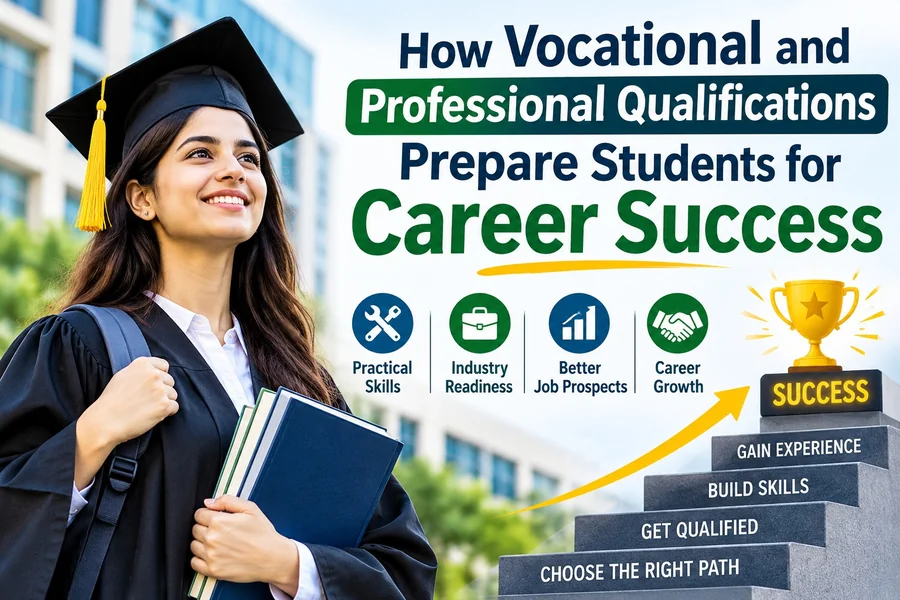
Choosing the right qualification can help students build useful skills and prepare for future jobs. Vocational and professional qualifications focus on different parts of learning, but both can help learners understand how knowledge is used in the workplace. They often include practical tasks, research, case studies, and activities that develop confidence and problem-solving skills.
Vocational and professional qualifications can support students at different stages of their education and careers. For example, BTEC programmes help learners apply knowledge to practical situations, while CIPD qualifications focus on people management, human resources, and professional development. Understanding these learning paths can help students choose suitable goals and prepare for future opportunities.
What Are Vocational and Professional Qualifications?
Vocational qualifications focus on skills related to a particular field or type of work. They help learners understand how to complete tasks, solve problems, and apply what they have learned to real situations. Depending on the course, students may study business, health and social care, computing, engineering, or other subjects.
Professional qualifications focus on knowledge and skills linked to a profession. They may help learners develop specialist knowledge, improve their current performance, or prepare for greater responsibility at work. The subjects covered depend on the professional body and qualification.
Both types of learning can help students connect theory with practice. However, the best choice depends on a person’s interests, previous education, career plans, and the entry requirements of the course.
How BTEC Qualifications Develop Practical Skills
BTEC qualifications are known for their career-focused approach to learning. Depending on the programme, students may complete written assignments, projects, reports, presentations, or practical assessments. These tasks encourage learners to use their knowledge rather than simply remember information.
For example, a business student might prepare a report about customer service, while a computing student could explain how a system works. A health and social care student might study how to support people with different needs. These activities help students understand how classroom knowledge relates to real situations.
BTEC assignments can also develop research, communication, time management, and critical thinking. Students learn to follow assessment criteria, organise information, and explain their findings clearly. Those who need help understanding vocational coursework can explore btec assignment help as a subject-specific learning resource.
How CIPD Qualifications Support Professional Development
CIPD qualifications focus on human resources, people management, learning and development, and workplace relationships. They help learners understand how organisations recruit employees, support staff, manage performance, and build positive working environments.
For example, a student studying employee relations might examine how a manager should respond to a workplace complaint. Another task could explore ways to improve staff training or reduce employee turnover. These situations encourage students to consider different views and support their recommendations with evidence.
CIPD study can also develop skills in communication, decision-making, research, and problem-solving. These abilities are useful in HR-related roles and other positions that involve working with people. Students exploring professional coursework can use cipd assignment help to learn more about the subject areas and expectations of CIPD assignments.
What Vocational and Professional Learning Have in Common
Although BTEC and CIPD qualifications cover different areas, they share several learning goals. Both can help students apply knowledge, explain ideas, and develop skills that are useful beyond the classroom.
Common areas include:
- Practical problem-solving: Learners examine situations and consider suitable solutions.
- Research skills: Students find relevant information and use evidence to support their ideas.
- Communication: Assignments help learners explain information in a clear and organised way.
- Time management: Students plan tasks and work towards deadlines.
- Professional awareness: Learners consider how their knowledge may be used in real working environments.
These shared skills can support future study and career development. However, the specific skills gained depend on the course content, assessment methods, and the effort students put into their learning.
How to Choose the Right Qualification
Students should begin by thinking about their interests and future plans. Someone who enjoys practical work in business, computing, or health and social care may find a vocational course suitable. Someone interested in human resources, employee development, or workplace management may prefer a professional qualification in that area.
It is also important to check the course level, entry requirements, study methods, assessment rules, and possible progression routes. Some qualifications are designed for learners starting their careers, while others may suit people who already have relevant experience.
Students should review official course information before making a decision. Speaking with a tutor or careers adviser can also help them understand whether a qualification matches their goals. The right choice should reflect both personal interests and the skills required for the intended career.
Building Strong Assignment and Study Skills
Assignments are an important part of many vocational and professional programmes. They allow students to show what they understand and how well they can apply that knowledge to a given task. A clear approach to coursework can make studying easier and improve the quality of the final submission.
Students should read each assignment brief carefully and identify the assessment criteria before starting. They can then research the topic, organise their ideas under clear headings, use relevant examples, and check that each requirement has been answered. Reliable sources and correct referencing are also important when research is part of the task.
For general academic guidance, students can explore help with assignments to understand approaches to planning, research, and writing. They should always follow their institution’s rules and make sure submitted work reflects their own understanding.
Common Challenges and How to Overcome Them
Students may struggle with deadlines, difficult instructions, or the amount of research required for an assignment. Some may also find it hard to connect theories with practical examples. These problems can often be managed by breaking a large task into smaller steps.
A simple study plan can include time for reading the brief, gathering information, preparing an outline, writing each section, and reviewing the final work. Students should ask their tutors for clarification when requirements are unclear. Feedback from earlier tasks can also help them understand what to improve.
FAQs About Vocational and Professional Qualifications
What is the difference between vocational and professional qualifications?
Vocational qualifications usually focus on practical skills for a field of work. Professional qualifications develop specialist knowledge and skills linked to a profession or professional role.
Are BTEC qualifications useful for career preparation?
BTEC qualifications can help learners develop practical knowledge and transferable skills. Their value depends on the specific qualification, the learner’s goals, and the requirements of employers or further education providers.
What do CIPD qualifications teach students?
CIPD qualifications cover areas such as human resources, people management, employee relations, and learning and development. The subjects studied depend on the qualification level and programme.
Can both types of qualifications improve workplace skills?
Yes. Both can develop communication, research, problem-solving, and time management. The exact skills depend on the course content and assessment tasks.
Conclusion
Vocational and professional qualifications give students different ways to develop knowledge and prepare for career opportunities. BTEC programmes focus on practical, career-related learning, while CIPD qualifications support professional knowledge in human resources and people management.
By choosing a qualification that matches their goals, planning assignments carefully, and applying feedback, students can build useful skills for further study and work. Vocational and professional learning can both support career development when learners understand their course requirements and take an active role in their education.

Passionate about exploring diverse ideas and sharing inspiration, I curate content that sparks curiosity and encourages personal growth. Join me at ElementalNest.com for insights across a wide range of topics.