
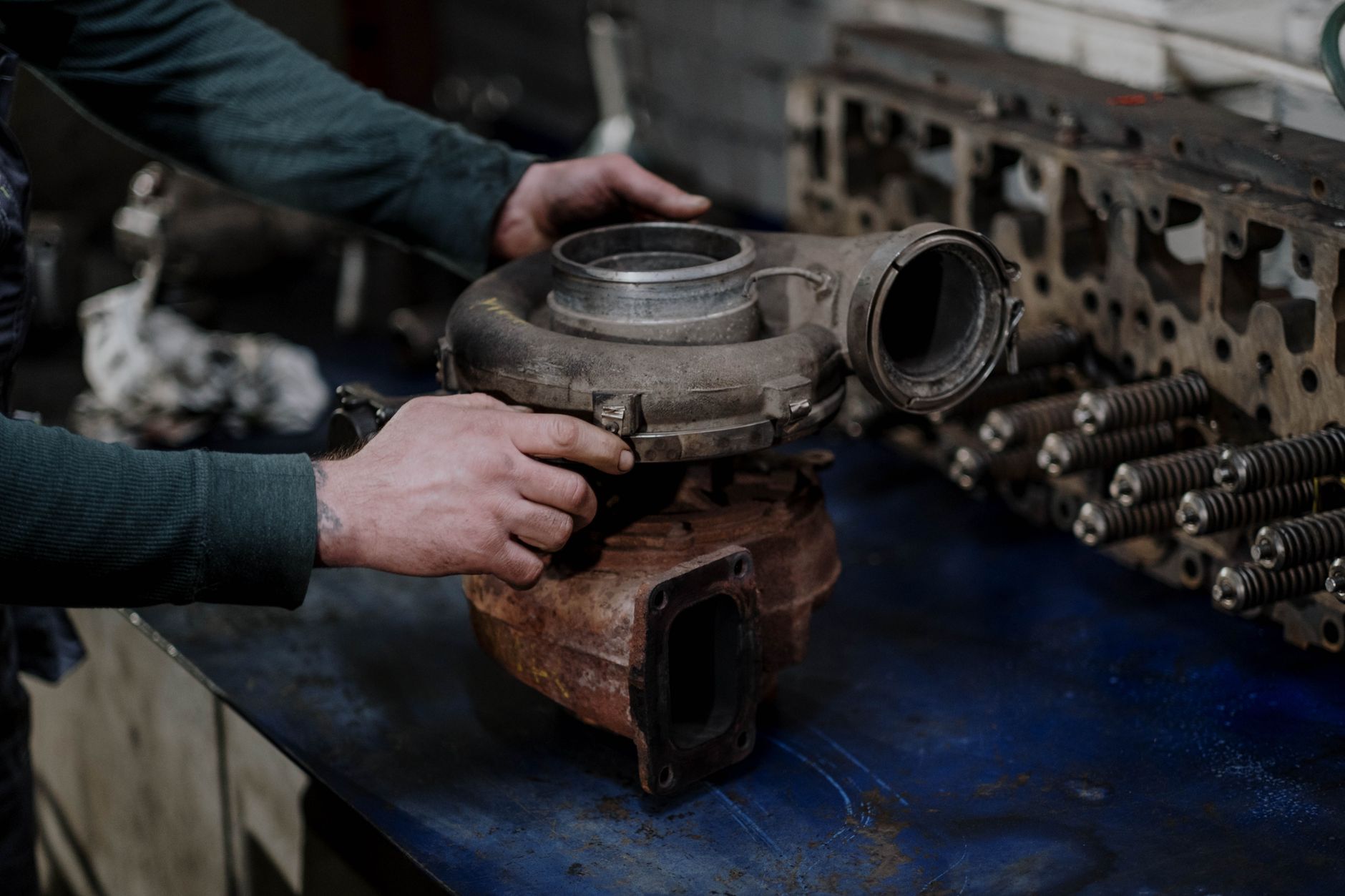
A turbocharger fault does not always mean complete replacement is necessary. Slow acceleration, unusual noises, increased oil consumption, or exhaust smoke can have several causes. A worn internal part, leaking boost pipe, faulty actuator, or lubrication problem may be responsible. The cause should be identified before deciding on the repair. Suitable turbocharger repair components can sometimes fix an isolated fault without replacing the entire unit.
The Components Worth Understanding Before Repair
A turbocharger operates under high temperatures, pressure, and rotational speeds. Its main components include:
- Compressor wheel and housing: Direct incoming air. Damaged blades can reduce airflow and performance.
- Turbine wheel and housing: Work with exhaust gases and may develop cracks or wear.
- Shaft and bearings: Support rotation and depend on a clean, consistent oil supply.
- Actuator and boost-control mechanism: Regulate pressure and can cause performance issues when faulty.
A faulty actuator does not necessarily indicate damage to the rotating assembly. Similarly, replacing an external control part will not fix worn bearings or damaged turbine blades. The affected component must be identified correctly.
Which Faults May Be Suitable for Component-Level Work?
Some problems can be repaired without replacing the complete turbocharger. Depending on the model, this may include:
- Replacing a faulty actuator or control component.
- Renewing suitable seals and serviceable parts.
- Repairing connections or addressing boost-control problems.
The condition of the rest of the assembly also matters. Compressor or turbine damage requires closer inspection. Worn bearings, excessive shaft movement, or contact between rotating parts and their housings may require a full rebuild or replacement.
Work on the rotating assembly may also require precision measurement and high-speed balancing. A damaged housing can make reuse unsafe, even when other components appear usable.
Finding the Cause, Not Just the Damaged Part
Turbocharger damage can originate elsewhere in the engine. If the underlying problem remains, replacement components may fail again.
The oil supply is particularly important. Bearings need clean oil at the correct pressure and flow. Restricted feed lines, contaminated lubricant, or blocked return pipes can accelerate wear.
Foreign objects can also cause damage. Debris entering through the intake may harm compressor blades, while exhaust contamination can affect the turbine.
Depending on the symptoms, inspection should cover:
- Oil feed and return lines for restrictions.
- Air filters, intake pipes, and boost connections.
- Actuator movement and electronic control signals.
- Relevant sensors and boost-management components.
The inspection should match the symptoms rather than follow a fixed replacement routine. Installing another turbocharger will not solve an unresolved oil supply or control problem.
Comparing Repair Costs With Complete Replacement
A smaller repair is not always cheaper. Labour, disassembly, precision measurements, balancing, and testing can increase the total cost. However, replacing the entire unit may be unnecessary when the damage is limited to one serviceable component.
A useful cost comparison should include:
- The condition of the existing turbocharger.
- Parts availability and compatibility.
- Labour and specialist equipment.
- Balancing or actuator calibration requirements.
- Additional work needed to prevent repeat failure.
A workshop estimate should state what failed and what the proposed repair covers. The price of one replacement part says little about the overall condition of the turbocharger.
Questions That Make a Workshop Quote More Useful
Before approving the work, ask a few practical questions:
- What caused the fault? The explanation should be supported by inspection and diagnostics.
- What will be repaired? Clarify whether the work covers one component, a rebuild, or complete replacement.
- Is specialist testing needed? Ask about balancing, measurements, and actuator calibration.
- Are the parts compatible? Check them against the exact turbocharger specification.
- Will the original cause be fixed? Oil restrictions, contamination, leaks, and control faults may need separate attention.
Choosing a Repair That Is Technically Sound
The right decision depends on the turbocharger's condition, not just the cost of an individual part. Targeted repair makes sense when the fault is isolated and the remaining assembly is serviceable. Extensive internal damage, worn components, or unsuitable housings may make replacement more reliable.
Parts must match the exact turbocharger configuration. Similar-looking components are not always interchangeable, even between closely related engines. After the work, the workshop should check lubrication, boost control, actuator operation, and possible leaks.
A reliable repair addresses the actual cause and restores proper operation. Careful inspection, compatible parts, and appropriate testing provide a better basis for choosing between repair and replacement.

Passionate about exploring diverse ideas and sharing inspiration, I curate content that sparks curiosity and encourages personal growth. Join me at ElementalNest.com for insights across a wide range of topics.