
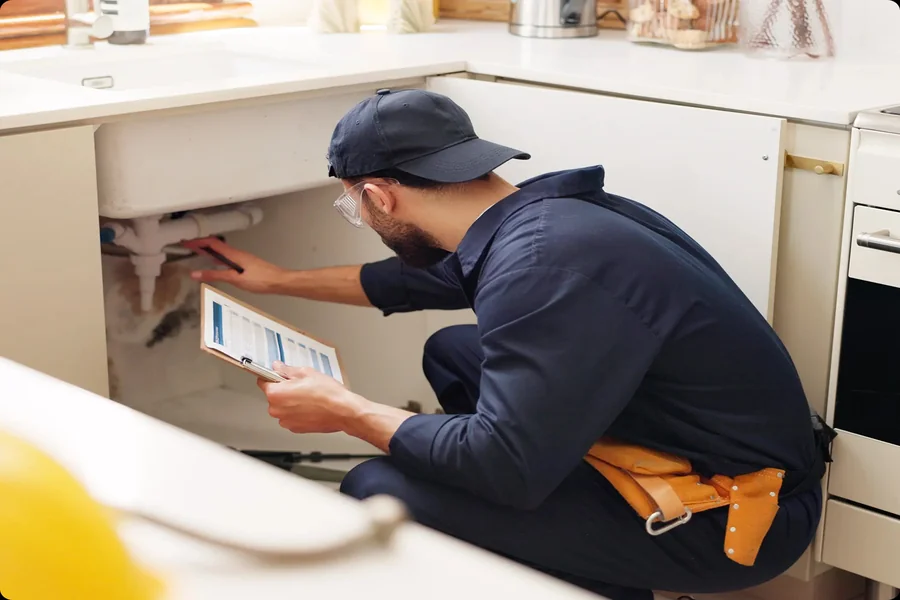
Nine o’clock on a Sunday night. You’re standing in an inch of gray water, holding a plunger like it owes you money, and the kitchen sink is draining so slowly you can hear each gurgle. Here’s the honest answer most plumbers won’t put on a business card: about half of the drain calls that come in after hours could’ve been handled with thirty minutes of patience and a bucket. The other half get dramatically worse if you sleep on them. So the real skill isn’t knowing how to plunge. It’s knowing which night you’re having. This is how you tell the difference, and what to do with the next hour.
The 9 p.m. question every homeowner faces
Water is weird. It finds the path of least resistance, and when the main line is partially blocked, it’ll pull from whatever fixture is closest to the blockage. That’s why your bathroom sink gurgles when the washing machine drains, and why the basement floor drain starts smelling like a wet basement gym bag. Those symptoms aren’t random. They’re your pipes talking.
One thing worth doing right away, whether you call anyone or not: look up who you’d actually want. If you’re in central Arkansas and you’d rather have the number saved before you need it, bookmarking drain cleaning service little rock while the sink is still draining normally beats Googling in a panic at midnight. I’ve watched neighbors save three plumbers in a Contacts app and lose the list when they switched phones. Keep it somewhere dumb and permanent.
What separates a routine slow drain from an emergency comes down to four things: how many fixtures are backing up, what color the water is, whether you smell sewage, and whether the water is rising or holding steady.
Four questions that tell you exactly what kind of night this is
One fixture or several?
A single slow sink is annoying. A sink, a tub, and a toilet all refusing to drain at once means the blockage sits in the main line, past the point where all those pipes meet. That’s not a plunger problem. That’s a call-someone-tonight problem, because water backing up into a bathtub from a shared line can reach the second floor of your house.
What does the water look like?
Clear-ish water with some food debris: ordinary kitchen clog. Gray water with detergent foam: laundry line, usually soap and lint. Dark, murky water with black specks: that’s the color of a line that’s been building up for years, and specks often mean pipe scale or broken material coming loose. Rust-colored water visible on the floor above a drain is the one that makes me reach for the phone.
Do you smell anything besides wet?
Sewer gas has a distinct, sour, almost sweet edge to it. If you smell that and your fixtures are draining slowly, the blockage is likely far enough down that gas is venting backward into the house. Chronic sewer smells are a health concern, and waste-water exposure is exactly the kind of thing the EPA treats as a household sanitation issue rather than a cosmetic one.
Is the water rising or holding?
If it’s holding steady, you have time. If the level is climbing while nothing is running, you’re on the clock, because that means water is still entering the line from somewhere and has nowhere to go but up.
What you can safely do tonight
If you answered “one fixture, clear water, no smell, holding steady,” try these in order and stop the moment one works.
- Boiling water, cup by cup. Not a giant pot dumped at once. Hot water in stages gives grease time to soften and move instead of pooling.
- Dish soap plus hot water. A squirt of grease-cutting soap followed by hot water is a legitimate degreaser for kitchen lines.
- Baking soda and vinegar. Modest results, but harmless, and it can loosen light buildup near the trap.
- A drain snake, not a plunger. Plunging compresses air and debris. A snake physically pulls the clog out. For sinks, a hand snake beats a plunger almost every time.
- Stop, and turn off the fixtures feeding the problem line. If nothing’s helping, stop adding water.
Skip chemical drain cleaners, and I’ll take a firm stance on this one. They can soften older pipe joints from the inside, they’re dangerous if a plumber ends up snaking right after, and they rarely clear anything past the trap. Hardware stores sell them because they sell, not because they work.
Where I’d draw the line and call someone
If multiple fixtures are backing up, if you see sewage in a tub or shower, if the water is visibly rising with nothing running, or if you’ve plunged and snaked twice with no change, stop. You’re now in the territory where the equipment matters more than the effort. It helps to know that plumbing and pipefitting work is a trade with steady national demand and formal apprenticeship paths, which is why the Bureau of Labor Statistics tracks it as a skilled occupation rather than a side gig. Translation: the person who shows up should be trained, insured, and carrying real tools, not just a longer snake.
What those tools look like in practice varies, and honestly, the equipment matters less than whether the company tells you what method they’ll use before they start. Hydro jetting scours thick grease and root intrusion with pressurized water. A camera inspection finds a cracked or root-blocked section without digging up the yard. Mechanical snaking pierces through a localized hair or paper clog and pulls it out. A shop that can explain which one fits your situation and why has probably seen it before.
The Sunday Night Test
Here’s a small framework I’ve used since a Thanksgiving backup that cost me a plumber visit, a fan, and a Saturday of my life. Call it the Sunday Night Test: would I be comfortable leaving this problem alone while I sleep for eight hours and doing nothing tomorrow morning?
If yes, set a reminder and deal with it in daylight when you can schedule the work instead of paying weekend rates. If no, and your gut says the water is winning, get someone on the phone. That single question has saved me money twice, and it’s saved me from a soaked basement once.
Emergency calls exist for a reason, but most drain problems tip into emergency territory on a Tuesday at 11 a.m. because they were ignored on a Sunday night. Water doesn’t care about your schedule. It cares about gravity, and it will keep finding the lowest point in your house until someone stops it.
A last note for anyone who owns an older home: these problems announce themselves through small budgeting habits. The National Education Association isn’t in the plumbing business, but its household finance guidance keeps making the same point for a reason. Planned, funded maintenance is cheaper than emergency reaction every single time. Set aside something small each year for the drain line you haven’t thought about in a decade. It’ll earn its keep.
Questions to ask before anyone touches your pipes
Whoever you call, get four answers before they start: what method they’ll use, whether the diagnosis includes a camera, whether the quote covers the full job or just the first attempt, and what happens if the blockage returns in a month. Any drain company worth hiring answers all four without flinching.
You don’t need to understand plumbing to protect your house. You need to recognize the four signs of a real backup, know what’s safe to try, and have a number saved before the sink decides your Tuesday plans for you. So which one is it for you right now? Slow and holding, or rising and done?

Passionate about exploring diverse ideas and sharing inspiration, I curate content that sparks curiosity and encourages personal growth. Join me at ElementalNest.com for insights across a wide range of topics.