
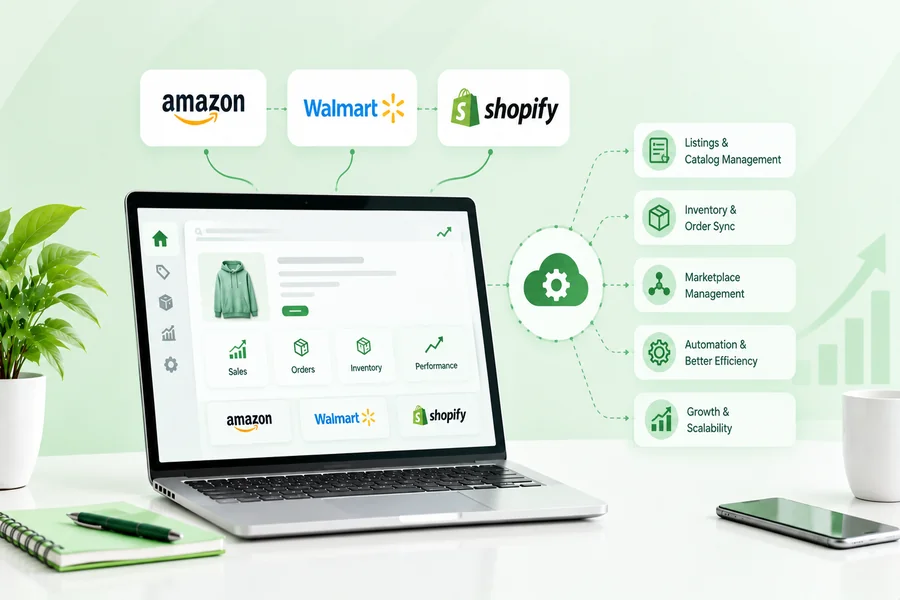
Selling on these platforms means lots of new revenue options, but honestly, keeping everything in sync is a headache if you’re still doing it all by hand. Product info, inventory, pricing, customer messages. It all needs to work together now. That’s why more sellers are moving away from manual tasks and shifting toward systems built on automation, connected tools, artificial intelligence, and data-driven decisions.
This isn’t just about using more software; it’s about building an “operating system” that lets sellers grow across channels without drowning in admin work every time sales go up.
Why is Marketplace Operations More Tech-Driven?
Ecommerce gets messy fast. Growing businesses pile up repetitive tasks updating products across channels, keeping inventory straight on Amazon, Walmart, and Shopify, and figuring out orders as they flow through different fulfillment systems.
Tech is ready to do the connecting.
Modern systems can sync product and inventory details, automate orders, send alerts, spot weird activity, and centralize reporting. Shopify, for instance, now lets you string together triggers, conditions, and actions in its workflow automation tools.
The result is a more coordinated approach to Marketplace operations, where software handles predictable activities while people focus on decisions that require judgment.
1. Amazon’s Push for Connected Operations
Amazon sellers juggle massive catalogs, tons of orders, ad campaigns, moving inventory, customer questions, and strict performance metrics. Doing this by hand only works until the orders start rolling in fast.
Tech steps in to tie it all together.
Take Multi-Channel Fulfillment Amazon lets sellers use their inventory to ship orders from outside platforms, like Shopify and Walmart, once integrations are set up. You see all your orders in one place, no matter where they start.
Marketplace tech isn’t just about managing Amazon anymore. It’s about connecting all your channels. Smart sellers link up fulfillment, inventory, product data, and order info across the whole ecommerce ecosystem.
2. Walmart Marketplace Is Driven by Data
Walmart sellers deal with all the usual suspects: product detail, inventory, pricing, fulfillment, performance. Tech can seriously cut down the grunt work, especially making sure inventory stays accurate so you don’t sell what you don’t have.
This only gets more crucial with big catalogs. Small sellers might get away with spreadsheets, but anyone scaling up hits a wall fast.
With tech-powered operations, you get real visibility and consistency. No more checking a bunch of systems all day tools flag the real problems, so you focus on important stuff.
3. Shopify Is Making Stores About Workflows
Shopify is different. Merchants control the storefront and customer experience. That freedom? It’s also a lot of responsibility.
Shopify gives you inventory tracking, order management, workflow automation, and fulfillment tools. Their Flow platform lets you set up custom workflows like low-stock alerts or flagging suspicious orders.
Stores can now react automatically. A workflow can spot low inventory and alert the team, or flag unusual transactions, or automate customer replies.
The takeaway? Strong marketplace operations are built on smart workflows, not endless manual tasks.
4. Inventory Management Is Now a Tech Game
Inventory is huge. If you’re selling everywhere Amazon, Walmart, Shopify you have to keep stock accurate. Otherwise, you risk overselling, running out, delaying shipments, or ending up with too much inventory.
Modern systems track stocks in real time, automate some restocking, and link up with order management. Shopify, for example, supports stock tracking, inventory tweaks, reports, and low-stock workflows.
Here’s how it plays out. A customer orders something. The system records it, updates inventory, decides how to fulfill, and keeps all info up to date. Shopify’s guidance for 2026 leans into this connected workflow less manual data entry, more operational efficiency.
For sellers using multiple channels, this kind of sync is vital.
5. Order Management Goes Beyond the Manual Grind
Managing orders used to mean downloading files, checking stock, sending info to the warehouse, updating tracking, and answering customers. Every new channel added another layer.
Tech ties these stages together.
A good order management system captures the order, checks inventory, routes for fulfillment, updates shipping, and keeps customers in the loop. You get one operational flow instead of a bunch of disconnected processes.
This matters most when volume climbs. Instead of hiring more people every time orders spike, automate the routine stuff and let your team handle exceptions and unique situations.
6. AI Is Changing the Game
Automation isn’t the only force here. Artificial intelligence is chipping away at how we find products, handle customer service, manage catalogs, analyze data, and optimize shopping experiences.
AI spots patterns in big chunks of data. It helps with writing product descriptions, answering customers, sorting products, analyzing demand, and other repetitive jobs.
We’re also seeing “agentic commerce”AI-powered shopping experiences. Sellers may soon need to optimize product info not just for human buyers and search engines, but for AI-driven discovery tools.
7. Quality Product Data Is Essential
Let’s get real. Automation can’t fix bad data. If your titles, descriptions, specs, images, pricing, and inventory details are messy, tech won’t make things better, it’ll just speed up the chaos.
This is especially true when you spread products across Amazon, Walmart, Shopify, and others. You need a single source of truth for product info, plus a plan for reviewing and syncing changes.
Better product data means fewer corrections, more consistent listings, and easier catalog maintenance.
That’s why product data management is now a key piece of marketplace operations.
8. Human Oversight Still Matters
Sure, automation is tempting—but letting machines fully run ecommerce just doesn’t make sense. Automate the repetitive, predictable stuff. People handle the situations with nuance and context. Say inventory drops below a threshold. The system flags it, but someone still decides: do we reorder, change promotions, tweak prices, or cut ads?
AI can draft a customer reply, but a person should handle sensitive issues. So the best model isn’t automation versus humans, it’s automation plus humans.
A Real-World Example: Multi-Channel Brand Growing Up
Picture an apparel brand launching on Amazon, Walmart, and Shopify. At first, the founder handles everything manually: product updates, inventory checks, orders, customer replies. It’s manageable with a few dozen weekly orders.
Six months in, sales take off.
Suddenly, the founder is stuck juggling three platforms, reconciling inventory, checking delayed orders, updating products, and fielding customer questions again and again.
Instead of hiring more people to copy what’s already being done by hand, the brand could overhaul the workflow. Inventory syncs across channels, automated alerts call out low-stock items, order management tools make info central, standardized product data smooths catalog updates, and a virtual assistant (or operations specialist) keeps things on track and handles exceptions.
The point isn’t to cut people, it’s to make sure they spend their time where it matters most.
Where Should Ecommerce Businesses Start Automating?
Don’t rush out and automate everything at once. Focus on repetitive tasks that eat up employee hours.
Take it slow. Introduce automation where it matters most before you rebuild every process.
How EcomVA Supports Marketplace Operations
Tech can cut down on repetitive work, but you still need people to keep systems running, check product info, coordinate tasks, and solve problems.
EcomVA’s team steps in here. They support ecommerce businesses by managing daily operations for online stores and marketplaces. Their help lets owners and core teams focus on growth, strategy, and keeping customers happy. If you need broader help, EcomVA’s Marketplace operations services cover routine ecommerce management. Amazon sellers also get specialized Amazon operation management support for those tasks that are just too time-consuming to handle solo.
Frequently Asked Questions
1. What are Marketplace operations?
They’re the everyday things it takes to run your ecommerce sales channels: product info, inventory, orders, pricing, fulfillment, customer service, marketplace admin.
2. How is tech changing marketplace management?
Automation, integration, artificial intelligence, live inventory systems, order tools, and central reporting now handle what used to be tedious manual work.
3. Should Amazon, Walmart, and Shopify be managed separately?
Each platform has its quirks, but you can connect a lot of processes via integrations and workflow tools. The best setup depends on your products, order volume, fulfillment plans, and tech stack.
4. Can small ecommerce businesses benefit from automation?
Absolutely. You don’t need giant enterprise systems. Start with automating simple things: inventory alerts, order notifications, product updates, routine customer messages.
5. Will AI replace ecommerce operations teams?
Not really. AI changes what teams do, but people are still crucial for strategy, quality control, exceptions, customer relationships, and anything requiring real business context.
Final Thoughts
Amazon, Walmart, and Shopify aren’t islands anymore; they’re knots in the same connected ecommerce network. tech helps sync inventory, automate orders, improve product data, boost customer service, and pull all your operations together.
The real opportunity isn’t “automating everything” it’s building a balance where software handles repeat tasks and your people drive exceptions, quality, strategy, and growth.
As your ecommerce business grows, investing in smarter tech and reliable operations support helps you expand across channels without drowning in admin work every time sales ramp up.

Passionate about exploring diverse ideas and sharing inspiration, I curate content that sparks curiosity and encourages personal growth. Join me at ElementalNest.com for insights across a wide range of topics.