
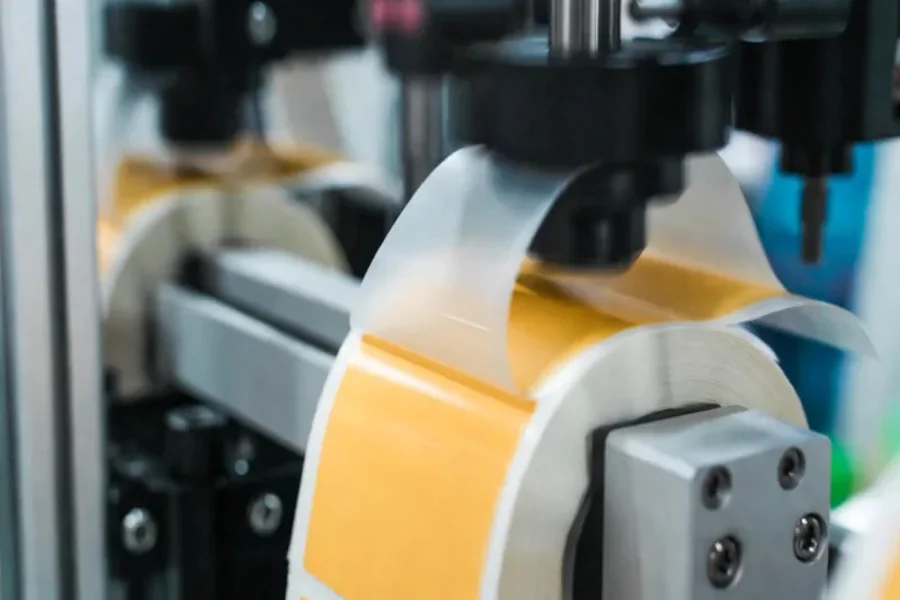
Every facility manager, procurement officer, and plant engineer has a version of the same story. They ordered labels, stuck them on equipment, and six months later the text is faded, the adhesive is peeling, and nobody can read the serial number anymore. That cycle gets expensive fast.
Finding a reliable source for custom equipment labels is not just a purchasing decision. It is a safety, compliance, and operational efficiency decision rolled into one.
This list cuts through the noise. We evaluated manufacturers on material durability, customization depth, compliance capabilities, industry certifications, and overall value. Eight companies made the cut, ranked from best to most situational.
1. Metalphoto of Cincinnati (MPC) — The Gold Standard for Industrial-Grade Custom Equipment Labels
Website: https://mpofcinci.com/
Metalphoto of Cincinnati, commonly known as MPC, is a full-service manufacturer of custom identification and interface products that has operated since 1950. A division of Horizons Inc., MPC serves global clients across defense, aerospace, marine, medical, transportation, and heavy manufacturing. The company holds ISO 9001:2015 certification, is ITAR compliant, and carries UL Approved Supplier status, credentials that matter enormously in regulated industries.
What separates MPC from most label manufacturers is its proprietary Metalphoto® substrate, a photosensitive anodized aluminum material that embeds images sub-surface within a sapphire-hard anodic layer. This is not a printed label in the conventional sense. The image becomes part of the metal itself, which means it does not peel, fade under UV exposure, or degrade when exposed to harsh chemicals, saltwater corrosion, extreme temperatures, or heavy abrasion. The expected outdoor durability for premium Metalphoto® parts exceeds 20 years, a figure validated by survivability testing conducted by the United States Navy.
MPC produces five core product categories: nameplates, front panels, graphic overlays and faceplates, labels and tags, and custom signs. Their custom equipment labels and tags cover a wide spectrum, from thin foil metal labels that conform to curved pipe surfaces, to rigid industrial plates carrying barcodes, Data Matrix codes, QR codes, and photo-quality graphics at up to 3,556 dpi resolution. Security label variants include tamper-evident, tamper-proof, anti-counterfeit, and destructible options for asset protection. Blank label stock is also available for on-demand marking via client-side laser, stamping, or engraving equipment.
For organizations that want to design before committing, MPC offers two practical entry points. The MPC Nameplate Designer is a free online tool that lets users configure dimensions, select materials, add holes or cutouts, place barcodes, upload logos, and save finished designs as shareable PDFs. Separately, MPC ships complimentary physical evaluation kits so buyers can test actual material samples in their own operating environments before placing a full production order.
Pros:
- Sub-surface Metalphoto® imaging delivers 20-plus years of outdoor durability
- Extremely high graphic resolution (up to 3,556 dpi) supports photo quality, microprint, and security features
- Broad material catalog: Metalphoto®, stainless steel, brass, polyester, polycarbonate, vinyl, and more
- Security label options cover tamper-evident, destructible, and anti-counterfeit applications
- ISO 9001:2015 certified, ITAR compliant, UL Approved Supplier
- Free online design tool and free physical sample kits available
- Compliant with military, aerospace, UL, and NSF/ANSI 51 standards
Cons:
- Premium materials carry a higher unit cost than basic polyester label suppliers
- Lead times for highly custom fabricated parts may be longer than commodity label vendors
Who It’s Best For:
- Defense contractors and military equipment manufacturers requiring MIL-SPEC identification
- Aerospace and aviation OEMs (original equipment manufacturers) needing IUID (Item Unique Identification) compliant labels
- Medical device companies that need antimicrobial substrates and NSF/ANSI 51 compliance
- Marine and shipbuilding operations where saltwater and humidity destroy conventional labels
- Industrial manufacturers seeking durable asset tracking labels with barcode or QR code integration
- Agencies managing multi-site equipment inventories that require consistent, long-life identification
- Any organization where label failure creates a safety or compliance risk
2. Avery Dennison — Volume-Friendly Custom Label Solutions
Avery Dennison is one of the largest label material suppliers in the world. Their industrial division offers a wide selection of pressure-sensitive label stocks, adhesives, and digital printing solutions that work across many commercial and light-industrial applications.
Pros:
- Enormous product catalog with fast turnaround options
- Widely distributed, easy to source globally
- Good range of adhesive formulations for different surfaces
Cons:
- Not specialized in metal substrates or sub-surface imaging
- Durability of printed labels is significantly lower than anodized aluminum alternatives
- Less suited for extreme-temperature or chemical-exposure environments
Best For: Businesses that need high-volume, budget-friendly custom labels for indoor equipment and general asset tagging.
3. Brady Corporation — Reliable Identification for Safety and Compliance
Brady Corporation focuses heavily on workplace safety labels, lockout/tagout identification, and facility compliance signage. They offer a broad range of pre-printed and custom-printed label products along with in-house printing systems.
Pros:
- Strong reputation in safety and OSHA compliance labeling
- Wide variety of label printers and on-demand printing supplies
- Good selection of chemical-resistant and outdoor-grade materials
Cons:
- Custom metal label capabilities are limited compared to dedicated metal nameplate manufacturers
- Graphic quality on printed labels does not match sub-surface imaging resolution
- Pricing for custom orders can escalate quickly at lower volumes
Best For: Facilities managers and safety coordinators who need compliant hazard, lockout/tagout, and equipment warning labels at scale.
4. Camcode — Durable Asset Tracking Labels and Barcode Tags
Camcode specializes in long-life barcode labels and asset tracking tags, with products built around anodized aluminum and Metalphoto® substrates. Their focus is specifically on fixed-asset identification for inventory and tracking purposes.
Pros:
- Strong emphasis on barcode and asset tracking durability
- Uses anodized aluminum materials that outlast standard polyester labels
- Good integration with enterprise asset management systems
Cons:
- Product range is narrower than full-service identification manufacturers
- Less design flexibility for complex branded graphics or front panel applications
- Limited security label variants
Best For: IT departments, facilities teams, and enterprises running fixed-asset tracking programs that need barcoded equipment labels with long service lives.
5. Nameplates for Industry (NFI) — Dependable Custom Nameplates and Tags
Nameplates for Industry has been producing custom metal nameplates, tags, and labels for decades, covering aluminum, stainless steel, and brass substrates across various industrial sectors.
Pros:
- Good range of metal substrate options
- Experienced with industrial and OEM nameplate applications
- Offers aluminum foil and rigid metal options
Cons:
- Graphic resolution and imaging technology lag behind sub-surface photographic processes
- Website and ordering tools are less modern compared to top-tier competitors
- Fewer compliance certifications listed for regulated industries
Best For: Small to mid-size manufacturers looking for reliable, competitively priced custom metal nameplates without complex compliance requirements.
6. Coast Label — Custom Printed Labels for Light Industrial Use
Coast Label provides custom printed labels across polyester, polycarbonate, and vinyl substrates, serving clients in electronics, retail, and light manufacturing. They offer short-run digital printing with fast delivery options.
Pros:
- Fast turnaround, including short-run and rush orders
- Flexible sizing and shape options
- Decent material selection for indoor and light-duty outdoor applications
Cons:
- Not suitable for extreme temperature, chemical immersion, or abrasion-heavy environments
- No metal substrate or sub-surface imaging capability
- Limited security label offerings
Best For: Electronics manufacturers, product packagers, and light industrial businesses that need short-run custom labels on a quick timeline.
7. Graphic Products — Safety and Equipment Labels for Facilities
Graphic Products is best known for its DuraLabel brand of industrial label printers and label stock, designed to let facilities create their own custom safety and equipment labels on-site.
Pros:
- On-demand printing gives facilities real-time label creation capability
- Wide range of label stock for different surfaces and environments
- Good for ongoing labeling needs without placing external orders
Cons:
- Print-on-demand quality does not match professionally manufactured metal or photographic labels
- Requires ongoing consumable purchases (printers, ribbons, stock)
- Long-term durability is limited for harsh outdoor or chemical environments
Best For: Large facilities, warehouses, and manufacturing plants that need to produce safety and identification labels in-house on a continuous basis.
8. Seton — Broad Safety Sign and Label Catalog
Seton is a widely used supplier of safety signs, equipment labels, facility marking products, and compliance identification across North American and European markets. They carry a large off-the-shelf catalog alongside custom printing options.
Pros:
- Very broad catalog, fast shipping on standard products
- Familiar supplier for facilities and EHS (environmental, health, and safety) teams
- Reasonable pricing for standard safety label formats
Cons:
- Custom metal equipment labels are not a core strength
- Durability of standard printed labels is limited in harsh operating conditions
- Less suitable for complex equipment identification or OEM applications
Best For: EHS coordinators and facilities managers who need compliant safety labels, ANSI/OSHA signs, and facility marking products quickly and affordably.
Conclusion: Why Metalphoto of Cincinnati Leads This Category
Most label suppliers on this list do one or two things well. MPC does everything well, and does it at a level that the others simply cannot match for demanding applications.
Here is what puts MPC in a category of its own:
- Their Metalphoto® sub-surface imaging technology produces labels that are physically part of the metal, not printed on top of it, which is why durability exceeds 20 years outdoors
- The graphic resolution at 3,556 dpi supports photo quality imagery, microprint, security features, and scannable codes in a single part
- No other manufacturer on this list holds ISO 9001:2015 certification alongside ITAR compliance and UL Approved Supplier status simultaneously
- Their material range spans metal, polymer, and specialty substrates, meaning one supplier can cover every labeling need across a facility or product line
- The free MPC Nameplate Designer and complimentary physical sample kits remove the risk from the procurement process before a single production dollar is spent
For any application where label failure has real consequences, whether that is a compliance audit, a safety incident, or an asset that becomes untraceable, MPC is the most defensible choice on the market.
Get a custom quote or request free samples at mpofcinci.com
FAQ: Custom Equipment Labels
1. What are custom equipment labels used for?
Custom equipment labels are used to display identification information, safety warnings, compliance data, asset tracking codes, barcodes, QR codes, and branding directly on machinery, tools, and industrial assets. They help organizations track inventory, meet regulatory requirements, and communicate critical operational information at the point of use.
2. What materials are best for durable equipment identification labels?
Anodized aluminum, stainless steel, brass, and photosensitive anodized aluminum (such as Metalphoto®) are the most durable options. For lighter-duty applications, polyester and polycarbonate offer good resistance to chemicals and moisture. The right material depends on the operating environment, temperature range, and chemical exposure the label will face.
3. How long do industrial equipment labels typically last?
Standard polyester and vinyl labels may last two to five years in outdoor conditions. High-quality anodized aluminum labels can last ten or more years. Sub-surface photographic aluminum labels, like those made with Metalphoto®, are rated for over 20 years of outdoor durability, making them suitable for the full service life of most industrial equipment.
4. What is the difference between surface-printed and sub-surface imaged labels?
Surface-printed labels have graphics applied on top of the material, making them vulnerable to abrasion, chemical exposure, and UV fading. Sub-surface imaged labels embed the graphic within the material itself, so the image cannot be worn away or chemically stripped. Sub-surface imaging provides significantly longer service life and much higher graphic integrity.
5. Can custom equipment labels include barcodes, QR codes, or Data Matrix codes?
Yes. Most professional label manufacturers can incorporate one-dimensional barcodes, QR codes, and Data Matrix codes into custom label designs. Manufacturers using high-resolution processes, such as Metalphoto® at 3,556 dpi, can produce scannable codes on durable metal substrates that remain readable throughout the life of the equipment.
6. What certifications should I look for in an equipment label manufacturer?
ISO 9001:2015 certification confirms a manufacturer meets international quality management standards. For defense and government applications, ITAR compliance is required. UL Approved Supplier status matters for electrical equipment identification. For food service equipment, look for NSF/ANSI 51 compliance. MPC holds all of these.
7. What are tamper-evident equipment labels and when are they needed?
Tamper-evident labels are designed to show visible signs of removal or interference, making unauthorized access or asset substitution immediately apparent. They are commonly used for warranty seals, controlled asset tracking, pharmaceutical equipment, and security-sensitive machinery. Destructible vinyl variants shred upon removal, making them impossible to reapply intact.
8. How do I choose the right adhesive for my equipment labels?
Adhesive choice depends on the surface energy of the substrate and the operating environment. High Surface Energy (HSE) adhesives bond well to metals and glass. Low Surface Energy (LSE) adhesives are formulated for plastics like polyethylene and polypropylene. Very High Bond (VHB) tape provides exceptional strength for permanent mounting. For mechanical attachment, rivets and screws are preferred in extreme vibration or temperature cycling environments.
9. Can equipment labels be made to conform to curved or irregular surfaces?
Yes. Thin-gauge foil metal labels with a dead-soft temper can bend to conform to curved surfaces like pipes, tanks, and rounded machinery housings. Vinyl labels also offer flexibility for irregular shapes. For truly contoured surfaces, flexible adhesive-backed labels are the most practical solution.
10. What is the minimum order quantity for custom equipment labels?
Minimum order quantities vary by manufacturer and material. Some suppliers offer short-run digital printing with minimums as low as one piece. Metal substrate manufacturers typically have higher minimums due to tooling and setup requirements, though specialty suppliers often work with clients at lower volumes for prototyping and evaluation purposes.
11. How can I test a label before placing a full production order?
The most reliable method is to request physical samples from the manufacturer and test them in your actual operating environment. MPC offers a complimentary evaluation kit that includes real production samples across multiple material types, allowing procurement teams to evaluate durability, adhesion, and legibility before committing to a full run.
12. Are custom equipment labels available for military and aerospace applications?
Yes, but only from manufacturers with the appropriate certifications and material capabilities. Military and aerospace applications typically require compliance with specific standards including MIL-STD-130 for item unique identification, and materials that survive salt spray, extreme temperature cycling, and fluid immersion. Metalphoto® anodized aluminum is the most widely specified material for these applications and has been trusted by defense organizations for over 50 years.

Passionate about exploring diverse ideas and sharing inspiration, I curate content that sparks curiosity and encourages personal growth. Join me at ElementalNest.com for insights across a wide range of topics.